Lightning Link Online Pokies in Australia: Free vs Real Play
 Available in US
Table of Contents
- Free Lightning Link Pokies: How to Play Without Spending Money
- Real‑Money Lightning Link Casino Play: Legal and Practical Essentials
- Lightning Link Slots in Demo Mode: Features and Benefits
- Lightning Link Slot Machine Mechanics: Understanding the Game Engine
- Lightning Link Casino Slots: Comparing Free Play and Real‑Money Options
- Step‑by‑Step Guide to Playing Lightning Link Slots for Free Online
- Lightning Link Slot Overview: Core Gameplay and Betting Limits
- Demo Versions of Lightning Link Games: Trying Card and Table Variants
- Hold‑and‑Spin Feature in Lightning Link: How It Works
- Lightning Link Slot Review: What Free Players Can Expect
Free Lightning Link Pokies: How to Play Without Spending Money
Lightning Link is one of the better-known pokies titles among Australian players, and for anyone curious about it without wanting to risk money, the free version is the sensible starting point. Slot games generally are the dominant category on most Australian online casino sites, and Lightning Link sits comfortably inside that category — a game most people simply call an online pokie rather than by any more formal name. Trying it for free costs nothing, requires no deposit, and doesn’t ask for banking details at all, which makes it a useful way to see whether the game suits you before any conversation about real money even comes up.
What "free" actually means here
Free-play Lightning Link runs in what’s usually called demo mode. Many slot games — Lightning Link included — offer this option, letting you spin using virtual credits instead of actual currency. You’re not wagering anything, and you can’t withdraw anything either, because there’s no real money in the loop at any point. The virtual balance you’re given exists purely so the reels can spin and the game can behave exactly as it would in a paid session.
If you’re hunting for a spot to enjoy Lightning Link and other online pokies in Australia, the operators below are worth a look before you sign up — here’s what stands out about each one.
Bonus: up to A$7,500 + 550 free spins across 10 deposits, 50x wagering · Payout speed: crypto under 1 hour, PayID 1-3 business days · Min. deposit: A$20 (A$30 to qualify for the bonus) You get a sizeable welcome package spread across ten deposits, plus fast crypto payouts under an hour and PayID clearing within a few business days for a modest minimum deposit.
License: Curacao Gaming Control Board OGL/2023/176/0095 (Hollycorn N.V.) · Bonus: up to A$11,000 + 300 free spins (code NEO100) Backed by a Curacao Gaming Control Board license under Hollycorn N.V., this operator pairs regulatory credentials with a large welcome bonus and free spins unlocked via a bonus code.
Bonus: up to A$750 + 50 jackpot spins, 35x wagering · Payout speed: crypto ~90 minutes, fiat 1-5 days · Min. deposit: A$30 A jackpot-spins bonus with moderate wagering requirements, plus quick crypto withdrawals around ninety minutes and fiat payouts within a working week, all for a low minimum deposit.
License: Curacao, operated by Dama N.V. · Bonus: 325% up to 5.25 BTC + 250 free spins across 4 deposits Operated by Dama N.V. under a Curacao license, this casino offers a substantial multi-deposit bonus denominated in Bitcoin alongside a generous batch of free spins.
License: Curacao Gaming Control Board · Bonus: up to A$5,000 + 400 free spins Licensed by the Curacao Gaming Control Board, you’re looking at a solid welcome bonus paired with a large number of free spins.
Bonus: 100% up to A$750 + 200 free spins, 35x wagering · Payout speed: crypto 30-120 minutes, fiat 24-72 hours · Min. deposit: A$30 A matched deposit bonus with free spins and reasonable wagering terms, backed by quick crypto payouts within a couple of hours and fiat withdrawals processed in a few days for a low minimum deposit.
License: Curacao Gaming Control Board OGL/2023/176/0095 (Hollycorn N.V.) · Bonus: 100% up to A$10,000 + 100 free spins Licensed through the Curacao Gaming Control Board under Hollycorn N.V., this operator stands out for a full matched bonus reaching a high cap plus free spins.
License: Curacao – Antillephone N.V. (Versus Odds B.V.) · Bonus: up to EUR 2,000 across 5 deposits + 200 free spins · Min. deposit: EUR 20 Licensed via Curacao’s Antillephone N.V. framework and run by Versus Odds B.V., you get a multi-deposit bonus with free spins for a low entry deposit.
License: Curacao · Bonus: 100% up to A$500 + 200 free spins, 10x wagering · Payout speed: crypto 30-60 minutes, fiat 1-5 days · Min. deposit: A$10 Curacao-licensed with a welcome bonus carrying notably low wagering requirements, fast crypto payouts within the hour, and one of the lowest minimum deposits around.
License: Curacao OGL/2024/1335/0780 · Bonus: up to A$1,000 + 150 free spins, wager-free · Min. deposit: EUR 20 Holding a specific Curacao license number, this operator offers a wager-free bonus with free spins, which is a rare and appealing structure for bonus terms.
This is worth stating plainly because the distinction matters more in Australia than it might elsewhere. Real-money online casino play sits under a separate legal framework, covered in the next section — but demo play, using virtual funds only, doesn’t involve gambling in the legal sense at all. Nothing is staked, nothing is won in a withdrawable form, and no licence is required for a site to offer it. That’s precisely why free Lightning Link pokies exist as a distinct, and widely accessible, option for Australians in the first place.
Where free versions live
Free Lightning Link pokies typically appear in one of two settings:
- On online casino sites, usually as a “demo” or “practice” button sitting next to (or instead of) a real-money play option, depending on the operator and its market.
- On game provider or aggregator pages, where the software developer or a review site embeds the game directly, again running on virtual credits only.
Both settings use the same underlying game engine and the same Random Number Generator (RNG) that powers the real-money version. That’s an important point: playing for free doesn’t mean playing a simplified or fake version of the game. The software behind online casino games — Lightning Link included — relies on RNGs that are regularly audited by independent testing agencies, and that audited engine doesn’t change depending on whether you’re playing with virtual credits or real funds. What changes is only what’s at stake, not how the reels behave.
Why demo mode exists at all
It’s tempting to assume free play is purely a marketing device, and there’s truth in that — it lets a site show off a game without asking for financial commitment first. But there are practical reasons it suits players too. Demo mode lets you:
- Get a feel for the pace of the game — how often the reels stop on something, how the bonus symbols trigger, how long a typical spin sequence runs.
- See the visual and audio presentation without any pressure to keep playing.
- Understand the layout of the game screen — where the bet controls sit, how the paytable is displayed, what the special symbols look like — before those details matter for money.
- Test the game on different devices, since performance and screen fit can vary between desktop and mobile.
None of this requires identity checks, deposits, or account creation on most demo pages. That accessibility is part of why the online casino sector generally has seen a rise in popularity — the barrier to trying a game has dropped considerably as technology has improved, and Lightning Link’s free version is a direct beneficiary of that shift. Whether that popularity is uniformly reflected in every operator’s numbers isn’t something publicly tracked in detail; what can be said is that the broader trend toward easier, faster access to demo content is well documented at an industry level.
What you won’t get from the free version
It’s worth being direct about the limits, since free play is sometimes presented as a shortcut to something it isn’t:
- No winnings. Any credits accumulated in demo mode aren’t real currency and can’t be withdrawn, transferred, or converted.
- No bonus unlocks tied to real accounts. Where a site does attach conditions to bonus content, those conditions apply to real-money play, not to demo sessions.
- No guarantee that free-play behaviour predicts real-money behaviour over a short session. The RNG produces independent outcomes each spin; a good run in demo mode says nothing about what the next real-money session will look like, and vice versa.
This last point is easy to overlook. Because the same audited RNG sits behind both versions, some players assume that a string of free wins means the game is "due" for something similar with real stakes, or that a losing free session is a warning sign. Neither follows. Each spin, in either mode, is generated independently, and past outcomes carry no weight for future ones.
Checking the environment, not just the game
Even though demo play involves no money, the site hosting it still matters. A page offering free Lightning Link pokies should be transparent about what it is and isn’t offering — whether it’s purely a demo showcase or a lead-in to a real-money product hosted elsewhere. Given that no domestically licensed real-money online casino operators exist for Australian players, any site that blurs this line, or that suggests local licensing where none exists, deserves a second look rather than trust by default. Free play itself carries no such complication, but the page around it can still misrepresent what comes next.
Legitimate demo pages tend to be straightforward about the fact that:
- No deposit, card details, or personal identification are required to spin.
- The credits used are virtual and have no cash value.
- Any move to real-money play happens on a separate page, with separate account requirements, and is covered by a distinct legal framework.
If a site around free Lightning Link pokies is unclear on any of these points, that’s a signal worth noticing before spending time on it — not because the demo itself is risky, but because how a site handles that distinction often tells you how carefully it handles everything else.
A practical way to think about it
Free Lightning Link pokies work best treated as exactly what they are: a way to see the game in motion, understand its mechanics, and decide whether it interests you, all without a financial dimension attached. The reels, the RNG, the pace, and the presentation are the genuine article — audited by the same independent testing processes that apply to the wider industry. What’s absent is simply the money, in both directions. You risk nothing, and you gain nothing beyond the experience of having played it.
For Australian readers specifically, that absence of a money component isn’t incidental — it’s the reason free play is straightforward to access at all, while real-money play involves a considerably more complicated legal picture. The next section deals with that picture directly: what real-money Lightning Link play actually involves, who can legally take part, and where the boundaries sit. Free play, by contrast, stays uncomplicated precisely because nothing is being wagered — and that’s worth appreciating on its own terms, rather than treating the demo purely as a waiting room before the "real" game begins.
Free Lightning Link pokies run on virtual credits only and do not constitute gambling under Australian law.
Real‑Money Lightning Link Casino Play: Legal and Practical Essentials
Playing Lightning Link pokies for free is one thing. Putting real money behind a spin is another, and the rules around it are stricter than most players expect. Before looking for a lightning link casino that accepts Australian players for cash play, it helps to understand what the law actually allows — because the honest answer is: less than the marketing on many sites suggests.
The law behind real‑money play
Online gambling in Australia is governed at the Commonwealth level by the Interactive Gambling Act 2001 (IGA), a law introduced primarily to protect the public through harm minimisation rather than to police individual behaviour. Under the IGA, online casino-style games — including slots, poker, blackjack, and roulette — are prohibited from being offered to people in Australia. That prohibition covers Lightning Link slots and any other pokies-style game running for real stakes, regardless of how the game is branded or which studio built it.
Illegal Real‑Money Play
Providing real‑money Lightning Link slots to Australian players breaches the Interactive Gambling Act 2001.
The Australian Communications and Media Authority (ACMA) is the body responsible for regulating online gambling and enforcing this framework. Its role is directed at operators and the way services are provided, not at punishing individuals who play. This distinction matters: the restriction under the IGA targets the businesses offering online casino games to Australian residents, not the residents themselves for choosing to play. In practical terms, there is no domestically licensed real-money online casino available to Australians — not for Lightning Link, and not for any other slot brand. Any site claiming to hold an Australian licence for real-money pokies is describing something that, under current law, does not exist.
This is worth stating plainly rather than skating past it, because a lot of the language used to sell real-money Lightning Link play borrows the vocabulary of caution — "licensed," "regulated," "verified" — without there being an Australian register to check any of it against. On this market, that advice has nowhere to point.
Who can actually play
For any lawful real-money gambling product in Australia — sports betting, wagering, lotteries — two baseline conditions apply, and they carry over into how offshore casino operators typically frame eligibility for their own products:
- Age: the minimum age to gamble at online operators is 18. This is not negotiable and not something a demo mode or free-play option changes.
- Residency: players must be Australian residents to participate in online casino games in the first place, which is precisely the group the IGA’s prohibition is built around.
These two requirements sit oddly next to each other. Age and residency checks are described as standard practice for participating in online casino games, yet the same legal framework prohibits the games themselves from being offered to that exact audience. That contradiction isn’t a gap in this article — it’s a gap in the market itself, and it’s the reason real-money Lightning Link play looks so different from free play in terms of legal footing.
What this means for Lightning Link specifically
Lightning Link is a slot format, not a licensed Australian product. Nothing about the game itself creates an exception to the IGA. If a site offers Lightning Link for free credits or virtual currency, it sits outside the scope of the prohibition, because no real-money transaction is involved — this is covered in the free-play sections of this guide. The moment actual funds are wagered, the game is subject to the same restriction as any other online casino slot.
Both free and real‑money versions use the same audited RNG engine, ensuring identical reel behaviour.
It is not illegal for an individual in Australia to play at an offshore-licensed casino; the law is written to target operators, not players. That’s a meaningful legal distinction, but it is not the same as saying real-money play is protected, regulated, or safe by Australian standards. There’s no ACMA oversight of an offshore operator’s payouts, no Australian dispute process, and no local licence number to display in good faith — because there isn’t one to display.
Practical essentials before wagering real money
Given the legal backdrop, a few practical points matter more than usual for anyone deciding whether to move from free Lightning Link spins to real-money ones:
- There is no Australian licence to verify. Any claim of local licensing for real-money online casino games should be treated as inaccurate, since no domestic licence of that kind is issued.
- Age and residency checks will still apply at the operator level, even though the operator itself falls outside Australian regulation. Expect identity verification requirements as a condition of using the site at all.
- Harm-minimisation framing exists in the law, not necessarily in the product. The IGA’s stated purpose is protecting the public, but that protection is aimed at restricting the supply of these games to Australians — it doesn’t translate into consumer guarantees once someone plays through an offshore operator.
- Responsible gambling isn’t optional just because the legal status is unusual. Anyone spending real money on Lightning Link or similar slots should treat spending limits and breaks as a personal safeguard, since the usual regulatory safety net that applies to licensed Australian gambling products — like wagering or lotteries — doesn’t extend here.
Real money versus free play: the line that matters
The practical difference between free and real-money Lightning Link isn’t graphics or features — later sections cover the mechanics of demo mode and hold-and-spin in detail. The difference that actually changes your legal position is whether currency changes hands. Free play, run on virtual credits, sits entirely outside the IGA’s prohibition. Real-money play sits squarely inside it, from the operator’s side, even if the individual player faces no penalty for participating.
That’s the essential fact anyone should carry into a decision about real-money Lightning Link: not a verdict on whether to play, but clarity that the reassuring language often used around it — licensed, regulated, checked — doesn’t hold up against what’s actually on the books in Australia.
Lightning Link Slots in Demo Mode: Features and Benefits
A demo version of Lightning Link runs on the same engine as the real-money game, minus the money. Every spin still relies on a Random Number Generator, the same technology that underpins virtually all online casino titles, whether they’re RNG-based slots or live-dealer tables streamed from a studio. The outcome of each spin in demo mode is just as unpredictable as it would be in a paid session, because the software doesn’t distinguish between credits that cost something and credits that don’t. What changes is what’s at stake, not how the reels behave.
Hold‑and‑Spin Mechanics
The feature locks matching symbols, grants respins, and adds the symbol’s credit value to the total each time a new match appears.
The round continues until no new symbols land or the grid fills completely, at which point the accumulated credits are paid out.
This is worth stating plainly because it’s easy to assume a free version is somehow "softer" or rigged to look more generous than the real thing. There’s no evidence for that. The RNG produces results independently of the balance type sitting behind it. What a demo does change is the pressure around each decision — you can watch how the bonus rounds trigger, how the credit meter climbs during a feature, and how volatile the game feels over an extended session, all without financial consequence.
What the demo mode actually offers
- Unlimited practice credits. Demo balances reset or replenish, letting you play for as long as you like without needing to deposit anything.
- Full access to bonus features. The free-spin rounds and feature triggers that define Lightning Link are generally present in demo builds, since the point is to showcase the mechanics, not a stripped-down version of them.
- No withdrawal path. Winnings in demo mode aren’t real currency and can’t be cashed out — the credits exist only within that session or browser instance.
- No identity checks. Because nothing of value changes hands, there’s typically no age or identity verification built into the demo interface itself, though the platform hosting it should still gate access appropriately.
Bonus conditions still apply — just differently
Even in a free environment, the way bonus features are presented can carry conditions. Wagering requirements, game restrictions, and expiry dates are standard features of casino bonuses generally, and while a demo credit balance isn’t a cash bonus in the traditional sense, the same logic of "conditions attached" tends to follow the platform hosting the game. If a site offers extra demo credits or an extended trial, read what’s attached to it before assuming it behaves like an unconditional freebie. Not all demo access is identical from one platform to another, and the fine print — where it exists — is usually short but not always visible on the first screen.
Where the legal picture matters here too
Demo play doesn’t move money, but it’s still worth knowing where it sits legally in Australia, because the platforms hosting these demos aren’t operating in a vacuum. Australian law on this point is not entirely settled in how it’s described: one reading points to the Interactive Gambling Act 1997 as prohibiting the provision of online casino games to Australian residents, while a more commonly cited version of the law is the Interactive Gambling Act 2001. Sources differ on which act governs the prohibition, and this piece won’t pretend to resolve that discrepancy — it’s flagged here because it affects how any platform offering these games, free or otherwise, can lawfully present itself to an Australian audience.
What that means practically for a demo session is limited, since no money changes hands and no licence is being exercised. But it’s a useful reminder that "free" and "unregulated" aren’t the same thing, and the absence of a wager doesn’t mean the activity exists outside any legal framework at all.
Practice Benefits
Playing the demo lets you master the game’s pace, bonus triggers, and device performance without any financial risk.
Why this differs from just trying the game for free
A general free-play overview covers where to find these games and how to load them. This is narrower: it’s about what happens mechanically once you’re in a demo session — the RNG doing its job identically to a paid spin, the bonus rounds firing the same way, and the fine print that can still sit behind an otherwise free experience. None of that requires a deposit, an account balance, or a withdrawal method, which is precisely why demo mode remains a reasonable way to understand how Lightning Link’s features behave before any money enters the picture.
Lightning Link Slot Machine Mechanics: Understanding the Game Engine
Behind the flashing lights and stacked reels, a Lightning Link slot machine runs on the same core technology as any other RNG-based pokie: a random number generator that produces outcomes independently of previous spins. Every result — whether it’s a single line win or the trigger for the Hold-and-Spin round — is calculated at the moment you press play, not predetermined by how long you’ve been sitting at the machine or how much you’ve bet. The RNG is what makes the game genuinely random, and it’s also what independent testing agencies audit to confirm the software behaves as advertised.
This matters more in Australia than in most markets, simply because of how embedded poker machines are in everyday life here. Australia holds around 3% of the world’s pub and club poker machines, despite accounting for only 0.3% of the global population. New South Wales alone has roughly 95,800 of these machines, and the Central Coast region contributes 4,672 of them — about 2.37% of the national total. Lightning Link, in its physical cabinet form, is part of that landscape: a title built for the exact venue environment that makes Australia such an outlier in machine density.
What the RNG actually controls
The RNG doesn’t just decide whether you win or lose. It governs:
- Symbol placement on each reel for every spin.
- Feature triggers, including whether the Hold-and-Spin bonus activates.
- Jackpot allocation, where applicable, among the tiered prizes the game offers.
None of these are influenced by session length, bet size trends, or "hot" and "cold" streaks — a machine that has just paid out is exactly as likely (or unlikely) to pay out again on the next spin as one that hasn’t paid in hours. This is a mechanical fact of RNG design, not a matter of luck management.
Auditing and fairness
Online casino software using RNGs is subject to regular auditing by independent testing agencies, a practice that applies across the industry rather than being specific to any one title. The purpose of this auditing is to confirm that the random number generation hasn’t been manipulated and that the game’s outcomes align with its stated design. For a physical cabinet version of Lightning Link sitting in a pub or club, the equivalent oversight comes through state and territory gaming authorities, which is a separate regulatory track from the one governing online RNG software.
Why the engine matters beyond the spin
Understanding that the game runs on audited RNG logic helps explain why Lightning Link behaves consistently whether you encounter it in a licensed venue or in a demo build online — the underlying mechanic doesn’t change based on where the cabinet or the software instance is deployed. What does change is the context: a poker machine in a Wyong club sits within a dense physical network of thousands of similar machines, while an online version exists in a completely different regulatory environment, one this article’s other sections cover in more detail.

The mechanical takeaway is straightforward. Lightning Link’s engine is not a black box designed to behave unpredictably by design intent — it’s an RNG system, audited like any other in the category, sitting inside a game format that happens to be extraordinarily common in Australian venues relative to the rest of the world. That density explains why the game feels culturally familiar even to players who’ve never sat down at one; it’s built into the physical fabric of pubs and clubs in a way few other countries replicate. Recognising that the machine’s fairness rests on RNG auditing — not on visual cues, not on timing, not on how the cabinet looks — is the most useful piece of technical understanding a player can carry into any session, real or demo.
Lightning Link Casino Slots: Comparing Free Play and Real‑Money Options
Free play and real-money play look similar on screen but sit on opposite sides of a legal line. That line, not graphics or reel design, is the real difference between the two versions of Lightning Link.
What separates the two experiences
The free version runs entirely on virtual credits. Nothing is deposited, nothing is withdrawn, and nothing about the outcome affects your bank account. It exists so a player can see how the reels behave, how the Hold-and-Spin round plays out, and how the game feels before deciding whether to go further.
Real-money play is a different arrangement, both financially and legally. Under the Interactive Gambling Act 2001, providing online casino games — including slots such as Lightning Link — to people in Australia is prohibited. That prohibition sits on the operator, not on the person playing. It is not illegal for an individual Australian to play at an offshore-licensed online casino; the law is written to target the businesses offering the games, not the players using them. That asymmetry is the reason real-money Lightning Link is accessible at all from Australia, and also why it comes with no local licence, no domestic regulator, and no Australian consumer protections attached to it.
Bonus structures differ because the stakes differ
In free mode, there’s no bonus in the financial sense — no deposit match, no wagering condition, nothing to release. The "bonus" is simply unrestricted access to the base game and its features, including Hold-and-Spin, for as long as you want to keep spinning.
In real-money mode, bonus offers are built around actual funds, and they come with wagering requirements, game restrictions, and expiry conditions attached before any winnings can be withdrawn. Reviewing those terms is not optional — it determines what a bonus is actually worth, if it’s worth taking at all.
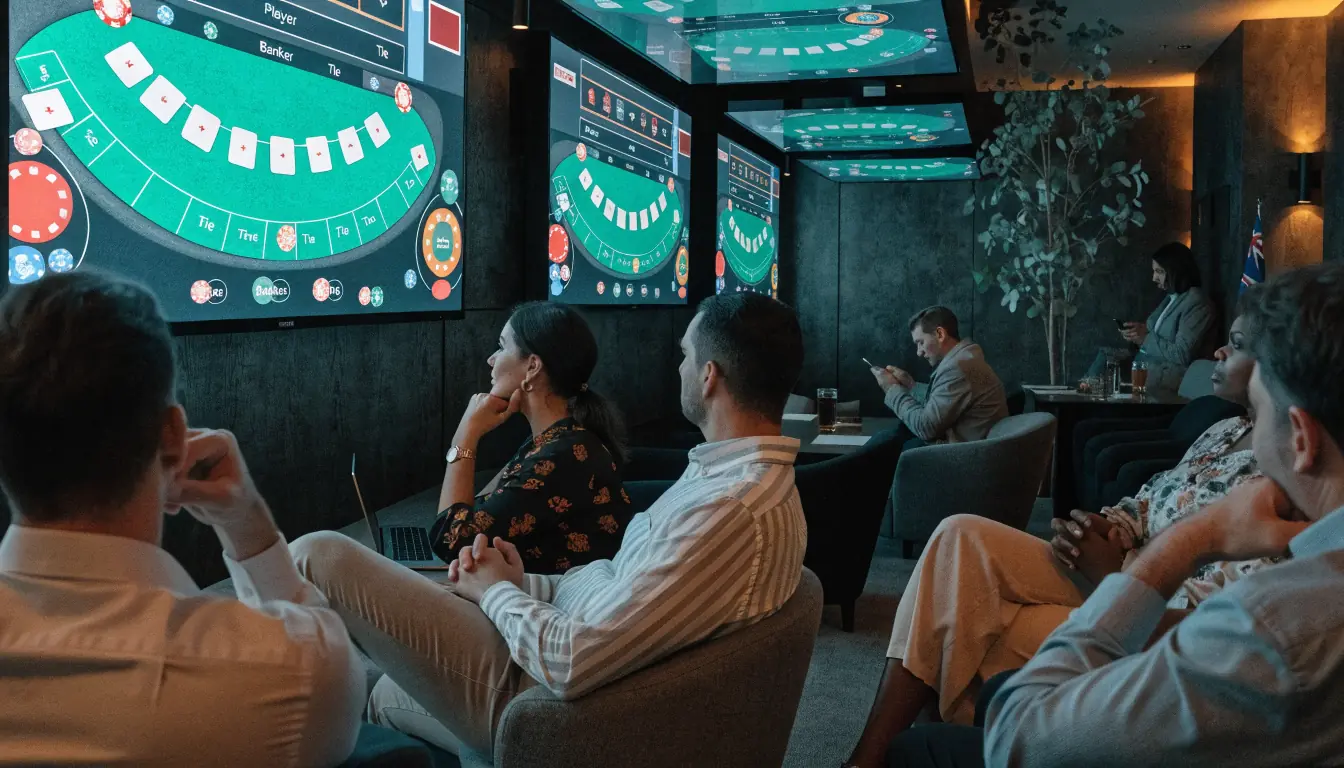
The regulatory backdrop won’t change your reel outcomes, but it changes everything else
Whether you’re spinning for free or for money, the reels themselves are governed by the same RNG-based logic. What changes is everything around the spin: whether an identity check applies, whether a withdrawal is even possible, and whether there’s any local body to complain to if something goes wrong. There isn’t one — no domestically licensed real-money online casino operator exists for Australian players, which means every real-money Lightning Link session happens under a foreign licence, foreign terms, and foreign dispute processes.
A market in flux
According to one industry review of the sector, the number of online casino sites, including operators serving Australians, has been increasing. That’s worth keeping in mind: the free-play landscape is comparatively stable, but the real-money side is a shifting set of offshore operators rather than a fixed, regulated market — which is precisely why the distinction between the two matters more than the game’s name suggests.
Step‑by‑Step Guide to Playing Lightning Link Slots for Free Online
Getting a free session of Lightning Link running takes a handful of steps, none of which involve a bank card or a deposit form.
1. Choose a site that hosts the demo build. Look for a platform that clearly labels its games as "demo" or "free play" rather than one that pushes straight to a cash register. Reputable software providers license these demo versions directly, so the reels, symbols, and Hold‑and‑Spin feature match what you’d see in a paid session.
2. Open the game without registering, if possible. Many sites let you launch Lightning Link straight from the lobby page. Others ask for an email address purely to save your progress or preferences — no payment details should ever be requested at this stage.
3. Check the game variant. Lightning Link comes in several themed builds, including versions such as Happy Lantern, so it’s worth browsing the selection before settling on one, since each carries slightly different symbols and bonus art even though the core mechanics stay the same.
4. Load your virtual balance. The demo assigns you a set amount of play credit automatically. There’s nothing to top up and nothing that disappears from a real account.
5. Set your bet size and spin. Betting controls work the same as in the real‑money version, letting you adjust stakes and paylines before each spin, so you can get a feel for how the game plays before ever considering a deposit.
6. Reset or reload if the balance runs out. Refreshing the page typically restores your play credit, letting you keep testing the game indefinitely.
None of this requires leaving your home, unlike the fixed venues that still dominate parts of the pokies market — Gosford, for instance, has roughly one poker machine for every 71 adults, and Wyong about one for every 47.
Lightning Link Slot Overview: Core Gameplay and Betting Limits
A Lightning Link pokie follows the same basic structure as most reel-based games: pick a bet size, spin, and watch for a trigger into the bonus round that gives the series its name. Sessions typically move through long stretches of base-game spins punctuated by occasional feature rounds, which is where most of the larger outcomes tend to be concentrated.
Betting ranges are set by the game itself rather than by any single platform, and adjusting your stake changes both the size of individual outcomes and how quickly a balance moves in either direction. This matters more in Australia than the marketing suggests. Electronic gaming machines here accounted for almost AUD$150 billion in bets during FY 2020‑2021, with total player losses reaching AUD$12 billion — a per‑capita loss of AUD$608 across that year alone. Those figures apply to gaming machines broadly, not to Lightning Link specifically, but they’re a useful reminder that volume of play, not any one spin, is what drives long-run results.

The next sections break down the individual features, including the Hold‑and‑Spin mechanic, in more detail.
Demo Versions of Lightning Link Games: Trying Card and Table Variants
The Lightning Link brand is built around its slot reels, but the same demo-first approach extends to card and table formats found alongside it on many platforms. If you’ve worked through a lightning link slot demo and want variety without moving to real money, these are worth a look.
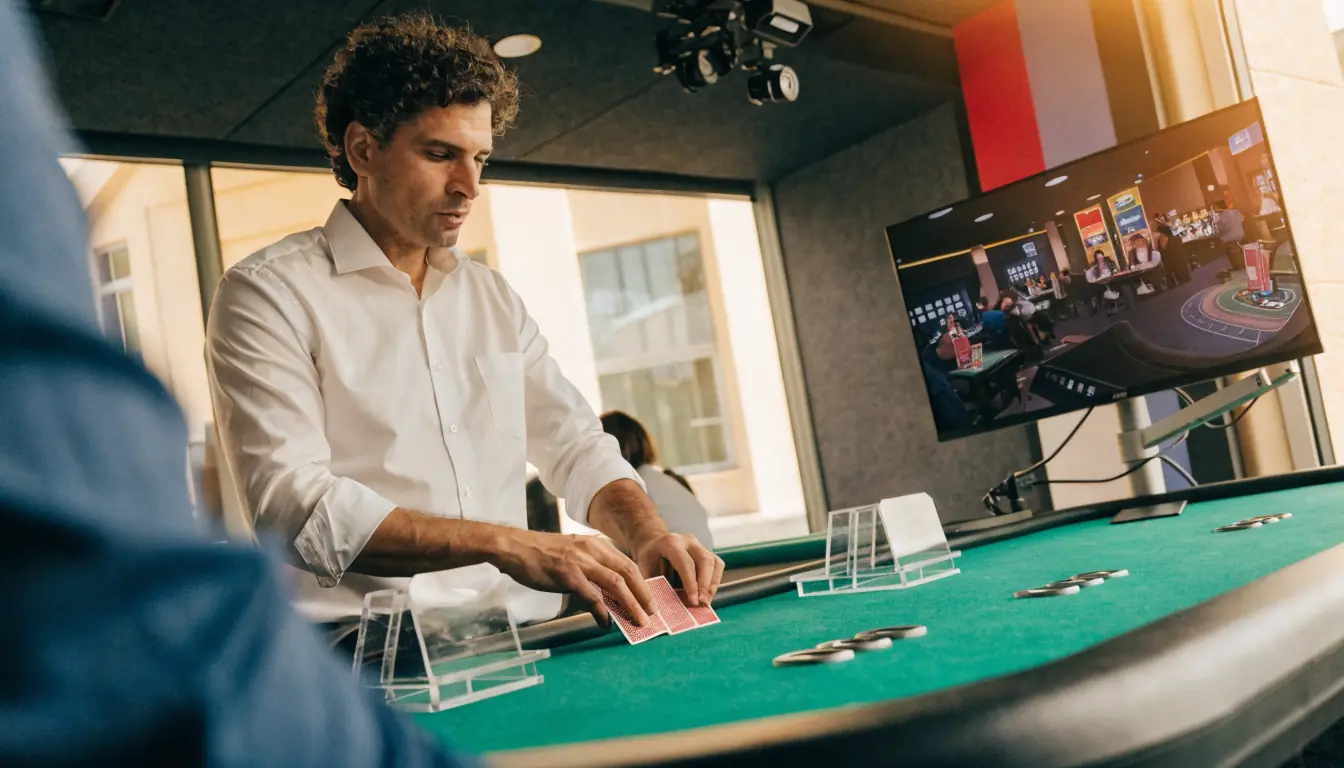
Online card games appear in numerous variations, with poker, baccarat, and blackjack among the most common. Each typically has a free version running on the same RNG-based engine as the slots, so no deposit is required to see how a hand plays out or how a particular ruleset works.
Table games extend the list further. Roulette, craps, Pai Gow, and Sic Bo are all available online, and demo versions let you learn table layouts, betting spots, and payout structures before any money is involved.
None of this replaces the lightning link slot games themselves, but it does show that the "try before you play" principle behind free lightning link slot games isn’t limited to reels — it runs across the wider catalogue these titles usually sit within.
Hold‑and‑Spin Feature in Lightning Link: How It Works
Hold-and-Spin is the mechanic that gives Lightning Link its name and its reputation. It triggers when a set number of matching symbols land on the reels, locking those positions in place and awarding a limited number of respins. Each respin that produces another matching symbol resets the counter and locks in another position, extending the feature until no new symbols appear or the grid fills completely.
What makes it distinct from a standard bonus round is the credit or jackpot value attached to each locked symbol. As the grid fills, the total displayed on screen climbs, and a fully locked board typically pays out the highest tier available in that particular game.
This differs entirely from the dealer-run games found elsewhere in an online casino lobby, where outcomes depend on a live-dealer streaming in real time rather than a locked, symbol-driven reel set.
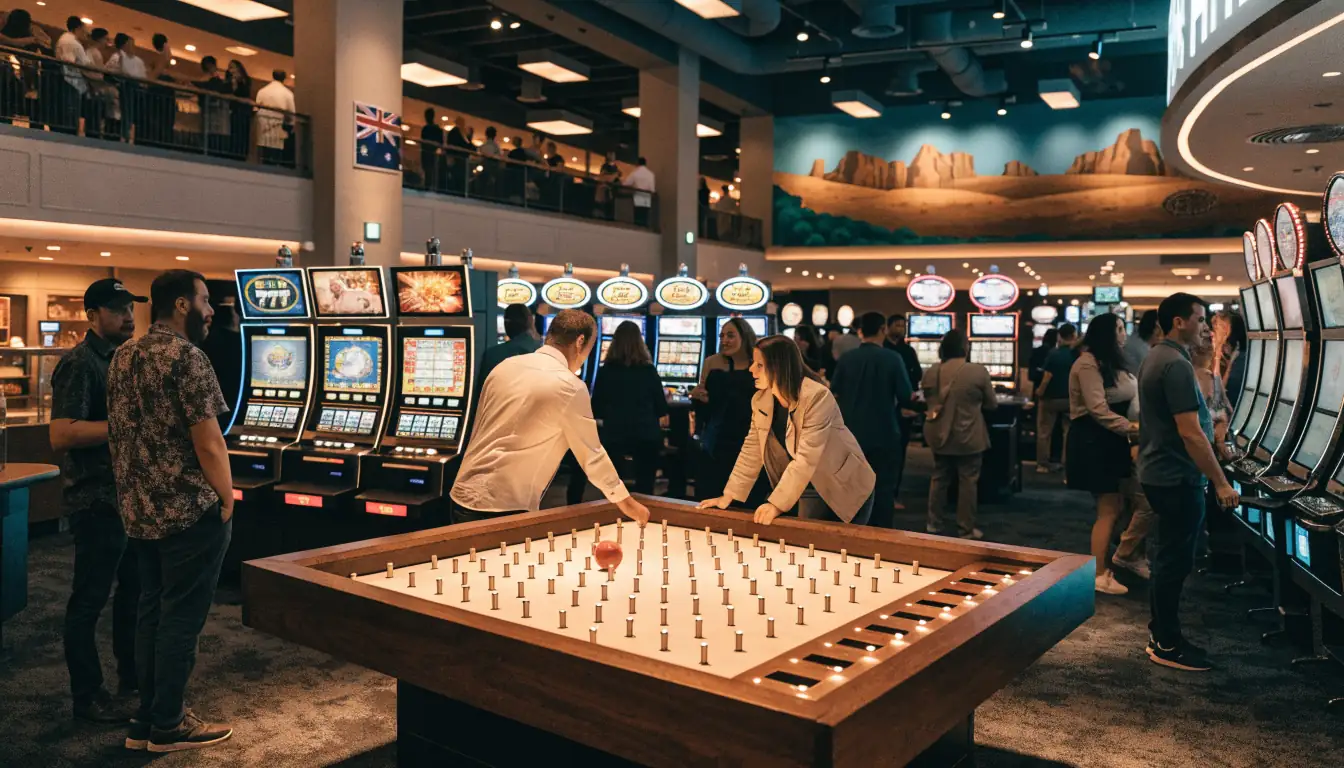
Lightning Link Slot Review: What Free Players Can Expect
The free version of Lightning Link delivers on the essentials: bright, high-contrast reels, the familiar chime that builds as credits climb during a bonus round, and a pace that suits short sessions as much as long ones. Nothing about the demo feels stripped down compared to what you’d expect from the real thing — the visuals and audio are the same assets, just running on credits that can’t be withdrawn.
Where the experience runs into a wall is legal, not technical. Online casino play, including slots like this one, is prohibited federally in Australia under the Interactive Gambling Act 2001, so no domestically licensed site can offer it for real money. Online sports betting remains legal under state and territory licences, but that’s a separate activity governed by different rules entirely. For free play, none of this affects the demo — you’re not wagering anything — but it explains why "free" is the only version available through licensed Australian channels.
Can I play online pokies for free?
Yes, many slot games offer a demo mode that lets you spin using virtual credits instead of real money. You can try games like Lightning Link this way without making a deposit or risking any funds.
Is online gambling legal in Australia?
Online casino games, including pokies, poker, and roulette, are prohibited federally under the Interactive Gambling Act 2001, and no domestically licensed real-money operators exist. However, it is not illegal for individual Australians to play at offshore-licensed online casinos, as the law targets operators rather than players.
How do recommended online casinos ensure game fairness?
Online casino software relies on Random Number Generators (RNGs) to produce independent, random outcomes for each spin. These RNGs are regularly audited by independent testing agencies to ensure the games behave fairly.
Can I play crypto casino games on my mobile device?
Yes, you can play online casino games on mobile devices. The integration of technological innovations has made it easier to access casino games across different platforms, including smartphones and tablets.
Published by the Casino Jackpots Guide team.