
Online Pokies E-Wallet Australia: How They Work, Rules
 Available in US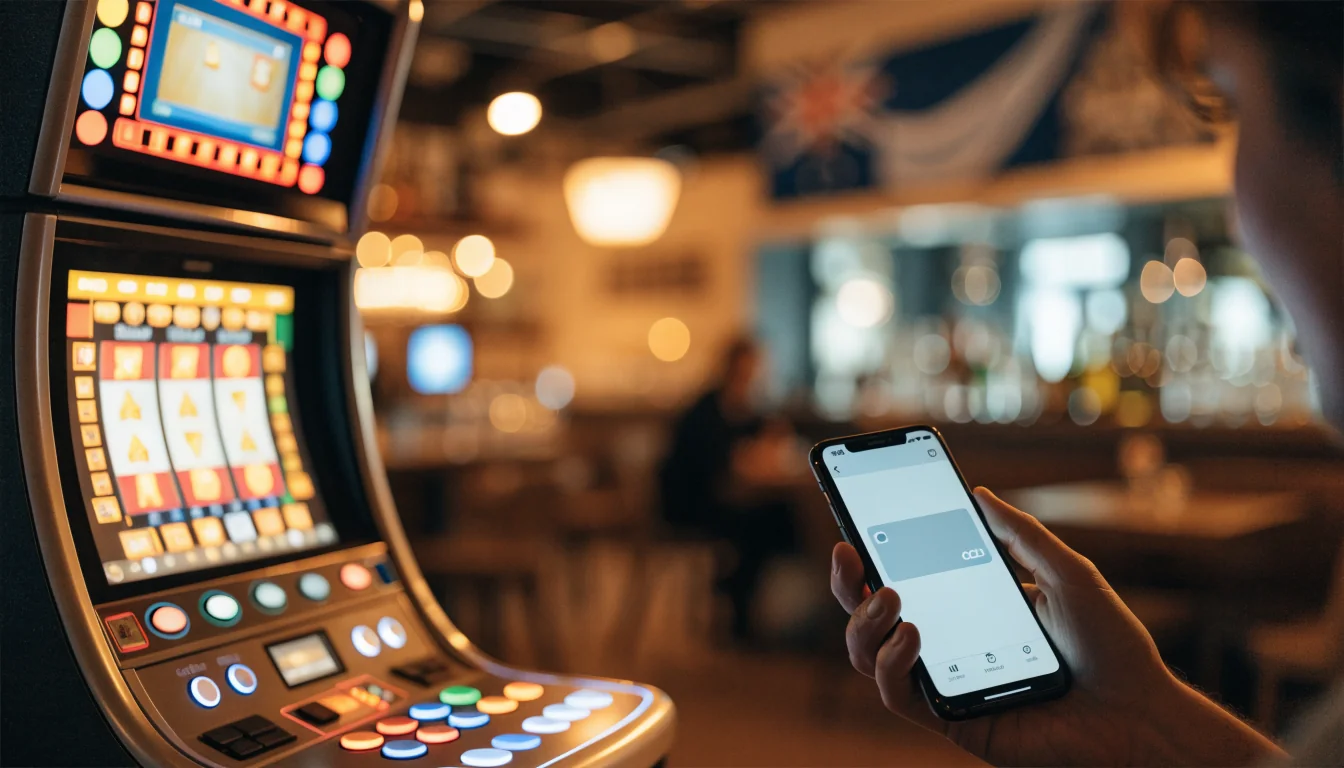
Understanding Pokies in Australia: How They Work, Regulation and Risks
Pokies — the Australian term for electronic gaming machines, or EGMs — are the slot machines you find lined up in pubs, clubs and casinos from Perth to Cairns. Anyone searching for online pokies e wallet Australia 2026 options is really asking about the payment layer sitting on top of a much bigger, older, and more tightly regulated machine. Before getting to e-wallets, it’s worth understanding what that machine actually is, because the legal boundaries around it shape everything else, including whether an e-wallet pokies real money site can legally exist in the first place.
What a Pokie Actually Is
A pokie is a cabinet with a screen, a note or coin acceptor, a button panel, and a random number generator that determines outcomes for each spin. In a physical venue, a player feeds cash or a pre-loaded card into the machine, presses play, and either wins credits (redeemable for cash at a kiosk or cashier) or loses the stake. Electronic gaming machines are operated in all Australian states, the Australian Capital Territory and the Northern Territory, which means the pokie is not a niche product confined to casinos — it’s a fixture of ordinary suburban pubs and licensed clubs across the country.
If e-wallet convenience and quick access to your winnings matter most to you, it pays to check how each casino handles deposits, bonuses, and payout speed before you commit.
Bonus: up to A$7,500 + 550 free spins across 10 deposits, 50x wagering · Payout speed: crypto under 1 hour, PayID 1-3 business days · Min. deposit: A$20 (A$30 to qualify for the bonus) You get a sizeable multi-deposit bonus package spread across ten deposits, plus fast crypto payouts if you prefer that route over PayID.
License: Curacao Gaming Control Board OGL/2023/176/0095 (Hollycorn N.V.) · Bonus: up to A$11,000 + 300 free spins (code NEO100) Licensed under Curacao’s Gaming Control Board via Hollycorn N.V., this operator backs itself with one of the larger bonus offers on this list, boosted by a dedicated bonus code.
Bonus: up to A$750 + 50 jackpot spins, 35x wagering · Payout speed: crypto ~90 minutes, fiat 1-5 days · Min. deposit: A$30 You’ll find a jackpot-spins bonus with reasonable wagering terms, plus notably quick crypto payout times if speed is your priority.
License: Curacao, operated by Dama N.V. · Bonus: 325% up to 5.25 BTC + 250 free spins across 4 deposits Operated by Dama N.V. under Curacao licensing, this casino stands out for a crypto-denominated bonus stretched across four deposits.
License: Curacao Gaming Control Board · Bonus: up to A$5,000 + 400 free spins Licensed by the Curacao Gaming Control Board, it offers a straightforward and generous welcome package combining a cash bonus with free spins.
Bonus: 100% up to A$750 + 200 free spins, 35x wagering · Payout speed: crypto 30-120 minutes, fiat 24-72 hours · Min. deposit: A$30 You can expect a solid welcome bonus with moderate wagering, plus some of the faster crypto payout windows on this list.
License: Curacao Gaming Control Board OGL/2023/176/0095 (Hollycorn N.V.) · Bonus: 100% up to A$10,000 + 100 free spins Also licensed through Hollycorn N.V. under the Curacao Gaming Control Board, this operator pairs its license with a large deposit-matched bonus.
License: Curacao – Antillephone N.V. (Versus Odds B.V.) · Bonus: up to EUR 2,000 across 5 deposits + 200 free spins · Min. deposit: EUR 20 Backed by Antillephone N.V. licensing via Versus Odds B.V., you get a bonus spread across multiple deposits with a low entry threshold.
License: Curacao · Bonus: 100% up to A$500 + 200 free spins, 10x wagering · Payout speed: crypto 30-60 minutes, fiat 1-5 days · Min. deposit: A$10 This Curacao-licensed casino keeps its wagering requirement low and its minimum deposit accessible, with fast crypto payout turnaround.
License: Curacao OGL/2024/1335/0780 · Bonus: up to A$1,000 + 150 free spins, wager-free · Min. deposit: EUR 20 Holding a specific Curacao license number, this operator offers a wager-free bonus, which is a distinct advantage if you want fewer strings attached to your winnings.
That ubiquity is part of what makes pokies distinct from other forms of gambling. A punter can walk into almost any local club, use a members’ card, and start playing within minutes. There’s no equivalent density for table games or sports betting terminals. This is also why pokies dominate Australia’s gambling turnover figures more than any other product category.
The Numbers Behind the Machines
The scale of pokie play in Australia is large enough that it’s worth stating plainly rather than softening it with vague language. In the financial year 2020-2021, Australians placed bets worth almost AUD 150 billion on electronic gaming machines. Of that turnover, the total player loss for the same financial year was about AUD 12 billion — the difference between turnover and loss reflects the fact that most wagered money is returned to players as winnings and re-wagered multiple times before it’s finally lost.
Per-capita losses from electronic gaming machines in FY 2020-2021 were AUD 608. That figure is a national average, not a description of any individual’s experience, but it gives a sense of how much pokie losses contribute to household gambling spend across the population as a whole.
More recent turnover data comes from a different kind of source. According to complyadvantage.com, pokies generated AUD 191.2 billion in gambling turnover in 2023. That’s a single source reporting a single year, and it shouldn’t be read as an official or audited market benchmark — it’s a data point, not a trend line, and the methodology behind it isn’t detailed alongside the figure.
Australia’s share of the world’s poker machine stock is another area where the numbers don’t agree. One figure places Australia at 3% of the world’s pub and club poker machines. Another puts it at roughly 18%. These two figures are wildly different, and rather than pick one to sound authoritative, it’s worth flagging plainly: sources disagree on this by a wide margin, and no single number here should be treated as settled fact.
Australian pokies generated AUD 191.2 billion turnover in 2023, with player losses around AUD 12 billion in FY 2020‑2021.
How Money Moves Through a Pokie
Cash is still the dominant way pokies operate in most Australian venues, and that has consequences beyond the gambling itself. The high volume of cash transactions and limited traceability of pokies make them attractive for money laundering. This isn’t a hypothetical risk — it’s a recognised feature of how the machines are used by a minority of players for reasons that have nothing to do with entertainment.
The basic laundering technique works like this: criminals insert large sums of cash into EGMs, perform minimal gambling activity, and cash out to create a false record of winnings. The pokie effectively becomes a laundering tool because a ticket printed at cash-out looks like gambling winnings rather than the original cash injected minutes earlier. A related method involves offenders purchasing winning tickets from other players to convert dirty money into clean, traceable funds — the seller gets a premium in cash, and the buyer walks away with a ticket that has the appearance of legitimate gambling income.



Another technique, known as structuring across venues, involves spreading smaller cash deposits across different venues to avoid AML reporting thresholds. Rather than making one large, reportable transaction at a single club, an offender breaks the amount into smaller deposits made at multiple locations, none of which individually triggers a reporting obligation. According to complyadvantage.com, money mules are also recruited specifically to launder money through pokies — individuals who insert and cash out funds on behalf of someone else, distancing the ultimate beneficiary from the transaction trail.
Regulatory Framework
Gambling regulation in Australia isn’t handled by a single national body with uniform rules. Pokies fall under a patchwork of state and territory regulators, including bodies such as the ACT Gambling and Racing Commission and the Office of Liquor and Gaming Regulation, each responsible for licensing and oversight within its own jurisdiction. Taxation of gambling operators in Australia varies by state and by type of gambling service, which means a club in Queensland and a club in New South Wales can face different tax treatment for what looks like the same product on the floor.
One consistent rule across the country is that gamblers’ winnings in Australia are not taxed. Whatever a player wins on a pokie, the tax burden sits with the operator, not the individual — a detail that matters because it removes one layer of complexity for players even as the regulatory burden on venues and operators has grown heavier.
Illegal Online Pokies
Offering real‑money online pokies to Australian residents breaches the Interactive Gambling Act 2001 and can result in prosecution.
At the federal level, online gambling is governed separately from venue-based pokies. The Interactive Gambling Act (2001) makes it an offence for online operators to offer real-money gambling to Australian residents. This law targets the operator, not the player, but its practical effect is that there is no legal pathway for an online casino — including online pokies — to be licensed to operate domestically in Australia. Any platform claiming otherwise is misrepresenting its own legal position, not offering a genuine local product.
AUSTRAC and Anti-Money-Laundering Obligations
Because of the laundering risks described above, pokie operators are subject to anti-money-laundering and countering-the-financing-of-terrorism (AML/CFT) obligations enforced by AUSTRAC, Australia’s financial intelligence regulator. AUSTRAC issued a guide in 2024 to help firms recognize money-laundering red flags, giving venues and compliance staff a clearer checklist of behaviours to watch for.
The red flags AUSTRAC highlights include unusually high cash access, large deposits, cash transfers, casino disbursement checks, and certain occupations associated with higher laundering risk. In practice, staff are trained to notice patterns rather than single transactions — a large or repeated cash insertion followed by minimal play and an immediate cash-out is one of the clearest indicators. Frequent small redemptions across different venues within a short period is another, since it mirrors the structuring technique described earlier. Customers refusing identification or using multiple player cards are also treated as red flags, since both behaviours are designed to obscure who is actually behind a transaction.
The compliance burden scales with the size of the operator. The obligations break down roughly like this:
| Operator size | Core obligations |
|---|---|
| Up to 15 pokies | Register with AUSTRAC, keep identification records, submit suspicious matter reports |
| More than 15 pokies | Appoint a compliance officer, conduct risk assessments, implement AML/CFT programs, perform customer due diligence, report cash transactions over AUD 10,000 |
A small pub with a handful of machines faces a lighter registration and reporting duty. A large club or casino with dozens of machines is expected to run something closer to a formal compliance function, including a named compliance officer and documented risk assessments. Non-compliant operators may receive remedial directions, infringement notices, civil fines and suffer reputational damage — a graduated set of consequences that gives AUSTRAC room to escalate from a warning to a significant penalty depending on the severity and persistence of the breach.
New South Wales has gone further than the federal baseline in at least one respect. An amendment to the Casino Control Act 1992 allows NSW casino operators to be fined up to AUD 100 million for compliance failures — a figure that puts the state’s casino-specific penalties well above the general AML fines available elsewhere in the sector.
The Push Toward Cashless Pokies
The laundering risks tied to cash have pushed regulators and researchers toward a fairly consistent recommendation: move pokies onto account-based, cashless systems. According to a 2022 report referenced as the NSW Islington Report, the recommendation was to make all NSW pokies cashless by the end of 2028. That’s a single report’s proposed timeline for a single state, not a national deadline, and it’s worth treating as a policy recommendation rather than a confirmed nationwide rule.
Cashless Benefits
Account‑based, cashless pokies improve traceability and significantly reduce money‑laundering risks.
The logic behind the push is straightforward. Transparent, account-based pokies provide full traceability of deposits, gameplay, and withdrawals, because every transaction is tied to a verified account rather than anonymous cash handed across a counter. According to facctum.com, adoption of cashless, account-based pokies improves traceability and reduces anonymity — a claim that lines up with the general direction regulators have been pushing, though it’s worth naming the source rather than presenting it as an established industry fact. Where cash allows a player to walk in, insert money, and walk out without ever being identified, an account-based system creates a record at every step, which is precisely what makes structuring and ticket-washing far harder to pull off undetected.
This is also the backdrop against which regulators recommend tighter customer due diligence, transaction monitoring, and the adoption of cashless gaming systems more broadly — not as three separate ideas, but as a single connected strategy where identity verification, ongoing monitoring, and the removal of anonymous cash all reinforce each other.
Where Online Pokies Fit Into This Picture
Everything described so far concerns physical, venue-based pokies — the machines sitting in pubs and clubs, regulated by state bodies and monitored by AUSTRAC. Online pokies operate under an entirely different legal reality, and it’s important not to blur the two.
The Interactive Gambling Act 2001 prohibits online casino-style games, including slots, poker, blackjack, and roulette, from being offered to Australian residents. There is no domestic licence that authorises an operator to run a real-money online pokies platform for Australian players, and no publicly maintained register exists where such a licence could be checked, because none is issued. This is different from sports betting and lotteries, both of which are lawfully licensed at the state and territory level in Australia. Pokies — in their online, casino-style form — simply sit outside that licensed category altogether.
No‑Deposit Bonus Risk
No‑deposit bonuses tied to e‑wallet pokies remain illegal in Australia and expose players to unregulated offshore operators.
It’s also worth being precise about who the law targets. The Interactive Gambling Act penalises operators, not players — it is not illegal for an individual Australian to play at an offshore-licensed online casino. But that legal nuance doesn’t create a domestic industry; it only means enforcement falls on the business side of the transaction rather than the player’s. Anyone offering, or seemingly offering, "regulated" or "licensed" online pokies to Australian residents is describing a licence category that doesn’t exist for this product in this market.
Where the Money and the Risk Overlap
Stepping back, the pokie sector in Australia sits at an unusual intersection: it’s one of the largest gambling categories by turnover, it’s deeply embedded in everyday venues like pubs and clubs, and it carries a documented money-laundering risk significant enough to warrant its own AUSTRAC guidance and state-level reform proposals. Pokies are widely used in Australian pubs, clubs, and casinos, which means the AML controls described above aren’t confined to a handful of large casino floors — they touch a huge number of small and mid-sized venues that most players would never associate with financial crime risk.
That combination — high turnover, cash intensity, and traceability gaps — is exactly why regulators have spent the past several years tightening reporting thresholds, publishing red-flag guides, and pushing toward cashless account-based systems rather than leaving pokies as a purely cash-in, cash-out product. It’s also the reason the next section, which looks specifically at e-wallets and pokies, needs the legal groundwork laid out here: any claim about e-wallet pokies in Australia has to be read against a backdrop where online casino-style gambling has no domestic licence, cash-based machines face growing compliance obligations, and traceability — not convenience — is the direction regulators are actively pushing the entire pokies sector toward.

How PayID payouts work at offshore pokies sites, why no Australian licence covers them, and…



e‑Wallet Pokies with No‑Deposit Bonuses: Legal Reality in 2026
Search for a no-deposit bonus tied to e-wallet pokies, and you’re really asking a legal question first, a marketing one second. Under the Interactive Gambling Act 2001, it’s an offence for online operators to offer real-money gambling — including pokies — to Australian residents. This applies regardless of the payment method involved. Whether you fund an account with an e-wallet, a bank transfer, or anything else, the offer itself is illegal at the operator level if it targets Australia.
That legal reality doesn’t change because a bonus is labelled "no-deposit." A no-deposit bonus is still an inducement into real-money online pokies play, and no e-wallet provider can make that offer compliant. There is no domestic licence that covers this activity, so no local site can advertise it legitimately, and no amount of payment-method branding — Skrill, Neteller, PayPal or otherwise — changes what’s being offered underneath.
One point that does hold regardless of platform: winnings from gambling are not taxed in Australia. That fact concerns players who use offshore sites, a separate question from whether the offer itself was ever lawful to advertise here.
Created by the ”Casino Jackpots Guide” editorial team.