
New PayID Pokies in Australia: Market, Rules and AML Risks
 Available in US
Understanding Pokies in Australia: Market Size, Regulation, and AML Risks
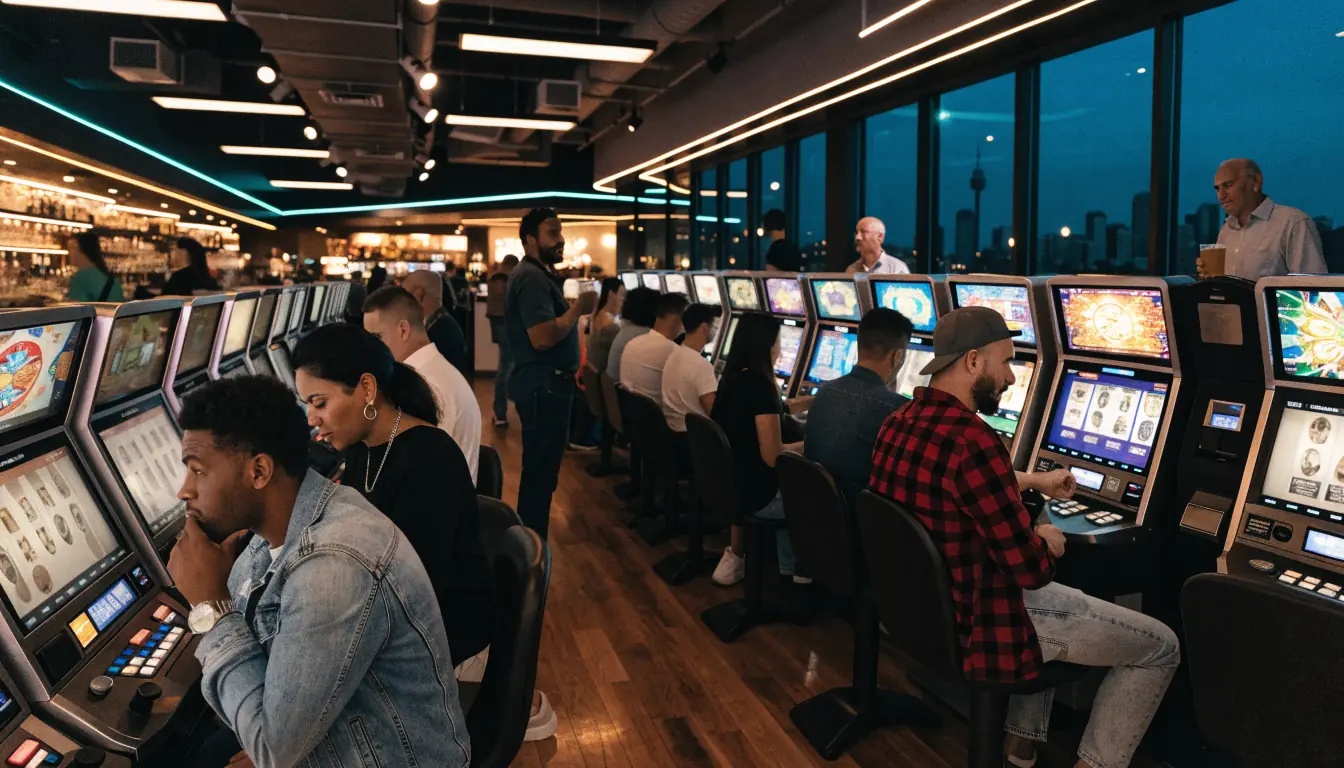
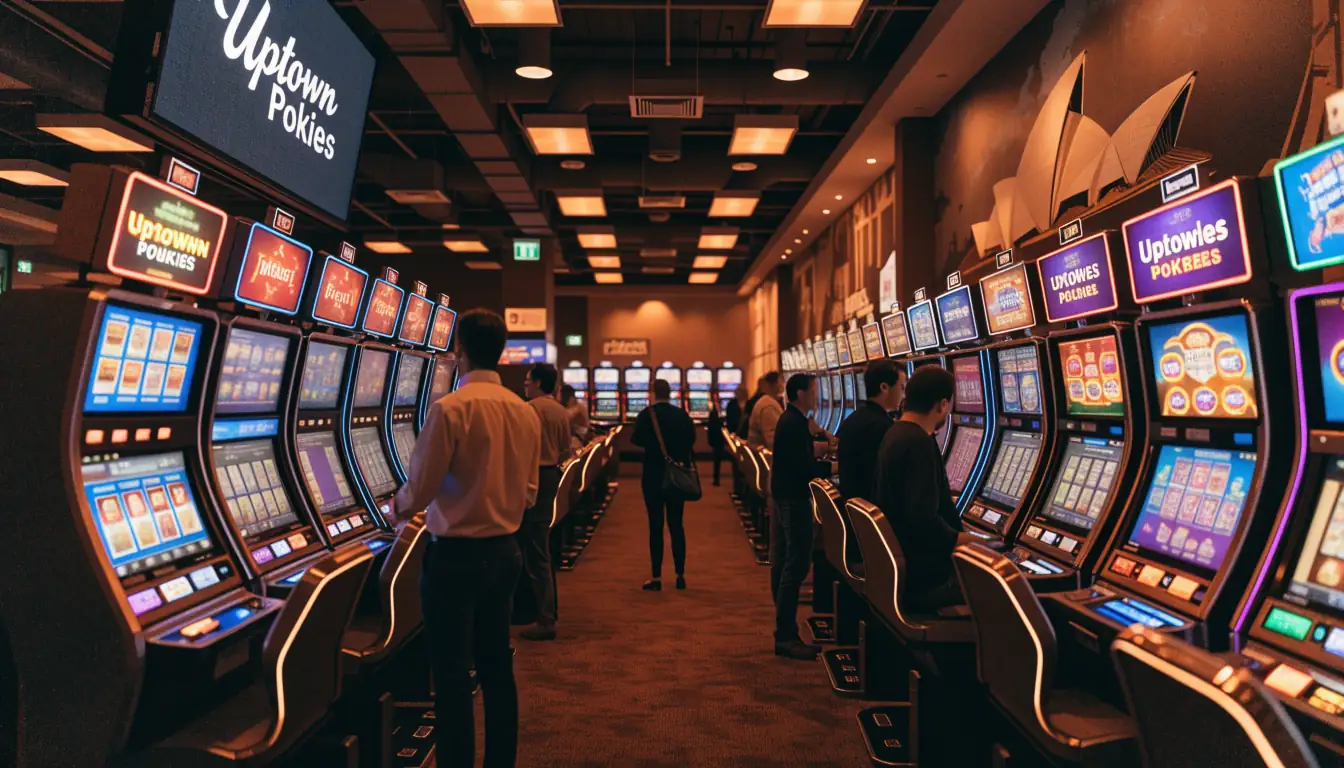
Before anything about new PayID pokies in Australia for 2026 makes sense, it helps to understand what pokies actually are, how large the market around them has become, and why regulators treat them as a persistent compliance headache rather than a harmless pastime. Pokies is the local shorthand for electronic gaming machines (EGMs) — the same category of machine that other markets call slot machines. You’ll find them in pubs, licensed clubs, and casinos across the country, and by international standards, Australia has an unusually large number of them relative to its population.
What counts as a pokie
A pokie is a coin- or note-operated electronic gaming machine that runs randomised outcomes for cash prizes. Formally, regulators and industry bodies refer to them as EGMs, and that’s the term you’ll see in legislation, AUSTRAC guidance, and state gaming reports. "Pokies," by contrast, is the word used everywhere else — in pubs, in the news, in casual conversation — and it’s the term this article uses throughout, because that’s how the market actually talks about them.
If you’re weighing up new PayID pokies options for 2026, it helps to see how each operator’s bonus terms, deposit minimums, and payout speeds actually stack up before you sign up.
Bonus: up to A$7,500 + 550 free spins across 10 deposits, 50x wagering · Payout speed: crypto under 1 hour, PayID 1-3 business days · Min. deposit: A$20 (A$30 to qualify for the bonus) A large multi-deposit bonus spread across 10 deposits with 550 free spins gives you plenty of runway, while crypto withdrawals clear in under an hour and PayID follows within a few business days.
License: Curacao Gaming Control Board OGL/2023/176/0095 (Hollycorn N.V.) · Bonus: up to A$11,000 + 300 free spins (code NEO100) Licensed under Curacao’s Gaming Control Board via Hollycorn N.V., this operator backs a sizeable welcome package worth up to A$11,000 plus 300 free spins, unlocked with a bonus code.
Bonus: up to A$750 + 50 jackpot spins, 35x wagering · Payout speed: crypto ~90 minutes, fiat 1-5 days · Min. deposit: A$30 A jackpot-themed welcome bonus with 50 bonus spins and moderate 35x wagering, paired with fast crypto payouts near 90 minutes and a low A$30 minimum deposit.
License: Curacao, operated by Dama N.V. · Bonus: 325% up to 5.25 BTC + 250 free spins across 4 deposits Operated by Dama N.V. under a Curacao licence, it stands out for a crypto-heavy welcome offer spread over four deposits, including a sizeable BTC match and 250 free spins.
License: Curacao Gaming Control Board · Bonus: up to A$5,000 + 400 free spins Licensed by the Curacao Gaming Control Board, this operator offers a straightforward welcome package combining a A$5,000 match with 400 free spins.
Bonus: 100% up to A$750 + 200 free spins, 35x wagering · Payout speed: crypto 30-120 minutes, fiat 24-72 hours · Min. deposit: A$30 A modest but accessible welcome bonus with 200 free spins and 35x wagering, backed by quick crypto payouts and a low A$30 minimum deposit for getting started.
License: Curacao Gaming Control Board OGL/2023/176/0095 (Hollycorn N.V.) · Bonus: 100% up to A$10,000 + 100 free spins Licensed under Curacao’s Gaming Control Board via Hollycorn N.V., it offers a strong 100% match up to A$10,000 alongside 100 free spins.
License: Curacao – Antillephone N.V. (Versus Odds B.V.) · Bonus: up to EUR 2,000 across 5 deposits + 200 free spins · Min. deposit: EUR 20 Licensed via Antillephone N.V. in Curacao, this operator spreads its welcome bonus across five deposits with 200 free spins and a low EUR 20 entry point.
License: Curacao · Bonus: 100% up to A$500 + 200 free spins, 10x wagering · Payout speed: crypto 30-60 minutes, fiat 1-5 days · Min. deposit: A$10 A Curacao-licensed operator with a low 10x wagering requirement, fast crypto payouts within the hour, and one of the lowest minimum deposits on this list at A$10.
License: Curacao OGL/2024/1335/0780 · Bonus: up to A$1,000 + 150 free spins, wager-free · Min. deposit: EUR 20 Holding a Curacao OGL licence, this operator’s headline draw is a wager-free bonus up to A$1,000 with 150 free spins, removing the usual playthrough hurdle.
A newer variant worth knowing is what’s sometimes called the transparent pokie: a machine built on account-based, cashless technology rather than the traditional coin-and-note hopper. Instead of feeding notes directly into the machine, a player’s funds sit in a linked account, and play draws from that balance. The mechanics of the game itself haven’t changed, but the way money moves through the machine has — and that distinction matters more than it might first appear, both for player experience and for the compliance conversation later in this section.
Just how big the pokies market is
The numbers involved are large enough that they’re worth stating plainly rather than rounding into vague impressions. In the 2020–2021 financial year, Australians bet almost AUD$150 billion on electronic gaming machines. Of that turnover, players lost AUD$12 billion — the difference between what goes into a machine and what comes back out over time. Spread across the adult population, that works out to a per-capita loss of AUD$608 for the same financial year, a figure that puts Australia’s gambling losses among the highest anywhere in the world on a per-person basis.

Why the Interactive Gambling Act 2001 bans real-money online pokies for Australians, and what that…
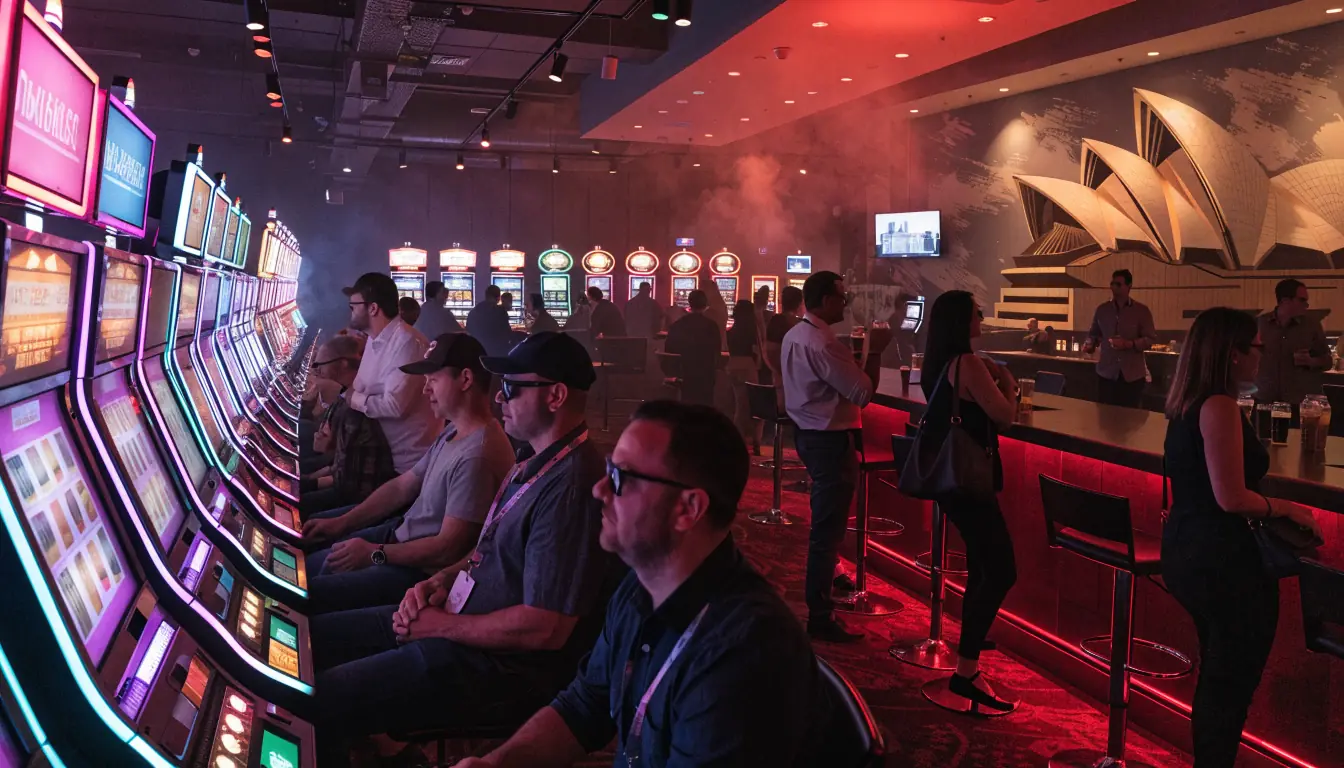

Scale alone doesn’t fully capture the picture; density does. Australia is home to roughly 3% of the world’s pub and club poker machines, despite accounting for only 0.3% of the global population. That’s a tenfold overrepresentation — a small country, by population, hosting a disproportionately large share of the planet’s slot machines. One industry source, complyadvantage.com, puts the figure even higher, suggesting Australia holds about 18% of the world’s poker machines; the discrepancy between that number and the more commonly cited 3% figure likely reflects different scopes of measurement (pub and club machines specifically, versus all EGMs including casino floors), and it’s worth treating both as separate claims from separate sources rather than reconciling them into a single "true" number.
New South Wales alone illustrates how concentrated this density is at the state level. The state has approximately 95,800 pokies — a number that, on its own, exceeds the entire machine count of many other countries. Between December 2017 and May 2018, NSW clubs earned $1.945 billion in net profit from pokies, a five-month figure that gives some sense of how central these machines are to the commercial model of the state’s licensed club sector.
High per‑capita losses mean many Australians lose significant amounts of money each year, which can lead to personal financial stress.
Zooming out to the national gambling economy, the same complyadvantage.com source reports that pokies generated $191.2 billion in Australian gambling turnover in 2023. That figure sits alongside — rather than directly comparable to — the FY2020-21 turnover figure above, since turnover accounting methods and time periods differ between sources. What both numbers agree on, regardless of the exact figure used, is the underlying reality: pokies are not a peripheral gambling product in Australia. They are the backbone of the industry’s revenue.
That revenue also flows into public coffers in a way that shapes how state governments relate to the pokies sector. In the 2015–16 financial year, gambling revenue accounted for 7.7% of state and territory taxation revenue — a meaningful slice of the money that funds public services at the state level. This is part of why pokies regulation in Australia has historically been a state and territory matter rather than a single national framework: the machines are a direct revenue source for the same governments that regulate them.
One detail that surprises visitors from other gambling markets: gambling winnings are not taxed in Australia. Whatever a player wins on a pokie — new or old, cash-based or account-based — is theirs in full. The tax burden in the Australian system falls on operators and venues, not on the player’s winnings, which is part of why the state revenue figure above comes from licensing and gaming taxes rather than from taxing player payouts.

Compare pokies and slots by reel count, volatility and RTP, and see which options suit…
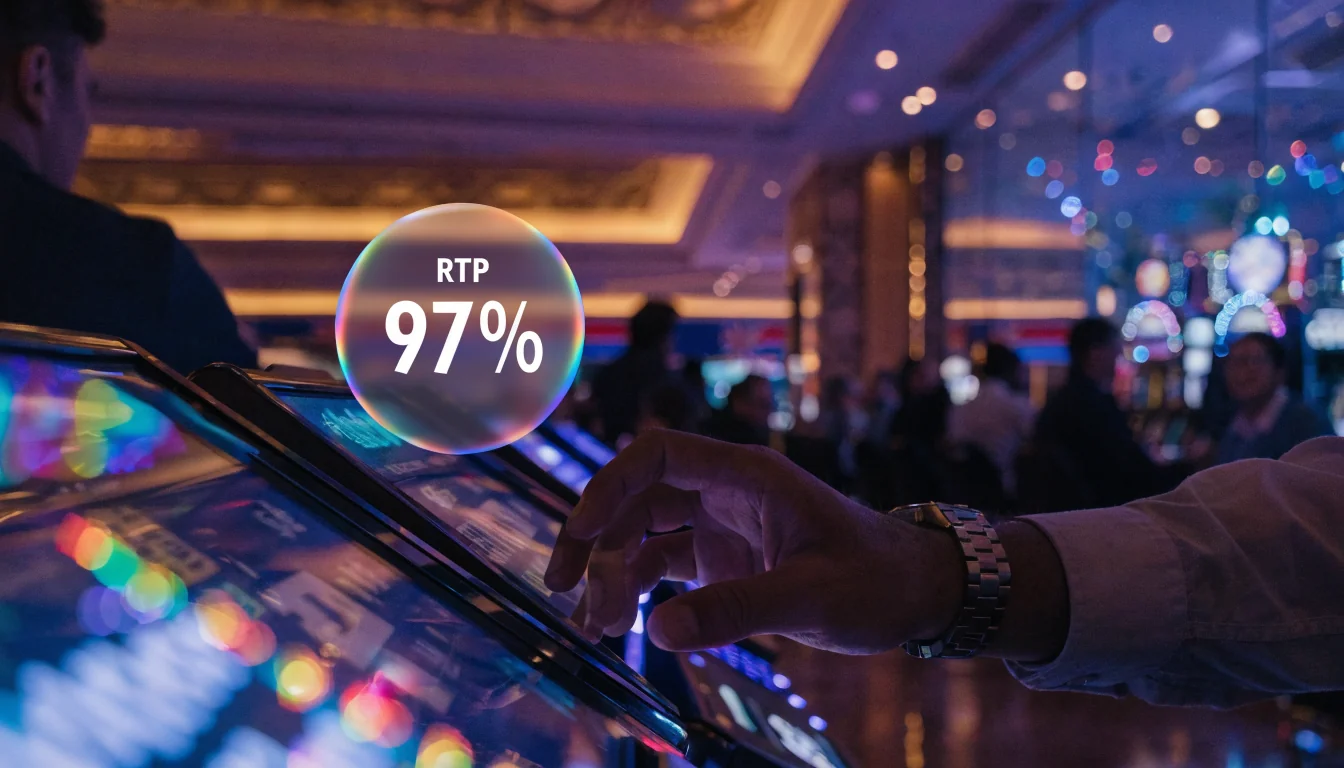
See what RTP actually means for your money — how a 97% game compares to…
Who regulates pokies, and how the framework is structured
Pokies regulation in Australia is not centralised. Each state and territory runs its own licensing and compliance regime for venues operating EGMs, which is why the rules, machine caps, and enforcement approach can differ from one jurisdiction to the next. Several bodies matter here:
- State gaming regulators, such as those overseeing NSW, set licensing conditions, machine caps, and venue-level compliance requirements for pubs and clubs operating EGMs.
- The ACT Gambling and Racing Commission performs the equivalent regulatory role for the Australian Capital Territory.
- The Northern Territory Licensing Commission does the same for the Northern Territory, again with its own local rules.
- AUSTRAC, the federal financial intelligence and AML regulator, sits above all of these state-level regimes when it comes to anti-money-laundering obligations — a point that becomes central later in this section.
- The New South Wales (NSW) Crime Commission has taken a particular interest in pokies as a money-laundering vector, given the state’s outsized machine count and cash volumes.
It’s worth being precise about what this state-based structure does and doesn’t cover, because the terminology around Australian gambling law gets confused easily. The Interactive Gambling Act — passed on 28 June 2001 — is a Commonwealth (federal) law, and its subject is online gambling, not land-based pokies in pubs and clubs. It prohibits the provision of online casino-style games, including slots, blackjack, roulette, and poker, to Australian residents. There is no domestic licence, state or federal, that permits an operator to run a real-money online casino for Australian players, and none is available under the current legal framework. That prohibition targets operators, not players — playing at an offshore-licensed online casino is not itself illegal for an individual Australian — but it means that any physical pokie you play in a licensed pub or club sits under a completely different legal regime than anything marketed as an "online pokie" or "online casino slot." The state and territory frameworks described above govern the land-based machines; the federal Interactive Gambling Act governs — and largely blocks — the online casino equivalent.
Illegal online casinos
Operating a real‑money online casino for Australian players breaches the Interactive Gambling Act and can result in severe penalties.
Given how much of the conversation around "new pokies" in 2026 is shaped by payment technology like PayID, that legal boundary is the single most important piece of context in this section. PayID is a real-time payment method used across Australian banking, and its presence in a gambling context typically points to licensed betting products — sports and racing wagering — rather than to online casino-style slot machines, since no licensed online casino operator exists domestically to accept such payments in the first place.
Why pokies are treated as an AML risk area
Public inquiries and sector guidance consistently flag pokies as a major money-laundering risk, and the reasons are structural rather than incidental. Pokies handle a high volume of cash transactions, and traditional, non-account-based machines offer limited traceability between the cash that goes in and the record of who put it there. That combination — lots of cash, little traceability — is exactly the profile that makes any financial product attractive to criminals looking to convert illicit cash into clean, traceable funds.
The mechanics criminals use are documented well enough to describe specifically, rather than in vague terms. A few recognised typologies:
- Cash placement with minimal play. Someone feeds a large amount of cash into a machine, plays little or nothing, and then cashes out. The pokie session is a pass-through, not a genuine attempt to gamble — the machine functions as a laundering conduit rather than as entertainment.
- Purchasing winning tickets. Rather than gambling the cash directly, an individual buys a winning ticket or voucher from another patron, effectively converting illicit cash into what looks like legitimate gambling winnings.
- Structuring across venues. Cash is broken into smaller amounts and moved through multiple venues rather than one, avoiding the thresholds and patterns that might trigger scrutiny at a single location.
None of these typologies work in isolation. They generally depend on collusion and weak oversight at the venue level — staff who don’t ask questions, oversight that doesn’t connect patterns across sessions, or venues that simply don’t have the systems in place to notice.
Red flags venues and regulators watch for
AUSTRAC guidance and industry AML frameworks point to a consistent set of behavioural indicators that distinguish ordinary play from suspected laundering activity. Recognising them is part of the compliance obligation for venues operating above certain machine thresholds, and they’re worth listing plainly:
- Large cash insertions followed by minimal play and an immediate cash-out
- Frequent small redemptions spread across multiple venues rather than one
- Multiple patrons appearing to work together to move cash through machines
- Customers who refuse identification or who use multiple player cards
- Redemption patterns that don’t match the typical pattern for that venue
- Access to more cash than would be expected given a customer’s known profile
- Deposits involving unusually large amounts of cash or higher-than-typical values
Individually, most of these could have an innocent explanation. A high roller with a large bankroll isn’t automatically a money launderer. What makes these indicators useful is pattern-matching across sessions and venues — which is precisely why oversight mechanisms exist and why they’re required by law above a certain scale of operation, rather than left to venue judgement alone.
Where an individual moving cash through a pokie on behalf of someone else is knowingly or unknowingly facilitating the laundering, that person is sometimes described in AML terminology as a money mule — a term borrowed from broader financial crime language but applicable here too, since the underlying mechanic (an intermediary moving illicit funds to obscure their origin) is the same.
What venues are required to do
Australia’s AML/CFT (anti-money laundering / countering the financing of terrorism) obligations apply specifically to venues operating above a defined machine threshold. Any venue running more than 15 pokies is required to:
- Appoint a dedicated compliance officer
- Conduct formal risk assessments
- Implement an AML/CFT program
- Perform customer due diligence
- Report cash transactions above $10,000
Separately, any venue subject to these AML obligations must register with AUSTRAC using an AUSTRAC Business Profile Form — the formal mechanism by which a venue becomes a reporting entity under the federal AML regime.
Two broad categories of control sit at the centre of how venues are expected to manage this risk:
Customer verification and patron profiling. Knowing who a patron is, and building a profile of what "normal" behaviour looks like for that individual, is what makes the red-flag indicators above actually useful. Without a baseline, unusual behaviour is invisible.
Cashless and account-based systems. This is where the shift toward transparent pokies matters most from an AML standpoint, rather than purely a convenience standpoint. When funds move through an account rather than through anonymous notes fed directly into a hopper, every transaction carries an identity attached to it. That traceability doesn’t eliminate the typologies described above, but it makes structuring, ticket-purchasing, and cash placement schemes considerably harder to execute without leaving a trail — which is precisely why regulators and compliance providers have pushed venues toward account-based technology as machines are upgraded or replaced.
transparent pokie
A transparent pokie is an account‑based, cashless electronic gaming machine where player funds are held in a linked account rather than inserted as cash, improving traceability for compliance.
Specialised compliance technology has grown up around this need. Providers such as FacctGuard, FacctShield, and FacctView build monitoring and screening tools aimed at exactly the kind of pattern detection venues are required to perform — flagging structuring behaviour, cross-venue redemption anomalies, and customer risk profiles that a purely manual compliance process would struggle to catch at scale.
The harm dimension, not just the financial-crime one
It’s worth stating plainly, because it sits alongside — not apart from — the AML picture: poker machines are recognised as the most harmful form of gambling in New South Wales. The same features that make pokies commercially significant — high-frequency play, continuous cash flow, low friction between betting and re-betting — are also what drive their harm profile relative to other gambling products. This isn’t a side note to the regulatory story; it’s a large part of why pokies attract more scrutiny, more reporting obligations, and more public inquiry attention than other forms of gambling in the Australian market.
BetStop, the national self‑exclusion registry launched in August 2023, has already registered 18 000 users, highlighting growing awareness of gambling‑related harm.
That harm recognition is also what sits behind the national self-exclusion infrastructure. BetStop, the national self-exclusion registry, launched in August 2023 and registered 18,000 users within its first six months — a signal both of demand for the tool and of the scale of the population that recognises its own gambling as something worth actively restricting. BetStop operates at the federal level, covering licensed wagering services rather than being a venue-by-venue opt-out, which makes it a distinct mechanism from the venue-level self-exclusion schemes that have existed in various state frameworks for longer.
The shape of the market going into 2026
Put together, the picture is this: pokies are a large, cash-intensive, state-regulated industry that generates substantial revenue for both venues and state governments, carries a well-documented set of money-laundering typologies, and is subject to a growing push toward account-based, traceable technology. The federal Interactive Gambling Act draws a hard line around online casino-style gambling that has nothing to do with the land-based pokies market described in this section — a distinction that matters increasingly as payment technology, PayID among it, becomes part of how Australians talk about gambling products heading into 2026. Understanding that distinction — between the licensed, cash-heavy, state-regulated land-based pokie sector and the federally prohibited online casino sector — is the foundation for everything that follows about how these machines actually operate, how players behave around them, and how advertising rules constrain what operators and venues can say.
What are pokies in Australia?
They are coin- or note-operated electronic gaming machines (EGMs) that run randomised outcomes for cash prizes, commonly found in pubs, licensed clubs, and casinos across the country.
What are the red flags for pokies-related money laundering?
Key warning signs include large cash insertions followed by minimal play and immediate cash-outs, frequent small redemptions across multiple venues, and groups of patrons working together to move illicit cash.
What law governs online gambling in Australia?
The Interactive Gambling Act, passed on 28 June 2001, serves as the legislative framework for online gambling in Australia.
Published by the Casino Jackpots Guide team.