Online Casinos in Australia: Bonuses, Games and the Law
 Available in AU
Table of Contents
- Bonuses & Promotions in Australian Online Casinos
- Payments, Deposits and Withdrawals for Australian Players
- Pokies and Slots – What’s Allowed in Australia
- Live Dealer and Table Games – Availability and Restrictions
- Game Providers and the Licensing Landscape
- Casino Rankings, Safety and Enforcement in Australia
Bonuses & Promotions in Australian Online Casinos
Search for a "welcome bonus" from an Australian online casino and you’ll find plenty of offers. What you won’t find, if you look carefully, is a single one of them coming from an operator licensed to provide online casino games in Australia — because no such licence exists. It is illegal to offer online casino gambling in Australia, and there is no domestic path to obtaining a licence for it. Every bonus you see attached to pokies, roulette or blackjack is being offered by an operator based offshore, outside the reach of Australian regulation.
That distinction matters more for bonuses than for almost anything else on this topic. Games, payments and licensing are all shaped by rules that at least attempt to draw a line between what’s permitted and what isn’t. Bonus promotion is different: it’s the part of the business model that depends on being seen, and it’s also the part Australian regulators are least equipped to police.
Why the promotion itself is the problem
ACMA, the federal regulator responsible for enforcing the Interactive Gambling Act 2001, can investigate offshore operators and order internet service providers to block their sites. What it cannot do is reach into the advertising layer sitting above those sites. The law prohibiting gambling advertising is written to cover advertising "in Australia," and platforms like Facebook fall outside ACMA’s authority to compel compliance under that wording. In practice, this means a bonus ad can be blocked from appearing on a casino’s own website while still circulating freely through a social media feed, an affiliate blog, or a sponsored post — channels ACMA has no power to force into line.

See which payment methods Australian casinos accept, from cards and e-wallets to crypto, and how…

Compare pokies and slots by reel count, volatility and RTP, and see which options suit…


This is why bonus offers persist even as the sites behind them get added to block lists. The promotion and the product are handled by different enforcement mechanisms, and only one of those mechanisms has teeth.
What a bonus actually is, once you strip the marketing
A bonus from an offshore casino is a contractual offer from a company operating outside Australian law. If the terms aren’t honoured — if wagering requirements turn out to be different from what was advertised, or a withdrawal tied to a bonus is refused — there is no local regulator who can step in on your behalf. ACMA can investigate and block a prohibited service, and it can pursue civil proceedings against the operator, notify border protection agencies about the people running it, and liaise with regulators overseas. What it cannot do is recover your money or settle an individual dispute with the operator. That function simply doesn’t exist for this category of gambling in Australia, in a way it does for a licensed local business.
This is worth sitting with, because it’s the opposite of how bonus terms are usually discussed. Most guides treat wagering requirements as a matter of reading the fine print carefully. Here, the more basic fact is that there’s no local authority who will enforce the fine print for you if the operator decides not to.
Wagering requirements can leave you without recourse if the offshore operator refuses to honour them, as there is no Australian regulator to enforce the terms.
Wagering requirements without a regulator behind them
Wagering requirements — the amount you need to bet before a bonus balance converts to withdrawable funds — are standard practice across offshore casino sites. In a licensed market, disclosure of these terms up front is typically a regulatory obligation, backed by a body that can act if it’s ignored. Australian players are dealing with offshore operators where that backing doesn’t apply. The terms may be published clearly, or they may not be. Either way, the party checking whether they’re honoured is you, not a regulator.
The pattern regulators have already responded to
ACMA’s toolkit for offshore gambling operators reflects how limited direct enforcement is once money and marketing cross a border it can’t fully police:
- Site blocking — ACMA can order ISPs to block access to a prohibited service, but this addresses the site, not the promotional material advertising it elsewhere.
- Civil proceedings — ACMA can initiate action against an offending operator, though this is a regulatory response after the fact, not a mechanism for recovering an individual player’s funds.
- Notifying border protection agencies — ACMA can flag the directors and principals of offending offshore operators to border authorities, a measure aimed at the people behind a business rather than its advertising.
- Liaison with foreign regulators — ACMA can work with regulators in the jurisdiction where an operator is actually licensed, which is often the only body with any real leverage over that operator’s conduct.
None of these four measures touches a bonus advertisement directly. They’re aimed at the underlying service, after it’s already been identified as prohibited — by which point the promotional campaign that brought players to it has usually already done its job.
What this means in practice
The bonus itself isn’t illegal for you to accept — the law targets operators, not individual players. But it’s worth being clear-eyed about what you’re accepting: a promotional offer from a business Australian regulators cannot audit, license, or force to pay out, sitting in an advertising space Australian regulators cannot fully police either. The size or generosity of an offer tells you nothing about whether the operator behind it will honour its own terms. In this market, that question is left almost entirely to you to answer, because there’s no regulator positioned to answer it on your behalf.
Payments, Deposits and Withdrawals for Australian Players
Payments are where the legal gap between betting and casino gambling becomes most concrete for an Australian player. Online sports betting is legal under state and territory licences, which means locally licensed bookmakers can offer conventional banking rails through regulated Australian institutions. Online casino play sits in a different category entirely: no operator can hold a domestic licence to offer it, so any deposit made to an offshore casino site travels outside that regulated system from the first transaction. The law itself does not criminalise the player for doing this — the Interactive Gambling Act 2001 targets the operator, not the individual placing a bet — but it does mean the payment protections that come with a licensed local product simply aren’t part of the picture.

What actually gets used
Offshore-facing casino sites cannot rely on the same banking infrastructure as a locally licensed wagering operator, so payment options tend to cluster around methods that don’t require a local financial institution to sign off on the transaction’s legality. PayID has become a common way for players to move money quickly between an Australian bank account and a betting or gambling platform, since it verifies via a linked identifier rather than card details. Bank transfers remain available in some form, though processing depends entirely on how the receiving platform is structured and where it’s based.
Cryptocurrency also shows up frequently in this space. It’s worth being precise about what that means in practice: crypto is used because it moves value across borders without going through a conventional bank, not because it comes with any endorsement or oversight from an Australian body. Nothing about paying in Bitcoin or Ethereum changes the underlying legal status of the site accepting it.
Using cryptocurrency to fund offshore casino accounts does not alter the legal status of the site; it remains unregulated under Australian law.
Verification before you see your money
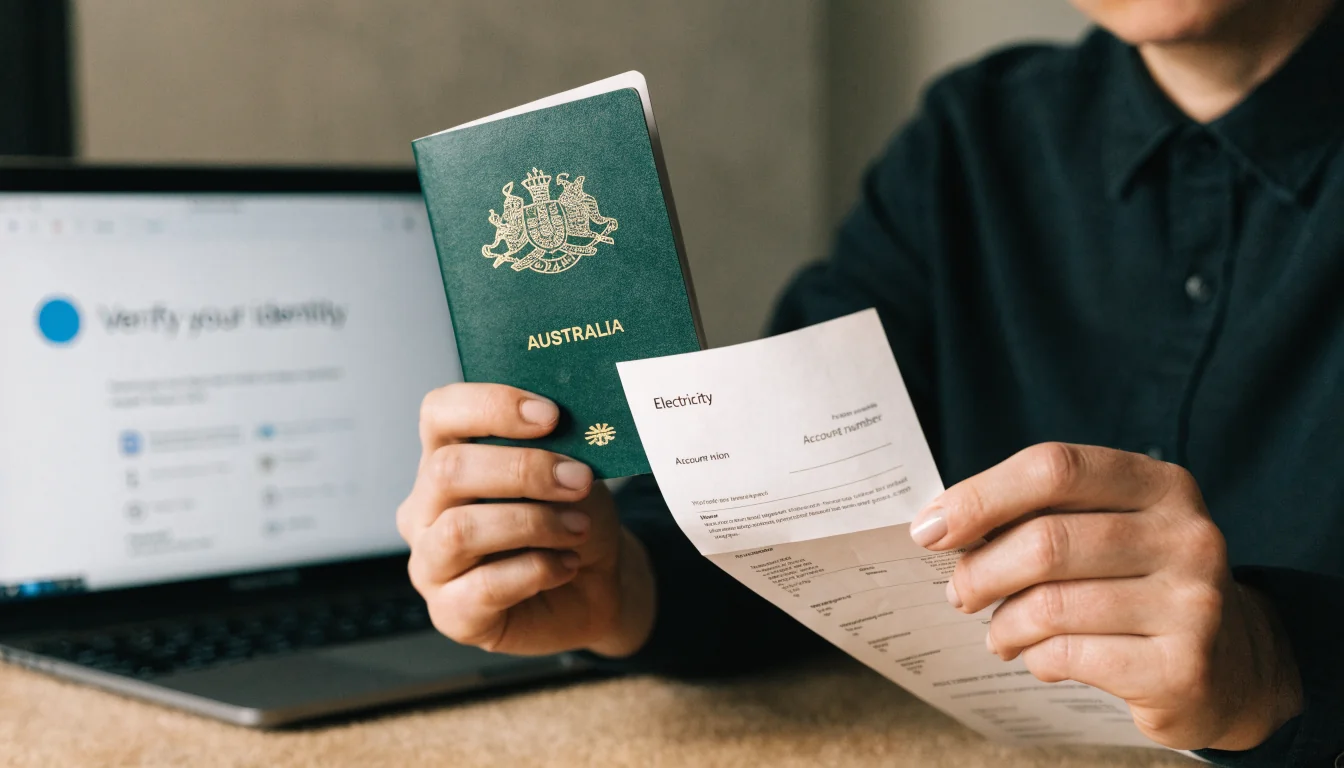
Withdrawals are where the process slows down, and that’s normal rather than a red flag on its own. Identity verification — commonly referred to as KYC, or Know Your Customer — is standard practice before a platform releases funds. Expect to submit government-issued identification and, in many cases, proof of address or a record of the payment method used to deposit. This isn’t a formality unique to offshore platforms; it’s how anti-money-laundering checks work across the gambling and financial sectors generally. The difference with an offshore casino is that there’s no Australian regulator standing behind the process to enforce a timeline or resolve a dispute if verification drags on or a withdrawal is refused outright.
That absence of a local backstop is the practical risk worth naming plainly. If a payment is delayed, disputed, or simply not paid, an Australian player has no domestic licensing body to complain to, because the operator was never licensed here in the first place. Whatever complaints process or dispute resolution the platform advertises is the only recourse available, and its usefulness varies by operator.
Why enforcement doesn’t touch the money itself
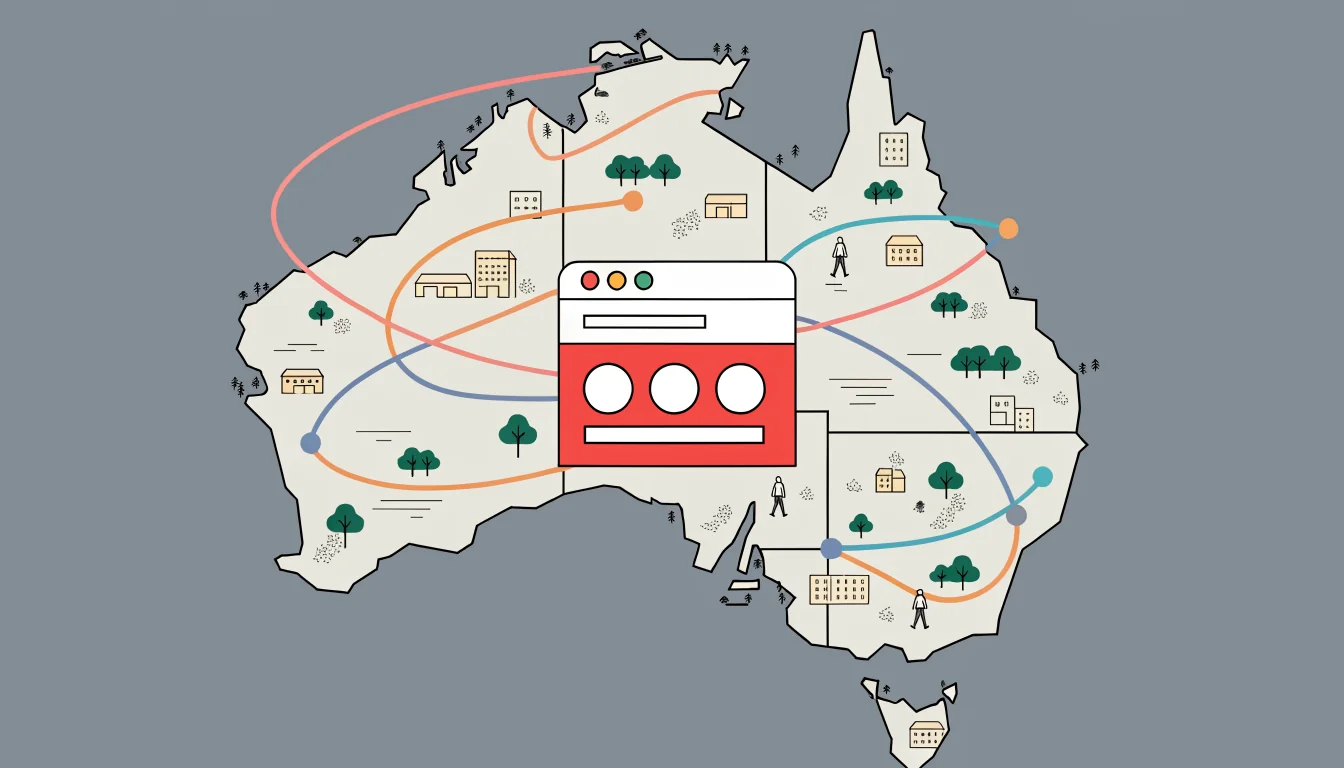
The Australian Communications and Media Authority (ACMA) has real enforcement powers over the sites themselves, but those powers are aimed at access, not transactions. ACMA can request that internet service providers block a site offering games not permitted under Australian law — this covers online casinos, online pokies, and in-play sports betting alike. When ACMA issues a blocking notice to an ISP, the typical target is an online casino operating without any Australian licence. What this enforcement mechanism does not do is intervene in a payment dispute, freeze funds, or force a refund. Blocking a site’s accessibility from Australia is a different action entirely from resolving what happens to money a player has already deposited with it.
That distinction matters for anyone weighing up how much protection actually exists around a transaction. A blocked domain might reappear under a new URL; the underlying operator, and whatever payment terms it set, doesn’t change because access was interrupted. Players dealing with an offshore casino are, in effect, relying on the operator’s own systems and reputation for how deposits and withdrawals are handled, because there’s no equivalent of a licensed local wagering provider’s regulatory obligations sitting underneath the transaction.
A practical checklist before moving money
- Confirm what identification documents a platform will ask for at withdrawal, before depositing anything.
- Understand that a payment method being available — crypto included — says nothing about the legal status of the site accepting it.
- Keep records of every deposit and the method used; there’s no regulator here who can reconstruct a transaction history for you.
- Treat verification delays as standard procedure, but treat unexplained withdrawal refusals as a sign there’s no external authority who can compel payment.
- Remember that sports betting through a state- or territory-licensed bookmaker sits on entirely different banking rails than casino play through an offshore site, even when both apps sit on the same phone.
None of this makes a deposit illegal for the player making it. It does mean the financial side of online casino play in Australia runs on the operator’s terms, verified only by the operator’s own processes, with no domestic authority available to step in if something goes wrong with the money itself.
Pokies and Slots – What’s Allowed in Australia
Pokies are the single most searched-for casino product in Australia, and also the one most directly named in federal law. The Interactive Gambling Act 2001 (IGA), the Commonwealth statute that governs online gambling with the stated aim of harm minimisation, prohibits online casino-style games outright — and slots sit at the top of that list, alongside poker, blackjack and roulette. There is no carve-out for pokies specifically. The law doesn’t distinguish between a simple three-reel machine and a complex video slot with bonus rounds; both fall under the same ban.
Illegal Online Pokies
Online pokies are prohibited for operators under the Interactive Gambling Act 2001, making any such offering unlawful in Australia.
This means there are no domestically licensed real-money online pokies operators in Australia. Not a handful, not a regulated minority — none. Any site offering online pokies to Australian players for real money is doing so without an Australian licence, because no such licence exists to obtain. This is worth stating plainly, because the absence of a legal domestic option is often where confusion starts. Searching for "online pokies Australia" turns up plenty of results, but none of them represent an Australian-licensed product.
Why pokies specifically get named in the law
Slots occupy an odd position in the gambling landscape because they combine two things regulators tend to treat separately: chance-based outcomes with no skill element, and rapid, repetitive play. Land-based pokies in pubs and clubs are heavily regulated at the state level, with venue caps, operating hour restrictions, and machine-specific rules that vary by jurisdiction. Online pokies inherit none of that state-based oversight, because they don’t fall under state gambling law at all — they fall under the federal ban created by the IGA. That’s the core distinction: physical pokies are a licensed, regulated, state-controlled product; online pokies are a federally prohibited one, full stop.

This is also why online pokies get treated differently from online sports betting. Betting on a horse race or a football match online is legal under state and territory licences, and Australians can do so through domestically licensed bookmakers. Pokies get no such treatment. The line the law draws isn’t about "online gambling" as a single category — it’s about game type. Wagering on an outcome you can research and reason about is treated as fundamentally different from spinning a reel with no observable variables.
What this means in practice for a player
Because the IGA targets the operators offering these games to Australian residents rather than the individuals playing them, an Australian resident who spins pokies at an offshore-licensed site isn’t committing an offence under this framework. The legal exposure sits with the business taking the bet, not the person placing it. That’s a meaningful distinction, but it shouldn’t be read as reassurance about the product itself. An operator with no obligation to hold an Australian licence has no obligation to meet Australian consumer protection standards either — there’s no local regulator with authority to intervene if a payout is disputed or an account is frozen.
It also means there’s nothing to check. On many markets, "look for the licence" is genuinely useful advice. Here, no domestic online pokies licence exists to display, so a badge, seal or claimed certification on an offshore site tells you nothing about your standing under Australian law. The absence of a legitimate local licence isn’t a gap you can research your way around — it’s the actual legal position.
Withdrawals from offshore casinos may be delayed or refused, and there is no Australian authority to compel the operator to release your funds.
How pokies compare with what happens at the tables
The prohibition on slots sits in the same clause of the IGA as the prohibition on other casino-style games, but the practical experience of each differs in ways worth flagging even briefly here. Pokies are solitary, fast, and continuous — there’s no dealer, no other players, no natural pause between rounds. That pace is part of why they’re grouped with poker, blackjack and roulette as "casino-style" rather than treated like sports wagering, where a single bet might be placed hours before an outcome is known. Live dealer games and traditional table games raise a related but distinct set of questions around real-time interaction and availability, covered separately — but the underlying prohibition traces back to the same section of the same Act.
The practical takeaway
For an Australian player, the legal status of online pokies is not ambiguous, even if the market surrounding them can look that way from a search results page:
- Online pokies are prohibited for operators under the Interactive Gambling Act 2001 — this applies regardless of theme, provider, or how the game is marketed.
- No domestic real-money licence exists for online slots, so there is no lawful Australian-licensed option to compare offshore sites against.
- Playing is not itself an offence for the individual, since the IGA is written to target the business offering the game rather than the person spinning it.
- Land-based pokies remain a separate, state-regulated product, governed by entirely different rules than anything offered online.
None of this changes because a site calls itself Australian-friendly, uses Australian dollars, or lists local payment options. The currency and language of a website say nothing about its legal standing under the IGA — the game type does, and for pokies, that answer hasn’t moved.
Live Dealer and Table Games – Availability and Restrictions
Live dealer blackjack, roulette, baccarat and poker sit in the same legal category as pokies and every other online casino game: prohibited under the Interactive Gambling Act 2001 when offered to a person in Australia. There’s no separate carve-out for a game with a human dealer streaming from a studio versus a random number generator running a virtual wheel. The law doesn’t distinguish by format. It distinguishes by whether real-money casino-style gambling is being offered online to someone physically in Australia — and if it is, the operator is breaking the law, regardless of whether the table has a dealer on it.

This matters because live dealer games sit closer to sports betting in how they feel to play, and that similarity causes confusion. A live blackjack stream looks and behaves like watching a race and placing a bet as it unfolds. It isn’t treated that way legally. Live, in-play online betting on sports and racing is itself illegal in Australia — you can only place an in-play bet by phone, not through a website or app — but that’s a separate prohibition covering a separate product. Live dealer casino games were never legal online in the first place, so there’s no equivalent phone exception for them. The phone carve-out applies to wagering on sport and racing outcomes, not to casino table games streamed from a studio.
Land-based tables are a different regulatory world
Physical casinos with live blackjack, roulette, poker and baccarat tables operate legally across Australia, and they sit under an entirely separate regulatory structure. State government regulators and law enforcement agencies oversee these venues — a Crown or Star casino floor answers to its state gaming authority, not to the federal Australian Communications and Media Authority (ACMA). ACMA’s remit is online and interactive gambling; it has no jurisdiction over what happens inside a licensed physical premises. This is the clearest line in the whole system: walk into a casino and sit at a table, and you’re in a state-regulated environment. Open a laptop and log into a live dealer stream, and you’re in territory the same state regulator can’t reach, because the operator is almost certainly based offshore.
Live dealer casino games are treated the same as other online casino products and are prohibited for Australian‑facing operators.
That gap is where most of the confusion around live dealer games online actually comes from. Bodies like the Victorian Gambling and Casino Control Commission (VGCCC) and Liquor & Gaming NSW have real authority over venues, staff, and wagering service providers operating within their borders or under the National Consumer Protection Framework for wagering. But an offshore site running live roulette tables out of Malta or Curaçao sits outside what either regulator can enforce. They can’t suspend a licence that was never issued domestically, and they can’t compel an operator with no Australian presence to change its practices. Enforcement against these sites falls back to the federal level.
What ACMA can and can’t do about it
ACMA’s tool for offshore live dealer and table game sites is the same one it uses for online pokies: it can request that internet service providers block access to the site. The Interactive Gambling Act gives ACMA the power to act against games not permitted under Australian law — and that includes any online casino product, live dealer tables among them, alongside slots and in-play sports betting. A blocking request doesn’t shut the operator down; it targets access from Australian internet connections, which is a narrower and more mechanical response than licence revocation.
What this means in practice for someone looking for a live blackjack or baccarat table online is that no domestically licensed option exists to point to. Every operator offering these games to Australian players is doing so from outside the country’s regulatory reach, using a licence — if any — issued by a foreign authority. The state regulators that oversee physical casino tables have no say over these sites, and the federal regulator’s main lever is blocking rather than licensing or supervision.
The practical distinction
| Land-based table games | Online live dealer games | |
|---|---|---|
| Regulator | State government gaming authority | No domestic regulator with licensing power |
| Legal status | Legal, licensed | Prohibited for Australian-facing operators |
| Oversight body | State regulators (e.g. VGCCC, Liquor & Gaming NSW) | ACMA (blocking only, not licensing) |
| Enforcement tool | Licence conditions, inspections | Website blocking requests to ISPs |
The upshot is that "live and table games" splits cleanly into two unrelated markets that happen to use the same terminology. One is a physical, state-supervised industry with visible licensing. The other is an offshore digital market that Australian regulators can restrict access to but not bring under domestic licence. Anyone comparing a casino floor to a live-streamed table online is really comparing two different legal systems, not two versions of the same product.
Game Providers and the Licensing Landscape
Ask who actually licenses an online casino serving Australians, and the honest answer is: no one in Australia. There is no domestic authority that issues licences for online casino games, because offering them is against the law here in the first place. What Australia does licence, extensively, is online sports betting and racing wagering — a different product with its own regulatory pathway, and understanding that pathway explains why the phrase "casino licensing" gets used so loosely in this market.
No single regulator, and no single law
Australia doesn’t have one overarching gambling authority. Regulation is split between the Commonwealth and the states and territories, and each level covers different ground. At the federal level, the Interactive Gambling Act 2001 sets the boundaries of what’s permitted online nationwide, and the Australian Communications and Media Authority enforces it. But federal law doesn’t licence anyone to run a casino — it exists to say that particular products can’t be offered to Australians at all, not to hand out permission slips.
Interactive Gambling Act
The federal legislation that bans the provision of online casino‑style gambling services to Australian residents.
Below that, every state and territory runs its own separate gambling regulator, with its own remit, covering land-based venues, wagering operators headquartered in that jurisdiction, and consumer protection within its borders. Liquor & Gaming NSW, the Victorian Gambling and Casino Control Commission (VGCCC), the Office of Liquor and Gaming Regulation in Queensland, the Tasmanian Liquor and Gaming Commission — the names differ, the scope differs, but none of them licenses an online casino, because that product isn’t on offer to license.
Why the Northern Territory matters more than its size suggests
One jurisdiction punches above its weight in this landscape: the Northern Territory. The Northern Territory Racing Commission (NTRC) licenses most of the national online bookmakers operating in Australia, largely because the Territory offers a lower tax regime than other states. That’s made the NTRC the de-facto regulator of Australian online gambling in practice, even though it’s formally just one territory authority among several. If a wagering brand advertises heavily across the country, there’s a good chance its licence traces back to Darwin rather than Sydney or Melbourne.
It’s worth being precise about what that licence covers. An NTRC bookmaker’s licence authorises sports betting and racing products — it does not, and cannot, extend to online casino games, pokies, poker, or in-play betting, all of which remain prohibited under federal law regardless of which state or territory a bookmaker is registered in. A licence from the NTRC is not a backdoor into casino legality; it’s a licence for an entirely different category of gambling.

Oversight that crosses state lines
Licensing tells you who authorised an operator to exist. It doesn’t tell you who’s watching what that operator actually does once it’s trading — and that’s a separate function, carried out by a different body. The VGCCC monitors all wagering service providers for compliance with the National Consumer Protection Framework, and its reach isn’t limited to businesses licensed in Victoria. It extends to operators based in other states as well, because consumer protection standards are meant to apply nationally even though licensing itself remains state-based. That arrangement reflects a broader pattern in Australian gambling regulation: the body that licenses an operator and the body that monitors its conduct toward consumers aren’t always the same one.
This is also where land-based and online gambling diverge structurally. Physical casinos — the venues in Sydney, Melbourne, the Gold Coast — are regulated by state government regulators and law enforcement agencies, under a framework built around a fixed location, a visible premises, and a state’s direct jurisdiction over what happens inside it. Online gambling regulation, particularly the federal layer enforced by ACMA, exists to police services with no physical presence in Australia at all. The two systems run in parallel and answer to different authorities, which is part of why a licence for a casino floor has no bearing on what’s legal on a website.
State regulator roles
State gambling regulators oversee land‑based venues and licensed sports betting, but they have no jurisdiction over offshore online casino operators offering pokies or live dealer games to Australian players.
What this means when you’re looking at an operator
None of this licensing structure applies to real-money online casino games, because there’s no domestically licensed operator offering them — a point worth repeating precisely because "licensed" gets thrown around as a reassurance in gambling marketing generally. When an online casino site cites a licence, it’s necessarily a licence from elsewhere: Malta, Curaçao, Kahnawake, or a UK authority, none of which have jurisdiction over what happens in Australia and none of which are recognised by any Australian regulator. That’s a separate matter from whether such a site is safe to use, which is a question of enforcement and risk rather than licensing — and it’s covered on its own terms elsewhere.
What’s useful to take from the licensing landscape itself is this: NTRC oversight signals a legitimate, taxed sports betting or racing operation, not a casino product. VGCCC-style monitoring signals consumer protection scrutiny on wagering providers, not approval of casino games. And state regulators like Liquor & Gaming NSW or the Tasmanian Liquor and Gaming Commission govern land-based venues and local wagering businesses, with no authority — and no licensing role — over online casino platforms of any kind. Knowing which regulator does what is less about finding the "right" licence for an online casino, since there isn’t one, and more about recognising what each authority in this fragmented system was actually built to oversee.
Casino Rankings, Safety and Enforcement in Australia
Before you sign up anywhere, it helps to see how welcome offers, deposit limits and payout speeds actually stack up so you can pick a casino that fits how you play.
Bonus: up to A$7,500 + 550 free spins across 10 deposits, 50x wagering · Payout speed: crypto under 1 hour, PayID 1-3 business days · Min. deposit: A$20 (A$30 to qualify for the bonus) Offers a large multi-deposit bonus spread across ten deposits with 550 free spins, backed by fast crypto payouts and PayID processing within a few business days.
License: Curacao Gaming Control Board OGL/2023/176/0095 (Hollycorn N.V.) · Bonus: up to A$11,000 + 300 free spins (code NEO100) Holds a Curacao Gaming Control Board license under Hollycorn N.V. and backs it with a sizeable welcome package plus 300 free spins via a bonus code.
Bonus: up to A$750 + 50 jackpot spins, 35x wagering · Payout speed: crypto ~90 minutes, fiat 1-5 days · Min. deposit: A$30 Pairs a welcome bonus with 50 jackpot spins on manageable 35x wagering, and keeps a low entry deposit alongside quick crypto withdrawals.
License: Curacao, operated by Dama N.V. · Bonus: 325% up to 5.25 BTC + 250 free spins across 4 deposits Operated by Dama N.V. under a Curacao license, it stands out for a crypto-focused bonus structure spread across four deposits with a large free spins allowance.
License: Curacao Gaming Control Board · Bonus: up to A$5,000 + 400 free spins Licensed by the Curacao Gaming Control Board, it offers a straightforward welcome bonus with a generous free spins count.
Bonus: 100% up to A$750 + 200 free spins, 35x wagering · Payout speed: crypto 30-120 minutes, fiat 24-72 hours · Min. deposit: A$30 Combines a welcome bonus with 200 free spins on 35x wagering, plus notably fast crypto payout times and a low minimum deposit.
License: Curacao Gaming Control Board OGL/2023/176/0095 (Hollycorn N.V.) · Bonus: 100% up to A$10,000 + 100 free spins Licensed through Hollycorn N.V. in Curacao, it features one of the larger welcome bonuses on this list alongside a free spins package.
License: Curacao – Antillephone N.V. (Versus Odds B.V.) · Bonus: up to EUR 2,000 across 5 deposits + 200 free spins · Min. deposit: EUR 20 Licensed via Antillephone N.V. in Curacao, it spreads its bonus across five deposits with 200 free spins and a modest minimum deposit requirement.
License: Curacao · Bonus: 100% up to A$500 + 200 free spins, 10x wagering · Payout speed: crypto 30-60 minutes, fiat 1-5 days · Min. deposit: A$10 Curacao-licensed with a welcome bonus carrying particularly low 10x wagering, fast crypto payouts, and one of the lowest minimum deposits around.
License: Curacao OGL/2024/1335/0780 · Bonus: up to A$1,000 + 150 free spins, wager-free · Min. deposit: EUR 20 Holds a Curacao license and offers a wager-free bonus with 150 free spins, making the terms notably straightforward.
Ranking a casino for safety in Australia means something narrower than it does in markets with a working local licence system. There is no single body that certifies an online casino as safe to use, because there is no lawful category of "licensed online casino" for this market to sort into tiers. What can be assessed and compared is enforcement: which offshore operators regulators have already acted against, which sites have been ordered blocked, and which state or federal bodies have jurisdiction over which slice of the industry.
Who actually regulates what
Australia has no overarching gambling statute and no single gambling authority. Regulation splits between the Commonwealth and the states and territories, and each layer covers different ground.
- The Australian Communications and Media Authority (ACMA) enforces the Interactive Gambling Act 2001 at the federal level. Its remit is online gambling services aimed at Australians, including offshore casinos operating outside the law.
- The Northern Territory Racing Commission (NTRC) licenses most of the national online bookmakers, and because of the lower tax rate it offers, it has become the de-facto regulator for online wagering in Australia — even though its formal authority is limited to the Northern Territory.
- Every state and territory runs its own separate gambling regulator on top of this. The Victorian Gambling and Casino Control Commission (VGCCC), for instance, monitors wagering service providers for compliance with the National Consumer Protection Framework, including providers based outside Victoria. Liquor & Gaming NSW performs a comparable role in New South Wales.
- Land-based casinos sit in a different regulatory lane entirely. They answer to state government regulators and law enforcement agencies, the same bodies that oversee poker machines and venue licensing — not to ACMA, which deals only with online and interactive gambling.
The practical effect for a reader trying to judge safety: a Victorian or NSW regulator’s compliance work applies to wagering operators that hold an Australian licence, not to an offshore online casino. State and territory bodies have limited power over those operators, because the casino itself sits outside their legal reach. That is why the safety picture for online casinos runs through ACMA and federal enforcement, not through the state regulators that a reader might associate with land-based venues or licensed betting agencies.
What enforcement looks like in practice
Since ACMA has no authority to license online casinos, its role is not approval but removal. Since November 2019, it has had the power to order internet service providers to block access to illegal offshore gambling sites. This is the closest thing Australia has to a public safety mechanism for online casinos: not a seal of approval, but a blocklist assembled after the fact.

That distinction matters for how "rankings" should be read on this topic. A casino that has not yet been blocked is not the same as a casino that has been vetted. Blocking is reactive — it follows a determination that a service is being offered illegally to Australians — and it depends on ACMA identifying the site, not on the operator disclosing anything to regulators in advance. Absence from a blocklist tells you a site hasn’t been caught yet; it says nothing about how the operator handles disputes, storage of funds, or player data, because no Australian body reviews those things for offshore casinos.
Why this sits apart from games and payments
It’s worth being precise about what "safety" covers here, because the term gets stretched to include things this section isn’t about. Whether a specific pokies title pays out fairly, or which live dealer tables are technically reachable from Australia, is a question about game availability, not about who is watching the operator. Similarly, how a casino handles deposits or ID checks before a withdrawal is a payments and verification question, not an enforcement one. The safety and enforcement layer is about jurisdiction and accountability: which regulator, if any, has a legal handle on the business behind the site, and what happens when that business breaks the law.
No domestic licence
There is no Australian‑licensed option for real‑money online casino games.
On that narrower question, the honest answer for Australia is that no domestic authority licenses or vets online casinos, so no domestic ranking of "safe" online casinos can be built on regulatory approval — because that approval doesn’t exist. What exists instead is a record of who has been blocked and why, maintained by ACMA, and a patchwork of state regulators whose authority stops at the border of licensed, land-based, or domestically licensed wagering products.
Reading enforcement as a signal
For a reader trying to make sense of an operator’s standing, the useful questions are jurisdictional ones:
- Is the operator licensed anywhere at all, and by which authority — noting that no such licence covers online casino games for the Australian market.
- Has ACMA taken any public action against the site or its operator.
- Does the site fall under a state regulator’s oversight for a different product line, such as licensed sports wagering, which would not extend to casino games offered by the same brand.
None of these questions produce a safety certificate, because Australia’s framework isn’t built to issue one for this category of gambling. What it produces is a clearer picture of exposure: an operator with no licence anywhere, operating outside any regulator’s effective reach, carries a different level of accountability than one licensed for other products under a body like the NTRC — even though neither can lawfully offer online casino games to Australian residents. Enforcement history, not a ranking badge, is the only verifiable signal this market currently makes available.
Published by the Casino Jackpots Guide team.