
House of Pokies Casino Australia: What the Name Actually Means
 Available in US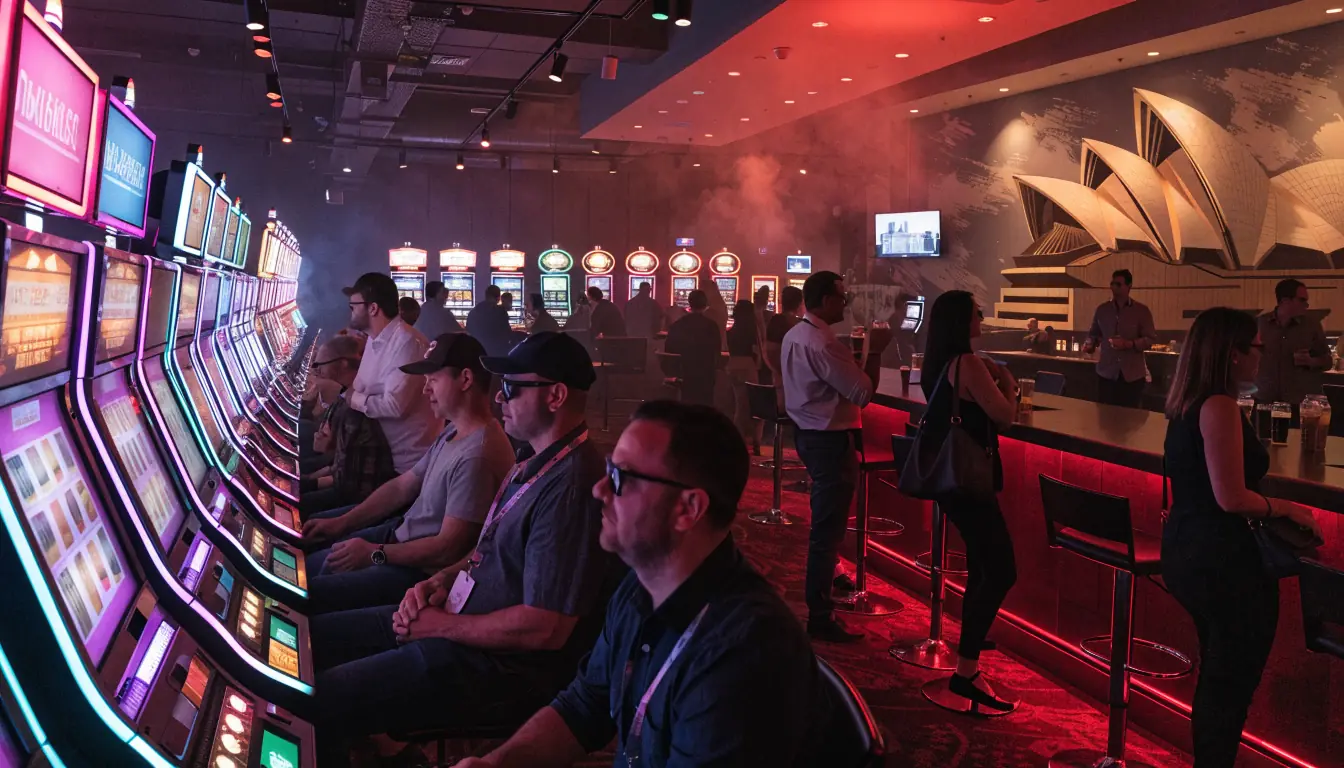
Understanding Pokies in Australia: Scope, Usage, and Impact
Search for "house of pokies casino Australia 2026" and you’ll find plenty of sites promising a straightforward answer about where to play. The honest answer is more complicated than a brand name. There is no domestically licensed real-money online casino operating under Australian law — not one called House of Pokies, not one called anything else. Before getting into why that matters, it’s worth understanding what pokies actually are in this country, how big the industry is, where the money goes, and why regulators watch it so closely.
What pokies are and where they operate
Pokies is the term Australians use for what much of the world calls poker machines or gaming machines — electronic gaming machines (EGMs) that accept cash or credit, run a randomised game, and pay out according to a fixed set of rules. The word “pokies” isn’t slang confined to casual conversation; it’s the term used in government reports, industry commentary and everyday speech alike, and it’s the one this article uses throughout.
Before you pick a casino to play at in 2026, it helps to see how the welcome offers, payout speeds and deposit terms actually compare across the market.
Bonus: up to A$7,500 + 550 free spins across 10 deposits, 50x wagering · Payout speed: crypto under 1 hour, PayID 1-3 business days · Min. deposit: A$20 (A$30 to qualify for the bonus) Offers a substantial bonus package spread across 10 deposits with 550 free spins, though the 50x wagering requirement is on the steeper side. Crypto withdrawals land in under an hour, while PayID takes a few business days.
License: Curacao Gaming Control Board OGL/2023/176/0095 (Hollycorn N.V.) · Bonus: up to A$11,000 + 300 free spins (code NEO100) Licensed under the Curacao Gaming Control Board via Hollycorn N.V., this operator backs it up with one of the larger bonus sums on the list plus 300 free spins via a bonus code.
Bonus: up to A$750 + 50 jackpot spins, 35x wagering · Payout speed: crypto ~90 minutes, fiat 1-5 days · Min. deposit: A$30 A more modest bonus paired with jackpot-themed free spins and a reasonable 35x wagering requirement. Fast crypto payouts around 90 minutes make it convenient for quick cashouts.
License: Curacao, operated by Dama N.V. · Bonus: 325% up to 5.25 BTC + 250 free spins across 4 deposits Operated by Dama N.V. under a Curacao licence, it stands out for a Bitcoin-denominated bonus percentage spread across four deposits along with 250 free spins.
License: Curacao Gaming Control Board · Bonus: up to A$5,000 + 400 free spins Holds a Curacao Gaming Control Board licence and pairs it with a solid welcome bonus of up to A$5,000 plus 400 free spins.
Bonus: 100% up to A$750 + 200 free spins, 35x wagering · Payout speed: crypto 30-120 minutes, fiat 24-72 hours · Min. deposit: A$30 A straightforward welcome bonus with 200 free spins and moderate 35x wagering. Payouts are quick, with crypto arriving within a couple of hours and fiat within a few days.
License: Curacao Gaming Control Board OGL/2023/176/0095 (Hollycorn N.V.) · Bonus: 100% up to A$10,000 + 100 free spins Licensed through the Curacao Gaming Control Board under Hollycorn N.V., offering one of the higher bonus ceilings on this list alongside 100 free spins.
License: Curacao – Antillephone N.V. (Versus Odds B.V.) · Bonus: up to EUR 2,000 across 5 deposits + 200 free spins · Min. deposit: EUR 20 Licensed via Antillephone N.V. under Versus Odds B.V., this operator spreads its bonus across five deposits with 200 free spins and a low minimum deposit.
License: Curacao · Bonus: 100% up to A$500 + 200 free spins, 10x wagering · Payout speed: crypto 30-60 minutes, fiat 1-5 days · Min. deposit: A$10 Curacao-licensed with a low wagering requirement of just 10x, plus fast crypto payouts and a low minimum deposit, making it accessible for smaller bankrolls.
License: Curacao OGL/2024/1335/0780 · Bonus: up to A$1,000 + 150 free spins, wager-free · Min. deposit: EUR 20 Licensed in Curacao, this operator’s standout feature is a wager-free bonus of up to A$1,000 with 150 free spins, removing the usual playthrough hurdle.
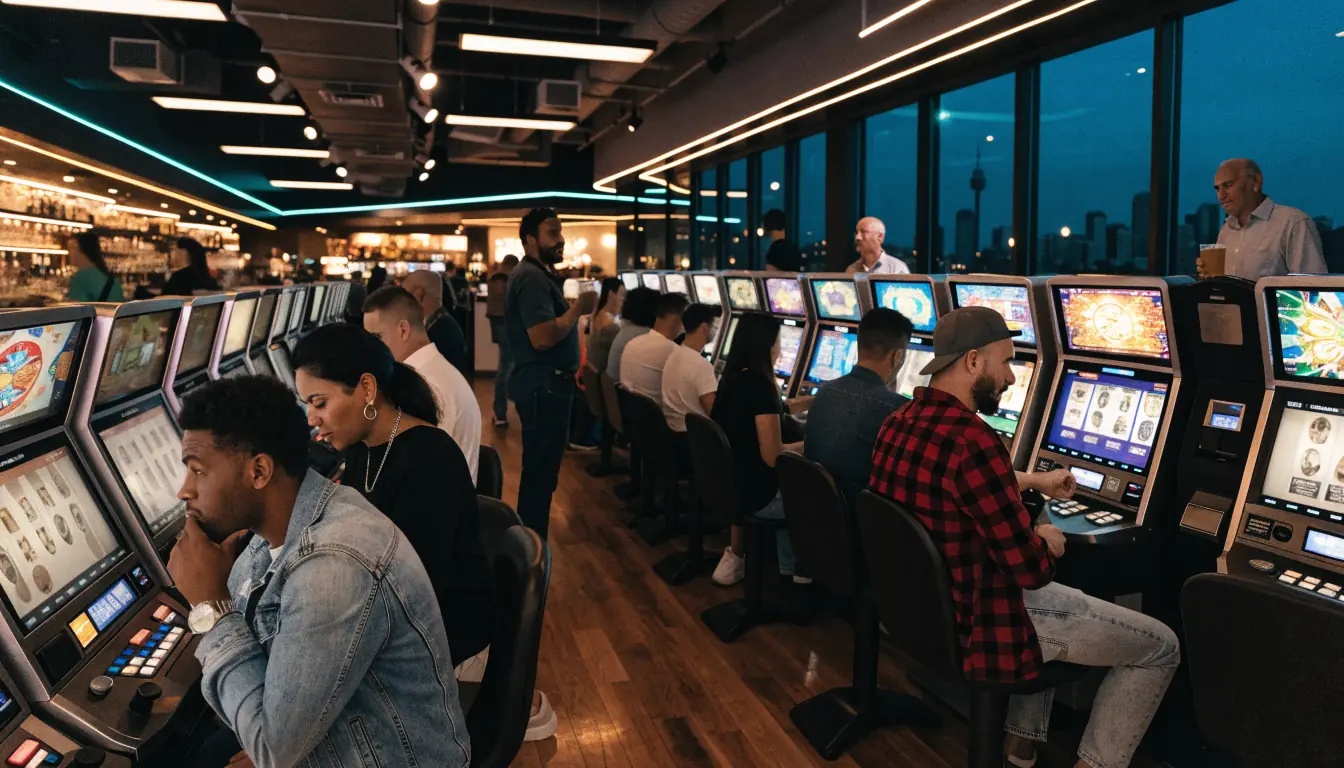
Electronic gaming machines are operated in all Australian states, plus the Australian Capital Territory and the Northern Territory. That’s a near-universal footprint: there is no state or territory where pokies are entirely absent. They sit in pubs, in suburban clubs, in RSLs, in licensed casinos — anywhere with a gaming licence and floor space. This ubiquity is part of what distinguishes the Australian relationship with pokies from many other markets, where machine gambling tends to be concentrated in dedicated casino venues rather than spread through everyday hospitality venues.
That distribution matters for anyone typing "house of pokies casino Australia" into a search bar expecting to find a single physical or digital venue. Pokies in the Australian context are not one place — they are a category of machine present in thousands of licensed premises across the country, regulated separately by each state and territory rather than by one national gambling authority.
The scale of the market
The numbers involved are large enough that they’re worth stating plainly rather than rounding into vague impressions.
In the 2020–2021 financial year, Australians placed bets worth almost AUD 150 billion on electronic gaming machines. That’s turnover — the total value of money wagered, not the amount actually lost, since most of what’s bet on a pokie is returned to players as they play, cycled through repeated bets before a session ends.
What was actually lost is a separate, smaller figure, though still substantial: total player losses from electronic gaming machines in FY 2020–2021 came to about AUD 12 billion. Spread across the population, that works out to per-capita losses of AUD 608 for that financial year — meaning that, on average, every Australian, gambler or not, lost the equivalent of that amount to pokies alone in twelve months.
A more recent figure comes from a single industry source: according to complyadvantage.com, pokies generated AUD 191.2 billion in gambling turnover in 2023. That’s a different year and, going by the wording, likely a different measure than the FY 2020–2021 betting total, so the two numbers shouldn’t be read as a simple before-and-after comparison. It’s included here as a data point from that source, not as a confirmed market-wide benchmark.
Australia’s share of the world’s poker machines is one of the more contested figures in this space. One account puts Australia’s share of the world’s pub and club poker machines at 3%. Another puts the figure at closer to 18% of the world’s poker machines. These are materially different claims, and the sources don’t agree on which is correct — worth flagging plainly rather than picking one silently, since the gap between "3%" and "18%" changes the entire impression of how concentrated pokies ownership is in Australia relative to the rest of the world.
Why pokies attract money laundering
Pokies deal in cash, in volume, with limited built-in traceability — and that combination is precisely what makes them useful to people trying to launder money rather than just gamble.
Money Laundering Risk
Using pokies to launder money can result in criminal prosecution and heavy fines for operators and participants.
The mechanics are fairly simple once laid out. Criminals insert large sums of cash into EGMs, engage in minimal actual gambling activity, and then cash out — creating what looks, on paper, like a winning session rather than what it actually is: cash conversion. In some cases, offenders go further and buy winning tickets directly from other players, handing over "dirty" cash in exchange for a ticket that can be redeemed as clean, traceable gambling winnings.
There’s also a more distributed version of the same idea, known as structuring across venues: rather than moving one large sum through a single machine or venue — which would draw attention — smaller amounts are spread across multiple venues, each individually beneath the thresholds that trigger mandatory reporting.
According to complyadvantage.com, money mules — people recruited specifically to move illicit funds through legitimate-looking channels — are recruited to launder money through pokies. This is one source’s characterisation of a laundering technique rather than an established feature of every pokies venue, but it illustrates how organised the misuse of gaming machines can become when it isn’t just an opportunistic individual acting alone.
None of this means every, or even most, pokies transactions are suspect. It means the format — high cash volume, limited identity checks at the machine level, frequent payouts — creates conditions that regulators have to actively monitor rather than assume away.
Red flags regulators and operators watch for
AUSTRAC, Australia’s financial intelligence and anti-money-laundering regulator, issued a guide in 2024 specifically to help gambling operators recognise the signs of money laundering through gaming machines. The red-flag indicators it outlines aren’t abstract — they describe observable patterns at the machine or venue level:
- Unusually high cash access — a customer handling far more cash than would be typical for recreational play.
- Large deposits inserted into a machine relative to the actual gambling activity that follows.
- Cash transfers between individuals in or around the gaming floor.
- Casino disbursement checks — irregularities flagged during payout verification.
- Certain occupations that AUSTRAC associates with elevated laundering risk.
Beyond AUSTRAC’s formal list, several behavioural patterns are consistently cited as warning signs across the sector:
- Large or repeated cash insertions followed by minimal play and an almost immediate cash-out — the clearest signature of using a machine as a conversion tool rather than a game.
- Frequent small redemptions spread across different venues within a short window of time — the practical expression of structuring.
- Customers who refuse to provide identification, or who use multiple player cards, rather than a single account tied to one identity.
These indicators exist because pokies, unlike a bank transfer, don’t automatically generate a clean audit trail unless the machine or venue is set up to capture one.
How operators are regulated under AML/CFT rules
Australia’s anti-money-laundering and counter-terrorism financing regime — AML/CFT, in the abbreviation regulators and compliance teams use — applies to pokies operators on a scale that depends on how many machines a venue runs.
Smaller operators, those running up to 15 pokies, carry a lighter but still meaningful set of obligations. They must:
- Register with AUSTRAC.
- Keep identification records for relevant transactions.
- Submit suspicious matter reports when a transaction pattern looks like the red flags described above.
Larger operators, running more than 15 machines, face a considerably more demanding compliance framework. They’re required to:
- Appoint a dedicated compliance officer.
- Conduct formal risk assessments of their operations.
- Implement a full AML/CFT program rather than ad hoc checks.
- Perform customer due diligence — verifying who they’re dealing with, not just processing transactions anonymously.
- Report any cash transaction over AUD 10,000 to AUSTRAC.
The distinction matters because it means the compliance burden scales with exposure: a small pub with a handful of machines isn’t held to the same standard as a large club or casino floor with dozens, but neither is entirely outside AUSTRAC’s reach.
Non-compliance carries real consequences. Operators who fail to meet these obligations may face remedial directions requiring specific fixes, infringement notices, civil fines, and the reputational damage that follows public enforcement action — a cost that, for a licensed venue depending on its standing with regulators and its community, can outlast any fine.
State-level responses: NSW as a case study
New South Wales has been the most active state on pokies reform, largely because it’s home to a significant share of the country’s machines and has faced its own scrutiny over gaming-related money laundering.
The 2022 NSW Islington Report — a single, specific inquiry rather than a settled national policy — recommended making all NSW pokies cashless by the end of 2028. This is a recommendation, not yet a universal legal requirement across the state, and it should be read as a policy direction under consideration rather than a fact already in force. Whether or how it’s implemented by that date is a separate question from the report’s existence.
NSW can fine casino operators up to AUD 100 million for AML compliance failures.
Separately, and more concretely, an amendment to the Casino Control Act 1992 allows NSW casino operators to be fined up to AUD 100 million for compliance failures — a figure that signals how seriously the state treats large-scale non-compliance at the casino level, as distinct from the smaller pub and club venues governed by the AUSTRAC thresholds above.
The push toward cashless, account-based pokies
A recurring theme across regulatory guidance and industry commentary is the shift toward cashless, account-based pokies as a structural fix rather than relying purely on staff vigilance or after-the-fact reporting.
According to facctum.com, adoption of cashless, account-based pokies improves traceability and reduces anonymity — a claim worth attributing to that source specifically, since it comes from a single provider’s perspective on the technology rather than a universally agreed regulatory conclusion. The underlying logic is straightforward enough on its own merits, though: a machine that requires an account, rather than accepting anonymous cash, leaves a different kind of trail.
Transparent, account-based pokies provide full traceability of deposits, gameplay, and withdrawals — every stage of the transaction is tied to an identified account rather than existing as a series of anonymous cash movements. That’s a meaningfully different proposition from a coin- or note-fed machine where the money’s origin and the player’s identity are never formally connected.
Cashless, account‑based pokies improve traceability and reduce anonymity, helping operators meet AML obligations.
Regulators have been explicit about the direction they’d like the industry to move: tighter customer due diligence, more active transaction monitoring, and broader adoption of cashless gaming systems. None of this amounts to a claim that cashless pokies are mandatory nationwide today — the NSW Islington Report recommendation illustrates that even in the most active state, this remains a target rather than an accomplished fact — but it does describe the trajectory regulators are pushing toward.
Why this history matters for anyone searching for "House of Pokies" online
None of the above is a detour from the topic of finding somewhere to play pokies online — it’s the context that explains why no legitimate answer to that search can point to a licensed Australian online casino, whatever name is attached to it.
The Interactive Gambling Act 2001 is the Commonwealth law governing online gambling in Australia, introduced with a focus on harm minimisation. Under it, online casino-style games — slots, poker, blackjack, roulette, and by extension pokies offered through a web-based casino — are prohibited for operators serving Australian residents. There is no licence, state or federal, that authorises a real-money online casino to operate domestically. There are no domestically licensed real-money online casino operators available to Australian players, full stop. That’s true regardless of how polished a site’s branding is or how convincingly it uses the word "pokies" to sound local.
It’s worth being precise about who the law targets. It is not illegal for an individual Australian to play at an offshore-licensed online casino — the Interactive Gambling Act 2001 targets operators, not players. But that’s a narrow legal point, not a recommendation, and it doesn’t change the fact that no such operator can be domestically licensed, regulated, or held to the AML/CFT standards described above. A physical pokies venue in a licensed pub or club sits inside the entire regulatory apparatus this section has described — AUSTRAC registration, compliance officers, suspicious matter reporting, state-level oversight. An offshore website using Australian gambling slang to attract local traffic sits outside all of it. There is no public register of licensed operators in Australia to check a brand against, which means the usual advice to "verify the licence" doesn’t apply here in the way it might elsewhere — there’s no local licence category for this kind of product to hold in the first place.
Sports betting and lotteries are a different story: both are lawfully licensed at the state and territory level, and wagering on sport or racing online is a legal, regulated activity in Australia. Pokies delivered through an online casino format are not in that category, no matter what the marketing around a particular brand suggests.
Offering real‑money online pokies to Australian residents breaches the Interactive Gambling Act 2001 and can lead to enforcement action.
Who plays, and why the regulatory focus keeps sharpening
Part of why AUSTRAC, state regulators and researchers such as the Australian Institute of Criminology keep returning to pokies specifically — rather than gambling in general — comes down to how deeply embedded the machines are in ordinary social life. A poker machine in the corner of a suburban club doesn’t carry the same visible signals of risk as a casino table game; it’s positioned as incidental entertainment, which is part of what makes the scale of losses — AUD 12 billion in a single financial year — surprising when it’s stated outright rather than absorbed gradually, one session at a time.
The minimum legal gambling age in Australia is 18, a line the industry and regulators treat as non-negotiable given how early gambling participation seems to start. Reported rates of underage and just-legal participation — close to a third of 12-to-17-year-olds and nearly half of 18-year-olds gambling in some form — are part of why responsible-gambling messaging, age verification and restrictions on where and how gambling can be advertised remain a live regulatory concern rather than a settled matter.
For anyone whose starting point was a search for a named online pokies brand, the more useful takeaway from this scope-and-impact picture is this: the regulatory scrutiny applied to physical pokies in Australia — AUSTRAC registration, compliance officers, reporting thresholds, state-level fines running into the tens of millions — exists precisely because the machines handle enormous cash volumes with historically limited traceability. That same scrutiny has no equivalent for offshore online casinos marketing pokies-style games to Australian residents, because those operators sit outside the domestic licensing system altogether. The next section looks specifically at what that means for deposits, bonus offers and promotional codes tied to pokies in Australia — and where the legal line actually falls.

Deposits, Bonuses, and Promo Codes for Australian Pokies: What You Need to Know
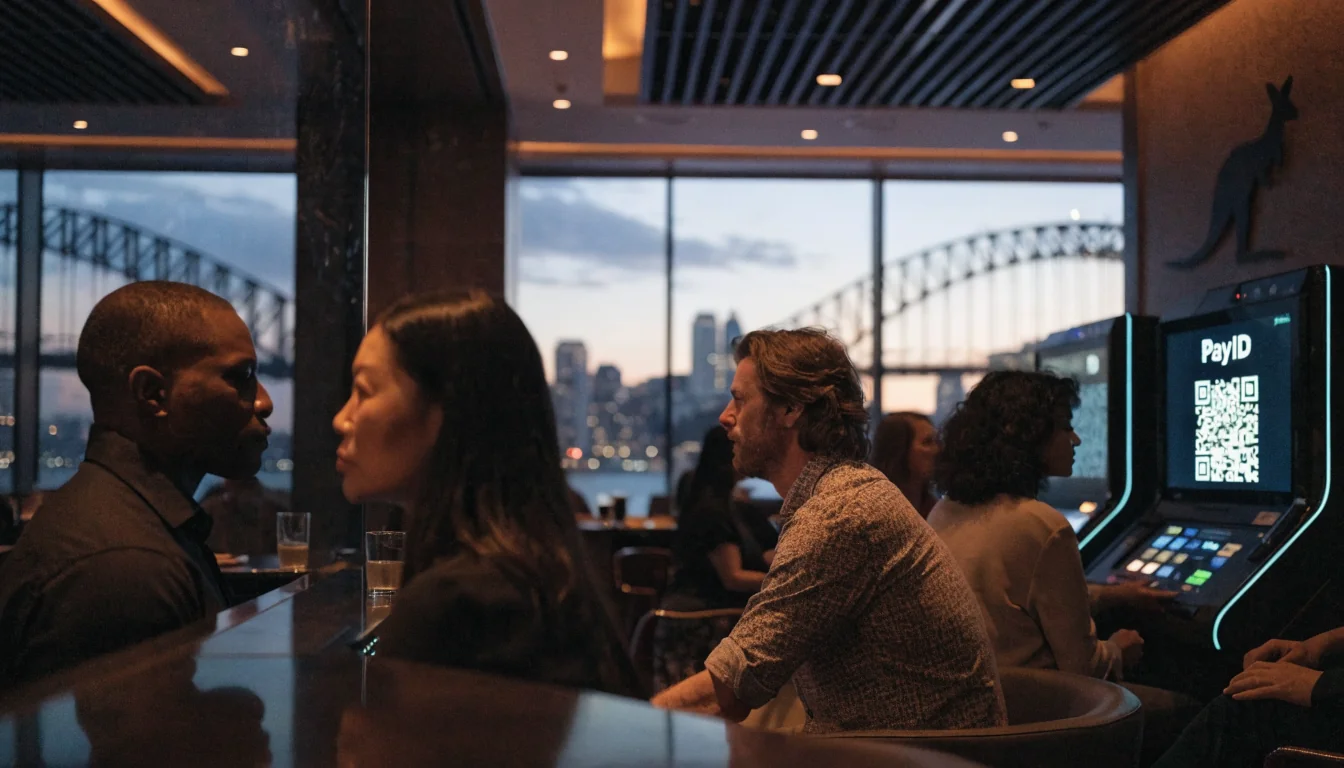
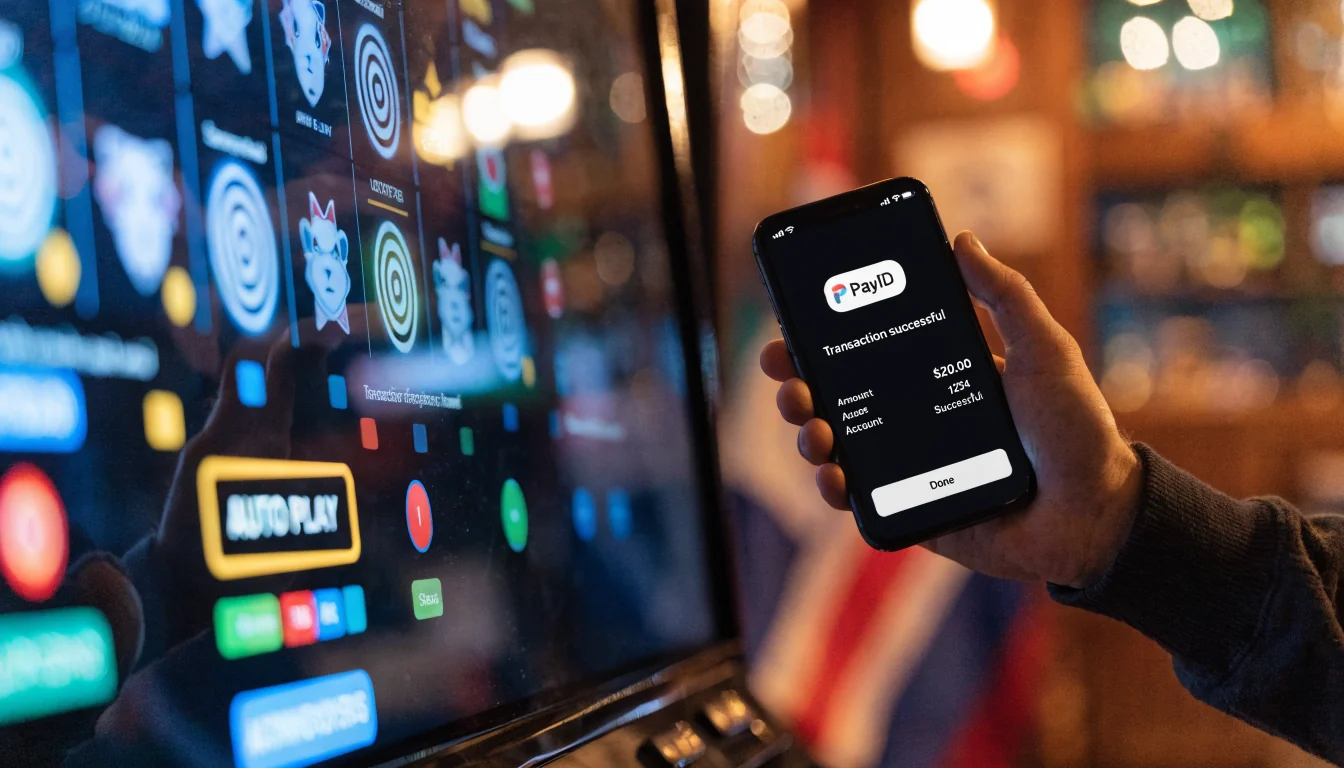
Searches for a house of pokies no deposit bonus code, a matching signup offer, or a free chip promotion all lead back to the same legal wall: the Interactive Gambling Act 2001 makes it an offence for an online operator to offer real-money gambling — pokies included — to anyone residing in Australia. That prohibition sits with the operator, not the player, but it also means there is no lawful domestic channel through which a bonus code, deposit match, or no-deposit chip for online pokies could be issued to an Australian resident in the first place. Any site advertising such a code is operating outside the framework this market recognises, regardless of what the promotion promises.
This is a separate question from tax. If a pokies win somehow reaches an Australian player, the amount is not taxed — winnings from gambling are treated as the outcome of a private activity, not income, under Australian tax law. That treatment applies to the outcome of play; it says nothing about the legality of the platform that generated it, and the two shouldn’t be conflated when weighing whether a bonus offer is worth pursuing.
Penalties in this space fall on operators, not on the promotional mechanics themselves. As one example of how seriously compliance failures are taken, an amendment to the Casino Control Act 1992 allows New South Wales to fine casino operators up to AUD 100 million for breaches. That figure applies to a licensed land-based casino context, not to an offshore online operator issuing bonus codes — but it signals the scale of consequence regulators are prepared to impose when gambling businesses fail to meet their obligations.
For deposits generally, the same rules that govern gambling advertising and consumer protection apply: bonus terms and wagering conditions must be disclosed clearly before anyone accepts them, and identity verification is a precondition of any withdrawal. A promo code that skips either step isn’t a shortcut — it’s a sign the operator behind it isn’t built for this market.
Prepared by the Casino Jackpots Guide editorial staff.