
Best Casino in Western Australia: Guide for 2026

Table of Contents
- Casino Development, Licensing and Regulatory Framework
- Casino Hotels in Western Australia
- Nearby Accommodation Options for Casino Visitors
- Poker Rooms and Tournament Facilities
- Bars, Entertainment and Contact Services
- Dining Buffets, Employment Opportunities and Rewards Programs
- Restaurant Choices Within Western Australian Casinos
- Spa Services, Dress Code and Additional Amenities
- Parking, Transport and On‑Site Accessibility
- Food Courts and Pool Facilities
Casino Development, Licensing and Regulatory Framework
Anyone researching a physical casino development in Western Australia in 2026 runs into a regulatory picture that looks nothing like the one governing online play. There is no single overarching statute or single overarching gambling authority regulating gambling in Australia. Regulation is split between state and territory bodies, which license and oversee land-based venues, and federal law, which deals with a separate and much narrower question: interactive gambling.
That split matters because it explains why a licensed, physical casino floor can operate legally while an online casino cannot. Land-based gaming — the tables, the pokies, the licensed premises themselves — falls under state and territory jurisdiction. Western Australia’s regulatory apparatus sits alongside similar bodies in other states, each responsible for approving venues, vetting operators, and setting the conditions under which a physical casino is allowed to open, expand, or reopen after a closure.
Where federal law draws the line
Federal involvement starts where the internet does. The Interactive Gambling Act 2001 is enforced by the Australian Communications and Media Authority (ACMA), and it prohibits online casino games, online poker, and in-play betting at the federal level. This is not a licensing regime with conditions to meet — it’s a prohibition. No amount of paperwork turns an online casino offer into a legal one for Australian residents, regardless of how the operator is licensed elsewhere.
The one federal-adjacent body worth naming here is the Northern Territory Racing Commission (NTRC), which functions as Australia’s de-facto online gambling regulator in a specific sense: it licenses most of the national online bookmakers who operate under the Territory’s lower tax regime. That role covers sports and racing wagering, not online casino games — the same activity that remains prohibited under interactive gambling law regardless of who issues a bookmaker’s licence.
Why this matters for anyone tracking a WA casino
None of this changes the basic separation a reader should keep in mind:
- Physical casino floors — licensed and regulated at the state and territory level, covering the venue’s gaming operations, staffing, and compliance.
- Online casino games (slots, poker, blackjack, roulette-style products) — prohibited federally, with ACMA as the enforcing body, and no domestic licence available to offer them.
- Online sports and racing betting — a different category again, legal under state and territory bookmaker licences, with the NTRC as the dominant licensing body nationally.
When you see references to a Western Australian casino’s development plans, staffing announcements, or a reopening after renovation, that activity sits entirely within the first category — state-regulated, physical-venue oversight. It has no bearing on whether an online version of the same games could legally be offered to residents; it couldn’t, and no state licence changes that. Keeping these two regulatory tracks separate is the only way to make sense of why a casino resort can expand its gaming floor one year while online casino products remain off-limits regardless of who’s asking to provide them.
Casino Hotels in Western Australia
Since Western Australia doesn’t offer many licensed local casino options, you’ll likely be looking at offshore operators, so it pays to check what each one actually offers before you sign up.
Bonus: up to A$7,500 + 550 free spins across 10 deposits, 50x wagering · Payout speed: crypto under 1 hour, PayID 1-3 business days · Min. deposit: A$20 (A$30 to qualify for the bonus) You get a sizeable multi-deposit bonus package with 550 free spins, and payouts land fast via crypto or within a few business days through PayID.
License: Curacao Gaming Control Board OGL/2023/176/0095 (Hollycorn N.V.) · Bonus: up to A$11,000 + 300 free spins (code NEO100) Licensed under the Curacao Gaming Control Board, this operator backs a large welcome bonus with 300 free spins via a bonus code.
Bonus: up to A$750 + 50 jackpot spins, 35x wagering · Payout speed: crypto ~90 minutes, fiat 1-5 days · Min. deposit: A$30 A jackpot-spin bonus with moderate wagering requirements is paired with quick crypto withdrawals and a low entry deposit.
License: Curacao, operated by Dama N.V. · Bonus: 325% up to 5.25 BTC + 250 free spins across 4 deposits Operated by Dama N.V. under a Curacao license, it stands out for a crypto-friendly bonus spread across four deposits.
License: Curacao Gaming Control Board · Bonus: up to A$5,000 + 400 free spins Licensed by the Curacao Gaming Control Board, you’ll find a generous welcome package with a large number of free spins.
Bonus: 100% up to A$750 + 200 free spins, 35x wagering · Payout speed: crypto 30-120 minutes, fiat 24-72 hours · Min. deposit: A$30 This operator offers a straightforward welcome bonus with fast crypto payouts and reasonable fiat withdrawal times, plus an accessible minimum deposit.
License: Curacao Gaming Control Board OGL/2023/176/0095 (Hollycorn N.V.) · Bonus: 100% up to A$10,000 + 100 free spins Holding the same Curacao license type as other Hollycorn N.V. brands, it offers one of the larger welcome bonuses on this list.
License: Curacao – Antillephone N.V. (Versus Odds B.V.) · Bonus: up to EUR 2,000 across 5 deposits + 200 free spins · Min. deposit: EUR 20 Licensed via Curacao through Versus Odds B.V., you can spread a substantial bonus across several deposits with a low minimum deposit requirement.
License: Curacao · Bonus: 100% up to A$500 + 200 free spins, 10x wagering · Payout speed: crypto 30-60 minutes, fiat 1-5 days · Min. deposit: A$10 Curacao-licensed with notably low wagering requirements on its welcome bonus, plus fast crypto payouts and a very low minimum deposit.
License: Curacao OGL/2024/1335/0780 · Bonus: up to A$1,000 + 150 free spins, wager-free · Min. deposit: EUR 20 Licensed in Curacao, this operator offers a wager-free bonus structure, which is a rare perk worth noting.
Crown Perth is the state’s only integrated casino resort, and its hotel towers are built around a different logic than a standalone hotel down the road. Rooms are priced and positioned to keep you inside the complex — close to the gaming floor, the restaurants, the entertainment venues — rather than to compete on rate alone with hotels that have no gaming licence attached to them. That distinction matters more than it sounds: an on-site casino hotel is designed as one piece of a larger commercial operation, where the room itself may be a smaller part of the revenue picture than what happens once you’re downstairs.
Crown Perth operates multiple towers under one roof, each aimed at a slightly different guest. There’s a tower built for guests who want quick lift access to the casino floor at any hour, a tower marketed on higher-end finishes and views over the Swan River, and a serviced-apartment style tower for longer stays or guests travelling as a group. None of this variety exists by accident — it reflects the fact that a casino resort’s accommodation has to serve everyone from a same-night gambler booking a room after arriving in Perth to a family attending a conference or a show who never sets foot on the gaming floor.
Age restriction
All guests must be 18 years or older to access the gaming floor and any casino‑linked amenities; staff will check ID at entry.
What actually differs from an independent hotel
The practical differences between a casino hotel and a nearby independent property come down to a handful of things:
- Access to the gaming floor. Casino hotel guests typically have direct internal access to the gaming areas, without needing to go outside or through a public street entrance. Independent hotels nearby don’t offer this — you’re walking or driving over.
- Bundled packages. Casino resorts often package room rates with dining credits, show tickets or loyalty-program perks tied to the same complex, which independent hotels have no reason to offer since they’re not connected to the gaming or entertainment operation.
- House rules on age and access. Anyone booking a casino hotel room should keep in mind that access to the casino floor and any casino-linked offers is restricted to guests aged 18 and over — a rule tied to the room, not just the tables, since hotel keycards can double as floor access in an integrated resort.
- Noise, layout and traffic. A casino hotel sits above or beside a 24-hour gaming and entertainment floor. That can mean more foot traffic, later noise near lifts and lobbies, and a design oriented around moving people between rooms and gaming areas — something a quiet independent hotel a few streets away simply won’t replicate.
Booking patterns worth knowing
Perth’s casino hotel rooms tend to see demand spikes around major events hosted at Crown — concerts, boxing cards, poker series — and rates move accordingly. Given that Australians collectively placed $244.3 billion in bets in 2022–23, and that close to three-quarters of adults gambled in some form over a twelve-month period, it’s not surprising that a state’s flagship casino resort operates as a genuine tourism draw in its own right, not just a gaming venue with rooms attached. Gambling activity also isn’t a marginal contributor to state finances — it made up 7.7% of state and territory tax revenue in 2015–16 — which is part of why jurisdictions like Western Australia continue to support large integrated resorts rather than standalone gaming halls.
Choosing between towers
If the goal is convenience — walking downstairs to a table or a show without stepping outside — the casino hotel towers do what independent hotels can’t. If the goal is a quieter stay at a lower price with the casino still a short trip away, that’s a different calculation, covered separately when it comes to nearby lodging. Within Crown Perth itself, the decision usually comes down to three things: how close you want to be to the gaming floor, whether you value river views and higher-end finishes over a straightforward functional room, and whether you’re staying a night or two versus long enough that apartment-style accommodation makes more sense.
None of the towers publish a separate "casino guest" rate distinct from their standard room rates — pricing is dynamic and tied to demand, event calendars and room type rather than a fixed casino-hotel premium. Anyone comparing options should treat the headline room rate as a starting point, not the full picture, since add-ons like resort fees, parking and package inclusions vary by tower and by season.
Nearby Accommodation Options for Casino Visitors
Not every casino visitor wants to stay inside the resort itself, and Western Australia’s gaming venues sit close enough to other lodging that skipping the on-site hotel is a genuine option, not a compromise. The choice usually comes down to what matters more: the convenience of walking straight from your room to the gaming floor, or a lower nightly rate a short drive or rideshare away.

What sits outside the resort gates
Independent hotels near casino precincts range from budget motels to serviced apartments, and short-term rental listings have expanded the range further, particularly for visitors staying several nights or travelling as a group. These properties don’t carry the casino’s branding or its loyalty perks, but they typically undercut on-site rack rates, especially outside peak weekends when resort pricing climbs.
Serviced apartments are worth singling out. They suit anyone staying more than a night or two, since they come with a kitchen and laundry facilities that hotel rooms — on-site or off — generally don’t offer. For a family or a group splitting the cost of a larger unit, this can work out considerably cheaper per person than booking multiple casino hotel rooms.
Trade-offs to weigh
The main cost of staying off-site is time and transport. A casino hotel puts you inside the building; anywhere else means a taxi, rideshare, or drive, plus whatever parking arrangement that property offers, which is rarely as straightforward as walking down from an upstairs room. Late finishes at the tables or a bar are the moments this gap is felt most — it’s a different experience getting back to your room via a lift compared with waiting on a rideshare at 2am.
Against that, off-site guests gain neutrality. There’s no ambient noise from a gaming floor drifting into a corridor, no proximity to poker machines on the way to breakfast, and no design cues nudging you back toward the tables. For anyone visiting Western Australia for reasons beyond the casino — a conference, a family trip, sightseeing — a hotel a few kilometres away can feel like a more ordinary stay.
Price range in practice
Independent accommodation near casino precincts spans a wider price band than the resort’s own rooms, from basic motel-style stays through to higher-end apartments and boutique hotels. That spread gives budget-conscious travellers more room to move than a single on-site rate card typically allows, though it also means more homework: comparing amenities, cancellation terms and actual distance to the venue rather than assuming "nearby" means walking distance.

It’s worth remembering that gambling activity underpins a meaningful share of state revenue — gambling contributed 7.7% of state and territory taxation revenue as recently as 2015–16 — which is part of why casino resorts and the accommodation economy around them have grown in parallel rather than in competition. The money passing through poker machines and tables doesn’t stay confined to the gaming floor; it shapes the hospitality options built up around it, on-site and off.
For visitors weighing cost against convenience, the practical approach is straightforward: if the casino is the whole point of the trip, the walk from an on-site room has real value. If it’s one stop among several, a nearby independent property or short-term rental usually does the job for less, without asking you to trade a kitchen and a quieter corridor for a shorter walk to the gaming floor.
Poker Rooms and Tournament Facilities
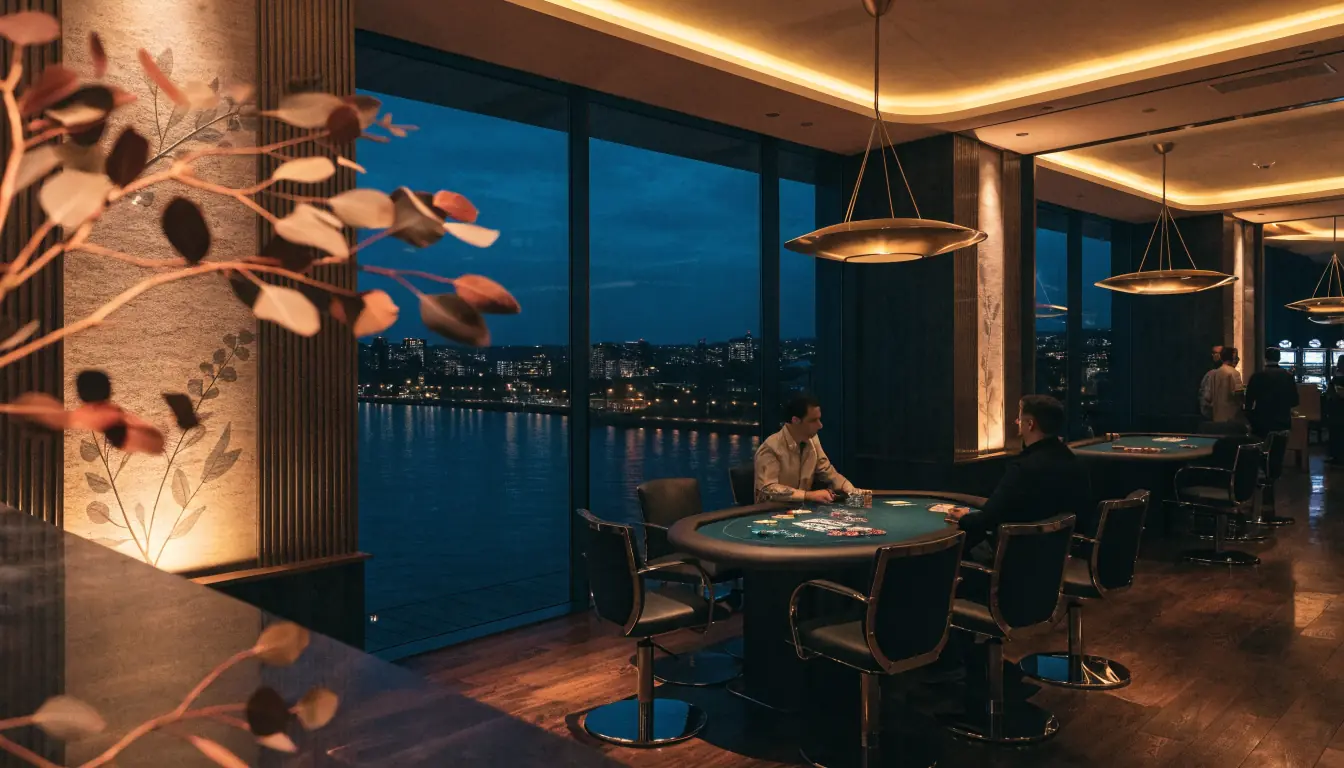
A dedicated poker room looks nothing like the rest of a Western Australian casino floor. There’s no ambient noise from pokies, no flashing reels competing for attention — just felt tables, dealers running the game, and players competing against each other rather than against the house. That distinction matters: in poker, the casino takes a cut of the pot or charges table fees, but it isn’t the opponent. For anyone used to the pace of gaming machines, the shift to a poker room can feel slower and more deliberate, which is precisely the point for regulars who treat it as a separate discipline rather than an extension of the gaming floor.
Physically, these rooms are usually set apart from the main floor, sometimes behind their own entrance or on a separate level, so tournament play isn’t disrupted by foot traffic or noise. Tables are fitted with standard equipment — felt layouts, chip trays, and card shufflers in most rooms — and dealers rotate through set periods rather than staying at one table all night.
Tournament schedules and formats
Tournament calendars typically run in cycles, with recurring weekly events supplemented by larger buy-in tournaments on a monthly or seasonal basis. Formats generally include:
- Texas Hold’em — the most commonly spread tournament format, run in both freezeout and rebuy structures.
- Omaha — offered less frequently, usually as a rotating or special-event format rather than a daily fixture.
- Cash games — ongoing tables running alongside the tournament schedule, with stakes typically posted at the entrance to the poker room.
Buy-in levels and prize pools vary by event and aren’t fixed figures worth quoting here, since they change with attendance and promotional cycles. Anyone planning a visit around a specific tournament should check the room’s current schedule directly rather than relying on a fixed weekly pattern, since major events can shift the regular calendar.
Why the equipment and staffing matter
The quality of a poker room often comes down to details that aren’t obvious until you’ve sat at a few tables: how quickly dealers push pots, how tournament clocks are managed, and whether there’s a dedicated tournament director on the floor to handle disputes. Rooms that run frequent tournaments tend to invest more in this infrastructure — proper card shufflers, monitors displaying blind levels and chip counts, and staff trained specifically for tournament pacing rather than pit-style pokies management.
Poker within the broader gambling picture
Poker sits differently in the national gambling landscape than pokies or table games in terms of how often people play it. With over a third of Australian adults gambling at least weekly, poker rooms capture a smaller, more dedicated slice of that activity — it’s a game that rewards repeat play and skill development rather than casual, one-off visits. That’s part of why poker rooms are structured so differently from the surrounding gaming floor: they’re built around a player base that returns regularly, tracks results over time, and treats tournaments as scheduled events rather than spontaneous entertainment.
It’s worth keeping the broader cost of gambling in view here too. National losses reached $31.5 billion in 2022–23, and per-capita betting figures for 2020–21 put average losses at $1,200 against total bets of $9,885 per person. Poker doesn’t carry the same house-edge dynamics as pokies or many table games — money moves between players, with the casino earning through rake or entry fees rather than a built-in statistical edge — but tournament buy-ins and cash game losses still add up, and treating a poker session as entertainment with a fixed budget in mind holds just as true here as anywhere else on the floor.

Practical notes for visiting a poker room
Dress codes and age verification apply the same way they do elsewhere in the casino — anyone at the table needs to be 18 or over, with ID checked at registration for tournaments. Seating for cash games is usually managed through a waitlist system at busy periods, particularly on weekend evenings when tournament traffic overlaps with regular play. Checking ahead for the day’s schedule is the simplest way to avoid arriving mid-tournament with no seats available, since poker rooms don’t run on the same continuous, walk-in basis as the pokies floor.
Bars, Entertainment and Contact Services
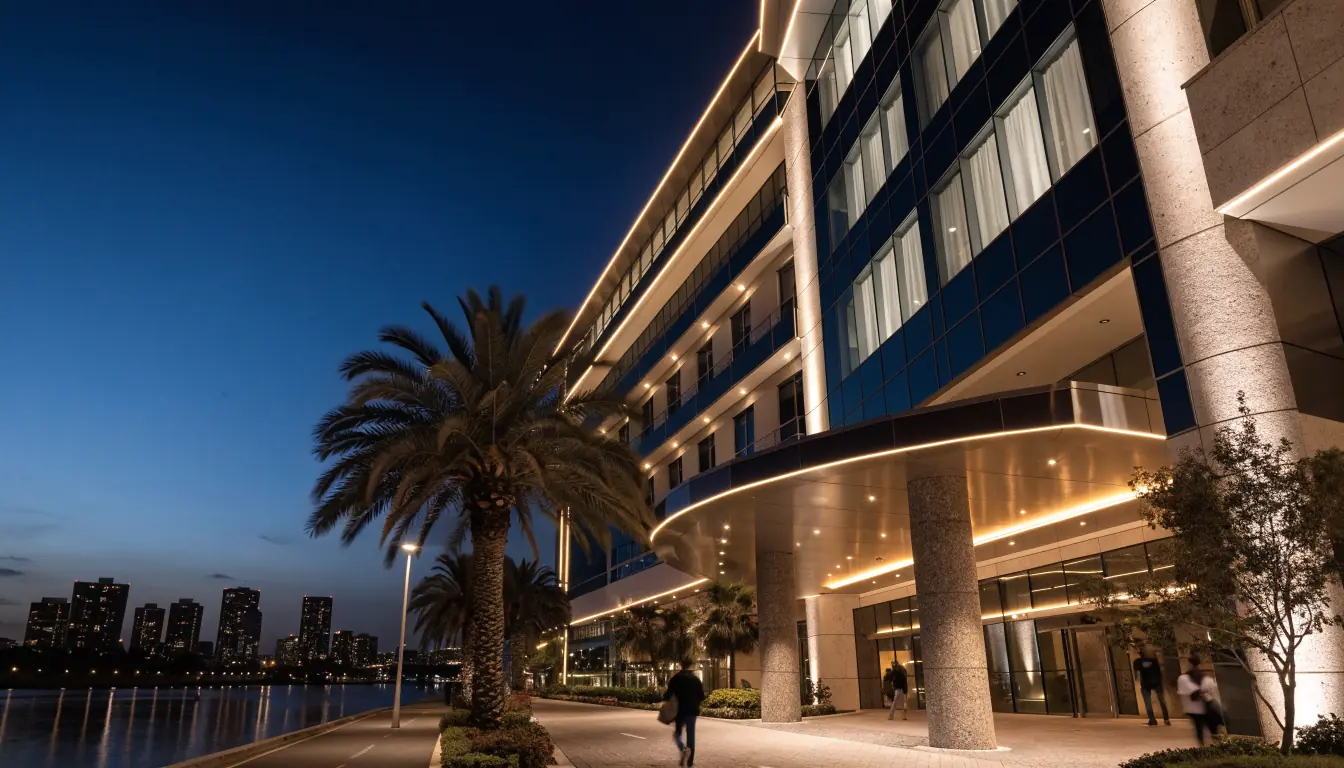
A casino floor is rarely just tables and pokies. Bars sit at the edges of the gaming areas, staffed to keep drinks moving without pulling anyone away from a hand of baccarat or a run at the craps table for long. Some bars lean toward quiet lounges with table service; others are built around a central island where staff can serve several games at once. None of this is complicated, but it’s worth knowing before you arrive if you’re planning an evening around a specific table rather than a specific drink.
Entertainment extends beyond the bar counter. Larger venues schedule live music and touring acts in adjoining function spaces, separate from the gaming floor itself — think a Friday night band booking rather than background piano near the slots. These events usually run on their own calendar, distinct from the casino’s daily trading hours, so checking what’s on before you travel saves a wasted trip if you’re after a specific show rather than a table game.
Getting Answers Before You Go
If you need something confirmed — opening hours, whether a particular game is running that night, how to get to the property — the venue’s own contact channels are the direct route. Most Western Australian casinos publish a general enquiries phone number alongside an on-site concierge or information desk, and the concierge is generally the better option for anything specific to your visit: table availability, entertainment bookings, or directions once you’re already on the grounds. Phone lines tend to be better suited to quick, factual questions asked ahead of time.
None of this contact information substitutes for verifying a casino’s licensing yourself, which is a separate matter covered elsewhere. What the front desk and phone line can do is confirm practical details — hours, bar service, whether a concert is sold out — not settle questions about how a venue is regulated.
What Casino Jackpots Guide Actually Checks
Bars and entertainment schedules aren’t part of how Casino Jackpots Guide ranks a casino, and it’s worth being upfront about that. The weekly ranking formula weights bonus generosity at 30%, payout reliability at 25%, game library breadth at 20%, customer support responsiveness at 15%, and user-submitted feedback at 10%. Every listing is separately scored on bonus transparency, cashout speed, customer care, and licensing integrity.
That customer care score is the closest overlap with what’s described here — it reflects how quickly and clearly a casino’s support channels answer a real query, not how good the in-house band was on a Saturday night. If you win at a table game, that money isn’t taxed in Australia, but how fast an operator’s staff or support line respond when you have a question about your account is a different, measurable thing, and it’s the one that factors into the ranking rather than the venue’s bar list.
If you’re calling ahead about a casino’s amenities — a table game, a scheduled performance, general opening times — the property’s own concierge or listed contact number remains the more reliable source than a search result, simply because schedules and offerings change more often than a review can track.
Dining Buffets, Employment Opportunities and Rewards Programs
A casino resort in Western Australia isn’t just a gaming floor — it’s a small local economy, with a buffet hall, a staff roster running into the hundreds, and a loyalty scheme that tries to keep the same faces coming back. These three things sit apart from the a-la-carte restaurants covered elsewhere: the buffet operates on volume and rotation rather than a fixed menu, the jobs board reflects an operation that runs around the clock, and the rewards program is a points system layered over everything else on-site.
The buffet
Buffet service at a casino resort typically covers breakfast through to dinner, with breakfast being the session most visitors ask about first — it’s usually the cheapest way to eat on-site before a day of gaming or checking out, and it’s open to hotel guests and walk-ins alike. Expect the usual buffet trade-off: broad variety over refined execution. Stations rotate through hot breakfast staples, a carvery in the evening, and a dessert section that does more work than it should to justify the price. None of this competes with the sit-down restaurants on the same floor — it’s a different meal for a different mood, and a different price point.
Employment at the resort
Casino resorts are among the larger private employers in their region, and the job listings reflect that scale. Positions typically split across a few broad categories:
- Gaming floor roles — dealers, pit supervisors, surveillance staff
- Hospitality — buffet and restaurant service, kitchen staff, bar staff
- Hotel operations — front desk, housekeeping, concierge
- Back of house — cage and cash operations, security, maintenance
Dealer roles generally require in-house training and licensing checks specific to gaming staff, which is a separate process from general hospitality hiring. Turnover in food service and front-desk positions tends to be higher than in gaming roles, which is reflected in how often those listings reappear. Anyone applying should expect standard background and identity checks — the same regulatory environment that requires patrons to prove they’re over 18 applies, in a different form, to staff handling cash and gaming equipment.
Rewards programs
Loyalty schemes at Australian land-based casinos work on a points-per-dollar model tied to a membership card, tracking spend across gaming, dining and hotel stays and converting it into tiered perks — this part of the operation runs entirely on-site and under state licensing, not online. It’s worth being precise about that distinction, because it doesn’t extend to any online casino product. Australia has no domestically licensed real-money online casino, and offering one to residents is against the Interactive Gambling Act — sources differ on whether the relevant year is 1997 or 2001, but either way, the restriction is federal and applies regardless of what a physical resort’s loyalty card offers in person. A rewards card that gets you a free buffet meal or a room upgrade at the resort has no equivalent that legally follows you home to an app.
Where independent reviewers assess casino operators for factors like bonus terms or cashout speed — testing with deposits of at least A$300 and tracking withdrawal times — that scrutiny applies to the regulated online betting and lottery products available to Australians, not to land-based loyalty points, which are a separate, in-person system with its own terms set by the resort.
Restaurant Choices Within Western Australian Casinos
A land-based casino floor in Western Australia typically sits alongside a row of sit-down restaurants that operate independently from the buffet hall and the bar counters. These are table-service venues: you’re seated, given a menu, and charged per dish, which sets them apart from the flat-rate buffet model and from the snack-oriented food courts found elsewhere on the property.
The a-la-carte tier usually covers a steakhouse or grill room, a seafood-focused menu drawing on Western Australia’s coastal supply chains, and at least one Asian-themed kitchen — often Cantonese or pan-Asian, reflecting the customer base that Perth casinos have historically drawn from. Italian and modern-Australian menus round out the mix at most venues, giving visitors a reason to book a table for an occasion rather than a quick meal between sessions on the gaming floor.
What differentiates these venues from buffet and bar dining
- Reservations matter. Themed and a-la-carte restaurants generally take bookings, particularly on weekends, whereas buffet seating is first-come and bar snacks require none.
- Pricing is per item, not per head. You order and pay by the dish, unlike the flat entry fee that governs buffet dining.
- Dress expectations are usually higher. Several of these rooms enforce smart-casual or stricter attire, a detail covered in full in the dress code section rather than here.
- Hours can be narrower. Themed restaurants often run dinner service only, while bars and food courts stay open across longer stretches of the day.
Choosing between the options
If you’re after a quiet dinner away from the noise of the pokies floor, the steakhouse or fine-dining room is the more likely fit. If you want variety without committing to one cuisine, the buffet — covered separately — remains the faster option. Seafood restaurants tend to be the standout at Western Australian properties given the state’s proximity to fresh catch, and they’re usually the first to require a booking ahead of peak weekend service.
None of this dining activity has any bearing on how online casino games are regulated in Australia. Restaurants, bars, and hotel rooms attached to a licensed physical casino are lawful hospitality businesses, but that licensing has nothing to do with online play. Slots, poker, blackjack and roulette offered through an internet casino remain prohibited under the Interactive Gambling Act 2001, and no operator holds a domestic licence to offer real-money online casino games to Australians. Online sports betting is a separate, legally licensed category at state and territory level — a distinction worth keeping in mind if a casino’s marketing blurs the line between its restaurant floor and any online promotion carrying its name.
Spa Services, Dress Code and Additional Amenities
A visit to a Western Australian casino resort isn’t only about the gaming floor. Most properties of this scale operate a day spa as a standalone facility, separate from the hotel rooms and the restaurants covered elsewhere on this page. Treatments typically run the usual range you’d expect from a resort spa — massage, facials, body treatments — booked either as a standalone visit or bundled with a hotel stay. If you’re travelling with someone who isn’t interested in the tables, this is the obvious way to split the day.
Dress code
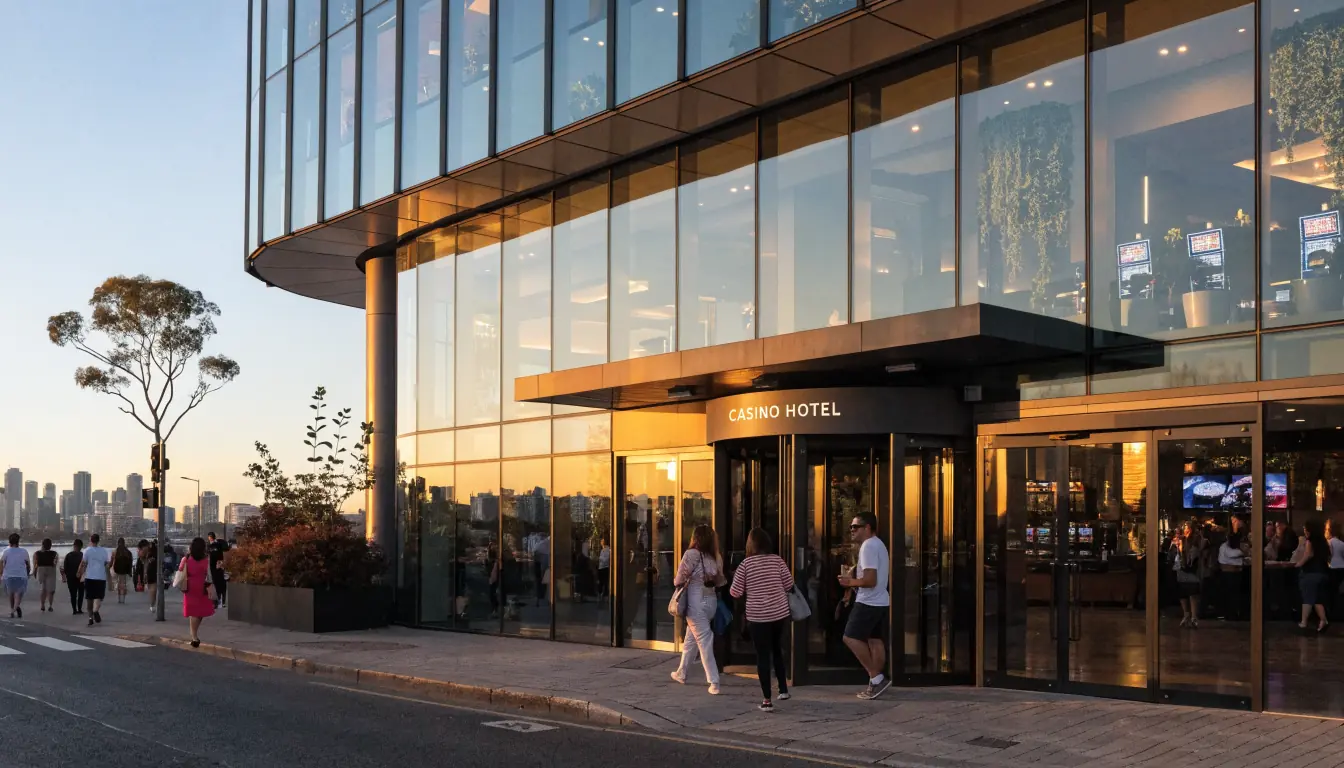
Casinos in Western Australia enforce a dress code that varies by area rather than applying a single blanket rule across the property. The gaming floor generally expects neat, presentable attire — no thongs (flip-flops), no singlets, no visible sportswear. Restaurant sections often ask for smart-casual as a minimum, and some of the higher-end dining rooms push closer to formal wear in the evening. Bars and lounges usually sit somewhere in between. None of this is exotic by international casino standards, but it’s worth checking the specific venue’s requirements before you arrive, since expectations shift depending on the time of day and which room you’re heading into. Staff at the entrance will turn away anyone clearly outside the code, so it’s not a suggestion you can quietly ignore.
Additional amenities
Beyond the spa, casino resorts in the region typically house a salon for hair and grooming services, again run as a separate business unit from the gaming and food operations. Some properties extend this further with retail outlets, cinemas, or event spaces used for functions unrelated to gambling — these exist to keep the resort functioning as a broader entertainment destination rather than a single-purpose gaming hall.
Who these amenities are for
Access to the spa, salon and general amenities carries no gambling-specific age restriction beyond the property’s standard entry rules, but it’s worth stating plainly: casino gaming areas remain restricted to adults, and this applies to every amenity bundled into the same complex. That distinction matters given that gambling participation in Australia starts uncomfortably early — around 30% of 12- to 17-year-olds report having gambled in some form, and that figure climbs to nearly 46% among 18- to 19-year-olds once it becomes legal. A resort spa or salon booking doesn’t carry the same restrictions as the casino floor, but staff won’t separate the two casually if a booking or access pass touches both zones. If you’re visiting with family and only some of the group plans to gamble, it’s simpler to treat the spa and the gaming floor as two separate visits rather than assume one ticket covers both.
Parking, Transport and On‑Site Accessibility
Getting to a casino floor and back to your car is not the part anyone plans in advance, but it shapes the visit more than most people expect. A venue that handles parking, transport links and accessibility well tends to handle the rest of the experience the same way — it’s one of the few areas where you can judge a property before you’ve even walked through the door.
On‑site parking
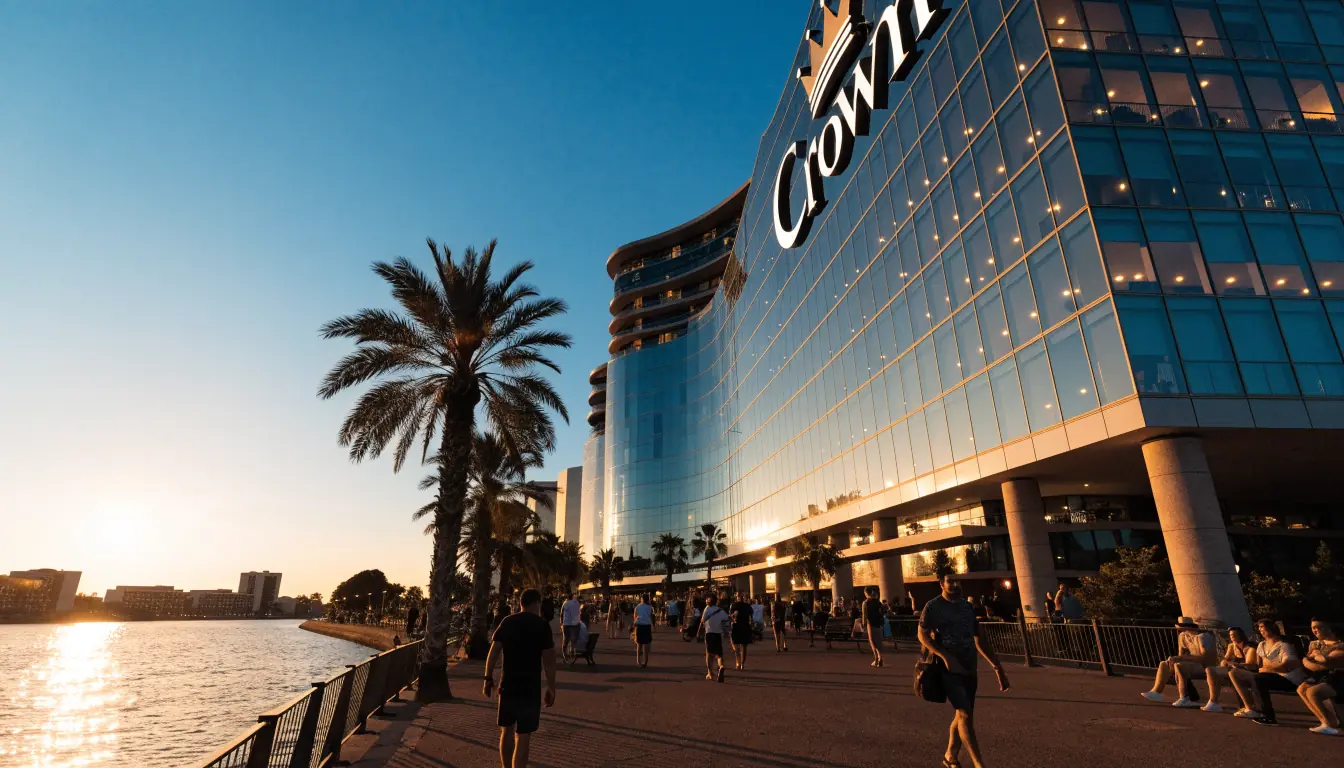
Casino complexes in Western Australia typically separate parking into a few tiers: multi‑storey self‑park structures for general visitors, a smaller allocation closer to the entrance for members enrolled in the property’s rewards tier, and a valet option for those who’d rather not deal with any of it. Valet queues tend to build up around evening peak hours and major events, so if you’re arriving for a specific show or tournament start time, self‑parking can actually get you inside faster. None of the properties publish fixed pricing or time‑limit tables in a way that’s consistent across the board, so it’s worth checking signage on arrival rather than assuming last visit’s rate still applies.
Public transport links
Perth’s casino precinct sits within reach of the metropolitan rail and bus network, which matters if you’re not driving or don’t want to deal with parking at all. Services run on standard public timetables rather than casino‑specific schedules, so late‑night departures are worth checking before you settle in for a long session — missing the last connection means relying on a taxi or rideshare instead. Rideshare and taxi drop‑off zones are generally kept separate from the self‑park and valet areas, which cuts down on congestion but also means it helps to know which entrance you’re aiming for before you arrive.
Accessibility features
Accessible parking bays are positioned near the main entrances rather than tucked into upper levels of the parking structure, and ramps or level access typically connect straight through to the gaming floor without requiring a detour through stairs. Accessible restrooms and wider walkways through the gaming areas are standard rather than an afterthought, reflecting the fact that casino floors draw a genuinely broad range of visitors, including older patrons and those with mobility needs. Staff at guest services can usually arrange wheelchair assistance from the car park through to a table or machine if you call ahead, though response times on the day itself will depend on how busy the floor is.
A practical note on who’s actually there
It’s worth remembering that a facility built to move large numbers of people in and out efficiently is also built to keep them there once they’ve arrived — easy parking and late transport links lower the friction to stay longer than planned. That matters given that a measurable share of Australian adults, estimated at somewhere between 80,000 and 160,000, experience significant gambling problems, and that nearly half of Australians aged 18 to 19 gamble in some form. Neither figure is specific to Western Australian casino floors, but they’re a reasonable reminder that convenient access cuts both ways: it’s good news if you’re there for a short, planned visit, and worth factoring in if you’re not sure how long you’ll stay. Venues that take accessibility seriously tend to also display responsible‑gambling information at entrances and near ATMs, which is a small but useful signal to look for on the way in.
Transport and parking arrangements are reviewed periodically by the venues themselves rather than published on a fixed schedule, so details here can shift between visits — checking current signage or the property’s own information desk on arrival remains the most reliable way to confirm what applies on the day.
Food Courts and Pool Facilities
Not every visit to a Western Australian casino calls for a sit-down meal. Food courts serve the quicker, cheaper end of the dining spectrum — the kind of stop between gaming sessions rather than an evening out. Expect a rotation of quick-service counters covering the usual mix of Asian, Australian and fast-food staples, with communal seating rather than table service. Prices sit well below the resort’s restaurants, which makes this the practical option if you’re pacing a day around the gaming floor rather than a meal.
Pool facilities fill a similar role on the leisure side: outdoor space to decompress without booking a spa treatment or leaving the property. These areas are typically open to hotel guests, sometimes with day-pass access for non-guests, and are set apart from the accommodation wings covered elsewhere. Don’t expect a resort-style water park — the pools function as a quiet counterpoint to the noise of the gaming floor, not a standalone attraction.
Neither the food court nor the pool will feature in anyone’s account of a big win or a big loss — and given that gambling losses nationally ran to $31.5 billion in 2022–23, with average per-capita losses around AUD 1,200 a year, a free afternoon by the pool is one of the cheaper parts of the whole experience.
Are crypto casinos legal in Australia in 2026?
No, online casino games — including those using cryptocurrency — are prohibited federally under the Interactive Gambling Act 2001, and no domestic licence exists to offer them to Australian residents.
How can a player verify that an online casino holds a valid licence in Australia?
You cannot, because there are no domestically licensed real-money online casino operators available to Australian players. The only valid online licences issued domestically cover sports and racing betting, not casino games.
What payment methods are available for Australian players at online casinos?
Since domestically licensed online casinos are prohibited in Australia, there is no official regulatory framework or licensed operator standard for payment methods in the local market.
What does the future outlook look like for the Australian online casino market?
The current regulatory framework strictly prohibits online casino products federally, and no pathway exists to obtain a domestic licence to operate them, so any legal shift would require amending the Interactive Gambling Act 2001.