Best New Australian Online Pokies for 2026
 Available in US
Understanding the New Australian Online Pokies in 2026
Talk to anyone who has followed offshore gambling sites for a few years and they will tell you the pokies landscape looks nothing like it did even three or four years ago. The games themselves have changed, but so has the plumbing behind them: how money moves in and out, who operates the sites, and what legal position an Australian player is actually in when they load one up. Before getting into any list of platforms or bonuses, it is worth being precise about what "new" actually means here, because the word gets used loosely and it is doing real work in this context.
What actually makes a pokie "new" in 2026
A new pokie release is not just a fresh skin on an old mechanic. The label usually refers to titles built on current game engines, with updated random number generation, new bonus structures, and — increasingly — verifiable fairness built into the game itself rather than promised by the operator’s marketing copy. That last point matters more than it sounds. Reputable crypto casinos now commonly use provably fair algorithms, which let a player check the randomness of a spin against a cryptographic hash rather than simply trusting a licence certificate on a footer page. That is a meaningfully different proposition from the pokies of five years ago, where "fairness" was a claim you took on faith or not at all.
With so many new pokies sites launching in Australia, it helps to see how each one stacks up on bonuses, payout speed and minimum deposit before you sign up.
Bonus: up to A$7,500 + 550 free spins across 10 deposits, 50x wagering · Payout speed: crypto under 1 hour, PayID 1-3 business days · Min. deposit: A$20 (A$30 to qualify for the bonus) Offers a sizeable multi-deposit bonus package with 550 free spins spread across ten deposits, backed by fast crypto payouts under an hour and PayID clearing within a few business days.
License: Curacao Gaming Control Board OGL/2023/176/0095 (Hollycorn N.V.) · Bonus: up to A$11,000 + 300 free spins (code NEO100) Licensed under the Curacao Gaming Control Board via Hollycorn N.V., with one of the larger welcome packages on this list plus 300 free spins unlocked with a bonus code.
Bonus: up to A$750 + 50 jackpot spins, 35x wagering · Payout speed: crypto ~90 minutes, fiat 1-5 days · Min. deposit: A$30 Pairs a welcome bonus with 50 jackpot spins and moderate wagering requirements, and backs it up with quick crypto withdrawals around ninety minutes alongside a low minimum deposit.
License: Curacao, operated by Dama N.V. · Bonus: 325% up to 5.25 BTC + 250 free spins across 4 deposits Licensed in Curacao and run by Dama N.V., it stands out for a high-percentage bonus paid in BTC combined with 250 free spins spread over four deposits.
License: Curacao Gaming Control Board · Bonus: up to A$5,000 + 400 free spins Holds a Curacao Gaming Control Board license and pairs a generous deposit bonus with 400 free spins for new players.
Bonus: 100% up to A$750 + 200 free spins, 35x wagering · Payout speed: crypto 30-120 minutes, fiat 24-72 hours · Min. deposit: A$30 Combines a welcome bonus with 200 free spins and manageable wagering terms, plus fast crypto payouts within a couple of hours and fiat withdrawals processed in a few days.
License: Curacao Gaming Control Board OGL/2023/176/0095 (Hollycorn N.V.) · Bonus: 100% up to A$10,000 + 100 free spins Operates under a Curacao Gaming Control Board license through Hollycorn N.V. and offers one of the larger deposit bonuses here along with 100 free spins.
License: Curacao – Antillephone N.V. (Versus Odds B.V.) · Bonus: up to EUR 2,000 across 5 deposits + 200 free spins · Min. deposit: EUR 20 Licensed in Curacao through Antillephone N.V., it spreads its bonus across five deposits and throws in 200 free spins, with a low minimum deposit to get started.
License: Curacao · Bonus: 100% up to A$500 + 200 free spins, 10x wagering · Payout speed: crypto 30-60 minutes, fiat 1-5 days · Min. deposit: A$10 Curacao-licensed with a wagering requirement on the lower end, fast crypto payouts within the hour, and one of the smallest minimum deposits on this list.
License: Curacao OGL/2024/1335/0780 · Bonus: up to A$1,000 + 150 free spins, wager-free · Min. deposit: EUR 20 Licensed in Curacao and notable for a wager-free bonus structure paired with 150 free spins, making the terms straightforward for new players.
The other defining feature of newer releases is how tightly they are integrated with alternative payment rails. A large share of the newest pokies titles are launched first, or exclusively, on platforms that operate as crypto casinos rather than traditional card-led sites. That is not a coincidence. Crypto casinos offer faster banking, wider payment flexibility, and a more direct way to move funds than the traditional card-and-bank-transfer model that dominated the last decade of online gambling. Game studios building for this environment design around near-instant settlement and multi-currency wallets from the start, rather than bolting them on afterward. The result is a generation of pokies that feel different to play, not just look different, because the deposit-to-spin-to-withdrawal loop is faster and less encumbered by the friction that used to define this category.
None of this means every "new" pokie is worth your time, or that novelty is itself a virtue. It does mean that when this article refers to new Australian online pokies, it is talking about a genuine shift in how these games are built, verified and paid for — not a marketing label slapped on a reskin.
How new pokies differ from older titles
The differences are worth breaking down by category, because they affect different parts of the experience.

Verification and trust mechanics. Older pokies asked you to trust the operator’s licence and the game studio’s reputation. Newer titles, particularly on crypto casino platforms, increasingly let you verify the outcome of an individual spin. Provably fair systems generate a hash before the round starts and reveal the seed afterward, so a player with the technical inclination can confirm the result wasn’t tampered with after the fact. This is not universal — plenty of new releases still run on conventional licensed RNG systems without this feature — but it is common enough now to be a genuine differentiator rather than a novelty.
Payment integration. This is probably the starkest difference. Older pokies were built with a single payment assumption: a card, a bank transfer, maybe an e-wallet. Newer titles, especially those launched through offshore operators, are built assuming multiple currencies will hit the same game session. Bitcoin remains the most widely accepted cryptocurrency across these platforms, but it is far from the only one. Many crypto casinos also support Ethereum, Litecoin, USDT, Dogecoin, Solana, Ripple and a range of other altcoins, and the newest pokies releases are typically designed to sit on top of that payment layer without friction. A player moving between a Bitcoin deposit and a Litecoin withdrawal on the same game session is a routine occurrence now, not an edge case.
Withdrawal speed is not guaranteed: it depends on both the blockchain confirmation time and the operator’s internal approval process, which can vary widely between sites.
Speed of settlement. Deposits on crypto casino platforms can be confirmed very quickly, often within minutes, which changes the practical experience of starting a session. You are not waiting on a bank transfer to clear before you can spin. Withdrawals are a slightly more complicated picture, and it is worth being upfront about that rather than smoothing it over. Some platforms process withdrawals that are usually instant or completed within hours, often clearing in minutes with low fees attached. Other accounts of the same market describe withdrawals as dependent on casino approval and blockchain processing, which can introduce delays regardless of how fast the underlying network is. Both things can be true at once, because withdrawal speed is a function of two separate systems — the blockchain’s own confirmation time, and the operator’s internal approval queue — and operators vary in how quickly they clear that second step. A new pokie built for one platform is not automatically fast to cash out from; the game and the payment rail are related but not identical.

Where the games are licensed. Older Australian-facing pokies sites sometimes blurred the question of where they were actually licensed, banking on players not checking too closely. Newer platforms, particularly those built around crypto payments, tend to be more explicit about it, largely because their entire audience is offshore by design. Many crypto casinos operate offshore and are licensed in jurisdictions such as Curacao or Malta. That is not a red flag by itself — it is simply where this part of the industry is regulated — but it is a different regulatory environment from what an Australian resident would find with a locally issued licence, because no such thing exists for online casino games in Australia in the first place. More on that below.
Bonus structure. The next section of this guide covers bonus and payment mechanics in more depth, so this section will only flag the pattern rather than the specifics: newer pokies releases are frequently bundled with promotional structures that differ meaningfully from the free-spin-plus-heavy-wagering model that dominated older sites. That distinction is worth understanding before you play, not after.

Why any of this matters for Australian players specifically
It would be easy to treat all of the above as a generic global trend and assume it applies the same way everywhere. It does not, because Australia’s legal position on online casino gambling is unusually strict, and that strictness shapes how this market actually functions for a player sitting in Sydney or Perth rather than one sitting in London or Toronto.
The relevant law is the Interactive Gambling Act 2001, the Commonwealth legislation that governs online gambling in Australia. It prohibits online casinos licensed in Australia from offering services to Australian residents — which sounds circular until you realise what it actually means in practice: there is no such thing as a domestically licensed online casino for Australians to use in the first place. The Act is enforced by the Australian Communications and Media Authority, and its prohibition is aimed squarely at unlicensed offshore operators actively offering online casino services into the Australian market — the sites doing the offering, not the individuals doing the playing.
That distinction is the single most important legal fact in this entire article, and it is worth stating plainly rather than burying it in a caveat. The law targets providers and operators, not individual Australian players, and there is no criminal penalty for an Australian resident who accesses an offshore crypto casino to play pokies. It is not illegal for individual Australians to play at offshore-licensed online casinos. What is illegal — and what the ACMA actively pursues — is an operator marketing, advertising or actively soliciting Australian custom without the standing to do so under Australian law.
This is why "new Australian online pokies" is a slightly misleading phrase if taken too literally. There is no Australian licensing regime issuing new local pokies. What exists instead is a wave of new titles released by offshore operators — many of them crypto casinos licensed in places like Curacao or Malta — that Australian players can access as individuals without breaking the law themselves, even though the operator’s ability to market directly to Australia is constrained. Understanding that distinction changes how you should read any claim about a site being "made for Australians" or "Australia’s newest pokies platform." What that phrase usually means, functionally, is that the operator accepts Australian players and has tailored its payment methods, currency display or support hours accordingly — not that it holds any Australian gambling licence, because none is available to it.
Australia’s approach here is genuinely stringent by international standards. Australia has some of the strictest online gambling laws among developed countries, and the Interactive Gambling Act’s framework reflects a policy focus on harm minimisation rather than on building a regulated domestic online casino industry the way, say, the UK or Malta have done. That policy choice is precisely why the entire new-pokies market that Australian players engage with is offshore by default — it is not a workaround or a grey area so much as the structural consequence of a law that never created a legal path for domestic online casino operators to exist.
The practical effect on where new pokies actually come from
Given that no domestic licensing pathway exists, every new pokies title reaching Australian players in any real-money format is, by definition, coming from an operator licensed somewhere else. This is not a temporary gap waiting to be filled — it is the settled state of the law, and has been since 2001. It means the "newness" of a pokie in the Australian context is entirely a function of what offshore studios and offshore-licensed platforms choose to release, and when.
This has a knock-on effect worth understanding: because these operators are courting a global audience rather than an exclusively Australian one, the newest titles tend to appear simultaneously across multiple markets rather than being built specifically for Australian tastes. A pokie described as new in an Australian context is very often the same release being marketed to players in New Zealand, Canada or parts of Europe at the same time, distributed by operators whose licensing sits in Curacao, Malta or similar jurisdictions rather than in any single national market. The "Australian" framing in most marketing is about payment currency support, time-zone-aware customer service, and language conventions — not about a game built exclusively for this audience.

Regulatory currents shaping what "new" will mean going forward
The rules around this market are not static, and 2026 in particular carries a live regulatory development worth flagging honestly rather than glossing over. According to one industry review of the sector, recent AML/CTF changes introduced in 2026 require additional reporting obligations for the gambling sector, with the practical burden falling mainly on providers rather than on players. This is not something confirmed across every source covering the space, and it is not a rule that individual Australian players need to act on directly — the reporting obligation, as described, sits with operators. But it is a useful signal of direction: regulators globally are tightening anti-money-laundering scrutiny around gambling platforms that handle cryptocurrency, and that scrutiny is more likely to show up in how an operator structures its verification and reporting processes than in anything a player needs to change about how they play.
What this means practically for someone evaluating a new pokies platform in 2026 is that the operators most likely to still be operating smoothly a year from now are probably the ones already treating identity verification and transaction monitoring seriously, rather than those advertising themselves on how little verification they require. A platform’s attitude toward compliance today is a reasonable, if imperfect, proxy for how stable it will be to use tomorrow.
The crypto layer is now inseparable from the "new pokies" story
It is difficult to talk about new Australian online pokies in 2026 without talking about crypto casinos specifically, because so much of what counts as new in this category is being released on crypto-first platforms rather than on legacy card-based sites. This is not simply a payment preference — it reshapes the player experience of the game itself.
Consider what "playing a new pokie" actually involves on one of these platforms. You are typically funding an account with Bitcoin, Ethereum, Litecoin, USDT, or one of a growing list of supported altcoins including Dogecoin, Solana and Ripple, rather than a card number. That deposit clears in minutes rather than the day-or-more window a bank transfer might take. You spin a game that, on a growing number of platforms, offers a way to check the fairness of individual outcomes through a provably fair system rather than relying purely on a licence badge. And when you want to withdraw, the outcome depends on a combination of network speed and the operator’s own processing — sometimes genuinely fast, sometimes not, and any operator or review claiming otherwise across the board is oversimplifying.
Crypto‑first pokies combine faster deposits with provably‑fair verification, but the withdrawal experience still hinges on blockchain traffic and the casino’s own processing queue.
This is the honest state of the "new pokies" category as it exists for an Australian player heading into 2026: a wave of titles built on faster, more flexible payment infrastructure, released by operators who are licensed offshore because no domestic licence exists to hold, playable legally by individuals even though the operators themselves sit in a stricter compliance environment than in years past, and verifiable in ways older pokies never allowed for. None of that is a guarantee of quality in any specific title — that judgment still comes down to the individual game, studio and platform — but it is the structural backdrop against which every claim about a "new" pokie should be read.
What this means when you’re actually choosing a platform
Given all of the above, a few things are worth carrying forward into how you evaluate any specific site or title claiming to offer the newest pokies for Australian players.
First, treat "Australian" in a platform’s marketing as a statement about audience and payment support, not about licensing, because no Australian online casino licence exists for any operator to hold. Second, if fairness verification matters to you, check specifically whether a platform’s games are provably fair rather than assuming a licence badge covers it — the two are different claims, and only one of them lets you personally check anything. Third, do not assume a platform’s payment speed on deposits tells you anything reliable about its withdrawal speed; the first is mostly a function of blockchain confirmation times, the second is a function of both the blockchain and the operator’s own approval process, and those can move at very different speeds even on the same site. Fourth, remember that as an individual player you are not the target of Australia’s gambling enforcement — the operators are — but that does not mean every operator is equally careful, well-run, or likely to still exist in its current form a year from now.
The sections that follow go into the specifics of payment methods and bonus structures, and the practical considerations around accessing real-money pokies hosted outside Australia. What this section has tried to establish is the ground those details sit on: new pokies in 2026 are defined less by flashier graphics than by a different payment architecture, a different fairness model, and a legal environment that permits Australians to play them as individuals while placing the compliance weight squarely on the operators offering them.
PayID Payments and Bonus Options for New Australian Pokies
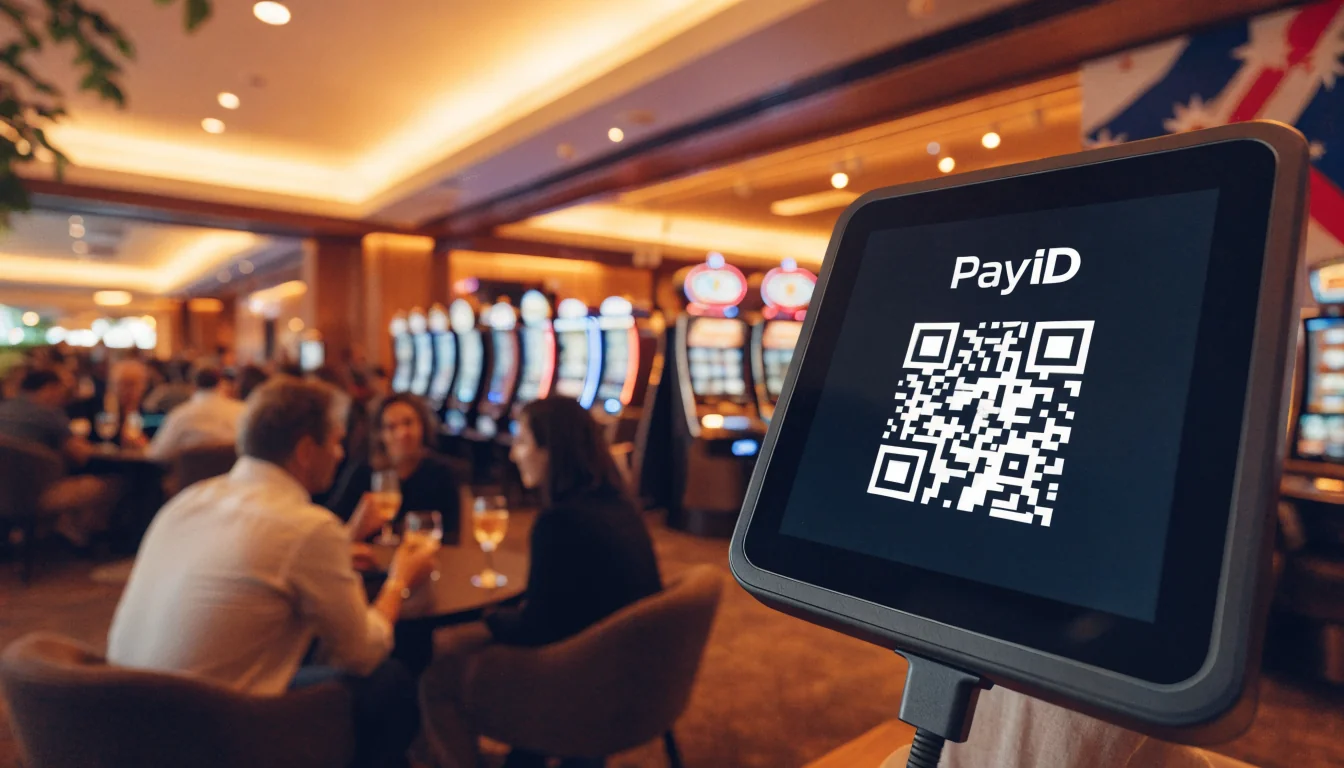
PayID comes up constantly in searches for new pokies sites, and the reason is simple: it moves money between Australian bank accounts using an email address, phone number, or ABN instead of a BSB and account number. That’s convenient for players who want to fund an account without typing out long strings of digits. But there’s a distinction worth making before anything else: PayID itself is a payments system built for Australian banking, not a gambling-specific product, and its presence on a site tells you nothing about whether that site is licensed to operate in Australia.

That matters because of where PayID can legally show up. Locally licensed Australian gambling operators — the ones offering sports betting or lottery products under state and territory licences — can and do use PayID for deposits and withdrawals, since it’s a standard local bank transfer rail. What they cannot do is combine PayID with the kind of casino-style games this article is about: pokies, blackjack, roulette, live dealer tables. The Interactive Gambling Act 2001 prohibits online casinos licensed in Australia from offering these games to Australian residents at all, regardless of payment method. So a site advertising "new PayID pokies" under an Australian licence isn’t describing a real category — no such licensed product exists.
In practice, the pokies sites Australians search for operate offshore, typically under Curacao or Malta licensing, and PayID doesn’t reach them directly. These platforms work with international payment processors, crypto payment gateways, or e-wallets rather than Australian domestic bank rails. If a site claims to accept PayID for pokies deposits, that claim deserves scrutiny rather than trust — it’s the kind of detail that should prompt you to check the operator’s actual licensing and payment terms before depositing anything, since the mismatch between "Australian bank transfer system" and "offshore casino" is exactly where problems tend to surface.

Where the payment landscape is actually heading
The regulatory direction here has been tightening rather than loosening. The Interactive Gambling Act was amended in 2023 with the stated aim of restricting operators from accepting digital currency payments from Australians, and a further amendment in June 2024 went further, prohibiting the use of both cryptocurrencies and credit cards on Australian-licensed gambling sites. Neither change touches PayID or standard bank transfers directly, but both signal that regulators are narrowing the payment methods available on the licensed side of the market, pushing crypto and card-based deposits toward the offshore, unlicensed space instead.
According to one industry review, AML/CTF changes taking effect in 2026 add further reporting obligations for the gambling sector, though the burden falls mainly on providers rather than players — you won’t need to do anything differently at your end, but it’s a reminder that the compliance environment around payments keeps shifting, and today’s accepted method isn’t guaranteed to stay available.
Bonuses: what to expect and what to check
The bonus landscape on new pokies sites tends to follow familiar shapes — deposit matches, free spins, and no-wagering bonuses that let you keep winnings without clearing a playthrough requirement first. No-wagering offers are the more player-friendly version, but they’re not universal, and plenty of sites still attach standard wagering conditions to their welcome offers.
Whatever the bonus type, the terms should be visible before you accept anything, not buried in a help article after the fact. Look for:
- The wagering requirement itself — stated in plain terms, not implied.
- Which games count toward clearing it — pokies contributions and table game contributions often differ.
- Maximum withdrawal caps tied to bonus winnings, if any apply.
- Time limits on using the bonus or clearing wagering.
If a site doesn’t display this before you opt in, that’s a reason to hesitate rather than assume the details are fine. This isn’t a formality — it’s the one place where a generous-looking offer and an unusable one look identical until you read the fine print.
Identity checks aren’t optional
No-KYC marketing shows up around crypto casinos and newer pokies platforms fairly often, but it’s worth being precise about what that phrase actually covers. Even where a site lets you deposit and play without verifying your identity, reputable operators still require it before you withdraw. Treat any site that promises to skip identity verification entirely — deposit through withdrawal — as a red flag rather than a convenience. Verification exists partly to satisfy the licensing jurisdiction’s own rules and partly to protect the account holder; a platform skipping it on both ends isn’t cutting friction, it’s cutting the part of the process that would let you get your money back if something went wrong.
The practical takeaway
If you’re comparing new pokies platforms, treat PayID mentions as a prompt to check the operator’s licence and payment provider rather than a feature to shop for on its own. The safer sequence is: confirm the licence, confirm what payment rails it actually supports, then look at the bonus terms — in that order. Doing it the other way around, chasing the bonus first, is how players end up locked into terms they didn’t read on a site whose licensing they never checked.

Playing Real‑Money Pokies from New Zealand: Key Considerations
Some Australian players look toward New Zealand‑based platforms when searching for new e‑wallet pokies to log into, expecting a different regulatory environment or a fresh set of titles. In practice, the platforms behind these sites are rarely domestic to either country. Many operate offshore, holding licences from jurisdictions such as Curacao or Malta rather than from New Zealand or Australian authorities — because no Australian licence for this kind of casino product exists to begin with.
That distinction matters more than the country name on the marketing page. A licence from Curacao or Malta says something about where the operator is registered and which regulator, if any, can act on a complaint. It says nothing about which e‑wallets it accepts or how quickly it processes withdrawals. Before treating "New Zealand pokies" as a separate category worth chasing, it’s worth checking who actually issued the operating licence and where that regulator sits.
Fairness is the other part of the equation, and it’s easier to verify than licensing jurisdiction. Reputable platforms — regardless of which country they market to — use provably fair algorithms, letting players confirm that a spin’s outcome wasn’t altered after the bet was placed, using cryptographic hashes rather than trusting the operator’s word alone. If a site markets itself heavily on geography but offers no way to check its games’ fairness, that’s a bigger red flag than the absence of a local licence.
For an Australian player, the practical takeaway is simple: "New Zealand" in a pokies site’s branding is a marketing detail, not a regulatory one. The licence and the fairness verification are what actually determine whether real money is safe there.
Can I play online pokies for free?
Yes, you can try new pokies releases in free-play mode to test their updated game engines and bonus structures before wagering real cryptocurrency or fiat.
What is a crypto casino?
It is an online gambling platform built around alternative payment rails, allowing you to deposit, play, and withdraw using multiple digital currencies instead of traditional card-and-bank-transfer methods.
What cryptocurrencies do casinos accept?
Bitcoin is the most widely accepted, but many crypto casinos also support Ethereum, Litecoin, USDT, Dogecoin, Solana, Ripple, and a range of other altcoins.
What happens if I have a dispute with a crypto casino?
Many crypto casinos operate offshore under licenses from jurisdictions like Curacao or Malta, so you must rely on the operator’s internal dispute resolution process, as no Australian regulatory body oversees them.
Created by the ”Casino Jackpots Guide” editorial team.