
Best Pokies in Perth: Types, Features and What to Look For
Understanding Pokies in Perth: Types, Features, and What to Look For
If you’re searching for pokies in Perth right now, hoping to find a venue open at odd hours or a club with cashless machines humming past midnight, the honest starting point is this: what you’re picturing and what’s actually available to you are two different things, and the gap between them matters more than any single venue’s opening time. Western Australia’s approach to poker machines is unlike anywhere else in the country, and understanding the shape of that gap is the first step before you even think about volatility, bonus buys, or RTP.
This section is about the pokies themselves — the mechanics, the features, the language you’ll see on a game’s info screen, and the tools that let you filter thousands of titles down to something you’d actually want to play. The venues, the licensing picture, and the legal framework around where you can and can’t play get their own treatment further down the page. Here, the focus stays narrow: what a pokie is, what makes one different from another, and what the numbers and labels on the screen are actually telling you.
Since online pokies now rival what you’d find on the Perth casino floor, it pays to check how each platform stacks up on bonuses, payout speed, and deposit requirements before you sign up.
Bonus: up to A$7,500 + 550 free spins across 10 deposits, 50x wagering · Payout speed: crypto under 1 hour, PayID 1-3 business days · Min. deposit: A$20 (A$30 to qualify for the bonus) Ricky Casino spreads a large bonus of up to A$7,500 plus 550 free spins over 10 deposits, with fast crypto payouts under an hour and PayID clearing in 1-3 business days.
License: Curacao Gaming Control Board OGL/2023/176/0095 (Hollycorn N.V.) · Bonus: up to A$11,000 + 300 free spins (code NEO100) Neospin operates under a Curacao Gaming Control Board licence held by Hollycorn N.V. and backs it with a sizeable welcome offer of up to A$11,000 plus 300 free spins via a bonus code.
Bonus: up to A$750 + 50 jackpot spins, 35x wagering · Payout speed: crypto ~90 minutes, fiat 1-5 days · Min. deposit: A$30 Kingmaker offers up to A$750 plus 50 jackpot spins with 35x wagering, and stands out for quick crypto withdrawals around 90 minutes alongside fiat payouts within a working week.
License: Curacao, operated by Dama N.V. · Bonus: 325% up to 5.25 BTC + 250 free spins across 4 deposits 7Bit Casino, licensed in Curacao and run by Dama N.V., delivers a crypto-friendly welcome package worth up to 5.25 BTC plus 250 free spins spread across four deposits.
License: Curacao Gaming Control Board · Bonus: up to A$5,000 + 400 free spins JustCasino holds a Curacao Gaming Control Board licence and pairs it with a solid sign-up offer of up to A$5,000 plus 400 free spins.
Bonus: 100% up to A$750 + 200 free spins, 35x wagering · Payout speed: crypto 30-120 minutes, fiat 24-72 hours · Min. deposit: A$30 MrPacho gives new players 100% up to A$750 plus 200 free spins with 35x wagering, and keeps things moving with crypto payouts in as little as 30 minutes.
License: Curacao Gaming Control Board OGL/2023/176/0095 (Hollycorn N.V.) · Bonus: 100% up to A$10,000 + 100 free spins GoldenCrown is licensed under the Curacao Gaming Control Board through Hollycorn N.V. and offers a strong 100% match up to A$10,000 plus 100 free spins.
License: Curacao – Antillephone N.V. (Versus Odds B.V.) · Bonus: up to EUR 2,000 across 5 deposits + 200 free spins · Min. deposit: EUR 20 Thor Casino, licensed in Curacao via Antillephone N.V. under Versus Odds B.V., spreads its bonus of up to EUR 2,000 across five deposits with 200 free spins and a low minimum deposit.
License: Curacao · Bonus: 100% up to A$500 + 200 free spins, 10x wagering · Payout speed: crypto 30-60 minutes, fiat 1-5 days · Min. deposit: A$10 Wild Tokyo is Curacao-licensed and notable for a low 10x wagering requirement on its 100% up to A$500 plus 200 free spins bonus, backed by fast crypto payouts and a low minimum deposit.
License: Curacao OGL/2024/1335/0780 · Bonus: up to A$1,000 + 150 free spins, wager-free · Min. deposit: EUR 20 Vegaz Casino carries a Curacao licence and offers a wager-free bonus of up to A$1,000 plus 150 free spins, a rare perk for players who dislike wagering conditions.
What "Pokies" Means and Why the Word Matters
"Pokies" is the word used across Australia for what other markets call slot machines or fruit machines. It’s not slang confined to pubs — it’s the standard term you’ll see used by regulators, operators, and players alike, and it applies equally to a physical machine with a lever-shaped button and a screen showing spinning reels in a browser. The mechanics underneath are the same regardless of where the game lives: reels, symbols, paylines, and a random number generator deciding the outcome of each spin.
That consistency in naming hides a real split in substance. A pokie you might encounter at a licensed venue and a pokie you access through a browser can share a theme, a studio’s name, even a title, and still behave very differently once you look at how they pay over time. That’s a subject for the next section on payout percentages. For now, what matters is that "pokies" is the umbrella term, and everything below — the types, the features, the filtering tools — applies whether the reels are spinning on a cabinet or a phone screen.
Types of Pokies You’ll Encounter
Not all pokies are built the same way, and the differences aren’t cosmetic. They affect how a game feels to play, how long a given budget lasts, and whether a session is likely to be a slow grind or a series of sharp swings.

Classic three-reel pokies. These are the simplest structures: three reels, a handful of symbols, usually a single payline or a small number of them. They’re the closest thing to the traditional mechanical machine, stripped of most modern extras. If you want a straightforward, low-complexity spin without bonus rounds or multiple feature layers, this is the category to look for.
Video pokies with five reels and multiple paylines. This is the largest and most varied category. Five reels is now the standard layout, and the number of paylines can range from a handful up to games that pay across dozens of lines or use a "ways to win" system instead of fixed paylines. These games typically layer in wild symbols, scatter symbols, and some kind of bonus round — free spins, a pick-a-prize screen, or a multiplier sequence — triggered by landing the right combination.
Megaways and dynamic-reel pokies. Popularised by developers like Big Time Gaming, this format changes the number of symbols on each reel every spin, which changes the number of ways to win from one spin to the next. These games tend to feel more volatile and more visually chaotic than a fixed-payline game, and they’re built around the idea that the win potential varies noticeably spin to spin.
Jackpot pokies. Some games link a portion of every stake, across many players, into a growing jackpot pool. Others offer a fixed jackpot amount that doesn’t grow. Either way, the presence of a jackpot changes the math of the game — a small piece of every spin’s return is being diverted toward that rare, large payout rather than the more frequent smaller wins.
Simple three‑reel layout with a single or few paylines, ideal for low‑complexity play.
Standard five‑reel games with multiple paylines, wilds, scatters and bonus rounds.
Dynamic reels change symbol count each spin, offering many ways to win and higher volatility.
Games that contribute a portion of each stake to a growing or fixed jackpot, affecting overall return.
Branded and themed pokies. Many titles are built around a licensed theme — a film, a TV series, a mythological setting — but the branding is cosmetic. What matters for how the game plays is the underlying mechanics: reel count, paylines or ways, volatility, and feature set, not the artwork wrapped around it.
Table-game adjacent and instant-win titles. Some platforms group in scratch-card-style instant games or simplified table-game variants alongside traditional pokies. These usually strip out reels entirely in favour of a single reveal mechanic, and they tend to appeal to players who want a faster round than a five-reel spin cycle offers.
Knowing which category a game falls into tells you something before you’ve even opened it. A classic three-reel game is going to behave predictably and simply. A Megaways title is going to swing. A jackpot game is quietly taking a cut of your return and putting it toward a payout you’re unlikely to see. None of that is good or bad on its own — it’s just useful to know what you’re looking at.
Volatility: The Feature That Shapes Every Session
If there’s one concept worth understanding properly before choosing a pokie, it’s volatility — sometimes labelled "variance" on a game’s info screen, though volatility is the term you’ll see used consistently across Australian-facing platforms. Volatility describes how a pokie tends to pay: specifically, the pattern of how often it pays and how large those payouts tend to be relative to the stake.
A low-volatility pokie pays more frequently, but the individual wins tend to be modest — often not much more than the stake itself. The experience feels steady. Your balance moves in small increments, up and down, without dramatic swings in either direction. A high-volatility pokie flips that pattern: long stretches without a meaningful win, punctuated by payouts that can be substantially larger relative to the stake when they land. Between those two poles sits medium volatility, which blends the two patterns — less punishing than high volatility, less flat than low volatility.
This isn’t a minor technical detail buried in a paytable. It’s arguably the single factor that determines whether a session feels enjoyable or frustrating, and it interacts directly with your budget. High-volatility pokies can quickly deplete a session budget — the dry spells between wins can be long enough that a modest bankroll runs out before a significant payout has a chance to land. That’s not a flaw in the game; it’s simply the mathematical trade-off that comes with the promise of larger wins. A player who sits down with a fixed amount and picks a high-volatility title should expect the possibility of that amount disappearing quickly, with no guarantee the bigger win arrives before it does.
Practically, this means volatility should factor into game choice the same way budget does. If you’re playing with a small, fixed amount and want that amount to last, a low or medium-volatility title is going to behave more predictably over the course of a session. If you’re playing with money you’re comfortable losing quickly in exchange for a shot at a larger single payout, high volatility is doing what it’s designed to do. Neither approach is more "correct" — but choosing a game without knowing which category it falls into means gambling on a factor you didn’t actually decide.
High volatility risk
High‑volatility pokies can deplete a modest bankroll quickly, as long dry spells are followed by occasional large wins.
Most reputable platforms now display volatility directly on the game tile or in the info panel — often as a simple low/medium/high label, sometimes as a numerical scale. It’s worth checking before you load a game rather than after a dry run has already eaten into a budget.
Bonus Buy Features: What They Are and What They Change
One of the more significant developments in pokie design over the past several years is the bonus buy option. Some pokie games feature bonus buy options, letting a player pay a set cost — usually calculated as a multiple of the base stake — to trigger the game’s bonus round directly, without needing to land the natural in-game combination that would normally activate it.
The appeal is obvious: it removes the wait. Rather than spinning through a base game hoping the right scatter symbols line up, a player can go straight to the free spins round, the pick-a-prize screen, or whatever feature the title is built around. For someone who finds the bonus round the more interesting part of a game, or who wants to test a feature before committing to longer base-game play, this can change how a session unfolds.
It also changes the risk profile in a specific way. Buying a bonus round outright is typically a larger single-stake commitment than a regular spin, concentrated into one moment rather than spread across many spins. That means the outcome of that single purchase — win or loss — has a much bigger effect on a session’s balance than a standard spin would. It’s a feature that suits a player who has already budgeted for it deliberately, not one to try on impulse partway through a session with money earmarked for something else.


Not every pokie offers a bonus buy, and among those that do, the mechanics vary — some let you choose between several bonus intensities at different costs, others offer a single fixed option. Where the feature exists, it’s usually flagged clearly in the game’s menu, often with its own icon separate from the regular spin and autoplay controls. It’s worth treating it as a distinct decision rather than an extension of normal play, precisely because the stake size and structure are different from a regular spin.
Multipliers, Respins, and Gamble Features
Beyond volatility and bonus buys, most modern pokies layer in a handful of secondary mechanics designed to add texture to a spin without changing its fundamental structure.
Multipliers apply a numerical multiplier to a win — doubling it, tripling it, or scaling it by whatever factor the game specifies — either as a fixed feature attached to certain symbols or as a value that increases across a bonus sequence. Some games build multipliers into a progressive structure where a value climbs with consecutive wins during a feature round, resetting once the sequence ends.
Respins allow a subset of reels to lock in place while the rest spin again, usually triggered by landing a near-miss combination. This gives a game a second chance at completing a winning line without requiring a fresh full spin, and it tends to appear in games built around a specific symbol-collection mechanic.
Bonus‑buy insight
Bonus‑buy options let you pay to trigger a feature directly, but they concentrate risk into a single, larger stake.
Gamble features offer a player the option, after landing a win, to risk that win on a simple secondary game — commonly a coin-flip-style choice — for a chance to double it, at the cost of losing it entirely if the gamble doesn’t land. This is an entirely optional layer sitting outside the main game, and it’s worth treating with particular caution: it converts a completed, banked win back into a bet, which is a different decision than continuing to spin with the same stake.
As an illustration of how these mechanics come together in a single title, one industry review of Mighty Wild: Panther describes a game with a 96.15% RTP, adjustable volatility settings, a maximum win of 750 times the stake, 15 paylines, and a feature set that includes bonus buys, multipliers, respins, and a gamble option. It’s a useful example of how a modern pokie can combine several of these mechanics at once — RTP, adjustable volatility, a defined max-win ceiling, and multiple secondary features — rather than relying on any single one. Not every title stacks features this densely, and the specific numbers attached to any one game are set by that game’s own paytable, not by a general standard across pokies.

Filtering and Finding the Right Game
With libraries running into the thousands of titles on larger platforms, browsing game by game isn’t practical. Most platforms build in filtering tools precisely because of this, and using them properly is the difference between finding a game that matches your budget and volatility preference in a minute versus scrolling for half an hour.
Players can filter games by provider, volatility, and features — three filters that, used together, narrow a large library down quickly to something relevant:
- Provider filtering lets you search by studio — useful if you’ve found a developer whose games you enjoy and want to see their full catalogue rather than searching title by title. Providers tend to have a house style: some lean toward high-volatility, feature-dense games, others toward simpler, steadier mechanics, so filtering by provider is often a shortcut to filtering by feel.
- Volatility filtering lets you sort directly by low, medium, or high volatility, cutting out the guesswork of checking each game’s info panel individually. This is arguably the single most useful filter for budget management, since it lets you match your session length preference to games that are actually built to deliver that kind of pacing.
- Feature filtering lets you search specifically for mechanics — bonus buy, respins, multipliers, jackpot, Megaways-style dynamic reels — so you can go straight to titles that include the specific mechanic you’re interested in rather than checking each game’s description manually.
Used together, these filters turn a library of thousands into a shortlist of a handful. It’s worth using them deliberately rather than relying on a homepage’s featured or "popular" section, which tends to reflect what a platform is promoting rather than what matches your particular budget and volatility preference.
How RNG Testing and Certification Fit In
Every pokie, regardless of type or feature set, runs on a random number generator (RNG) — the underlying software that determines the outcome of each spin. The RTP and volatility figures quoted for a game are only meaningful if that RNG is actually producing outcomes consistent with what the game claims.
This is where independent testing comes in. iTech Labs and eCOGRA are the two testing bodies most commonly associated with checking this in practice — they test RNG outputs and verify that a game’s reported RTP actually matches its real behaviour under testing conditions. A certification from either of these bodies is generally a stronger signal than a platform’s own claims about a game’s fairness, precisely because the testing is done independently of the studio or operator publishing the game.
This certification detail is worth checking for specific games rather than assumed universally. Not every title on every platform necessarily carries the same certification, and the presence of a testing mark is something you can typically find referenced in a game’s info panel or a platform’s fairness or responsible-gambling page. It’s a small detail, but it’s the difference between an RTP figure that’s a verified statistic and one that’s simply a number printed on a screen.
Cashout Speed as a Feature, Not Just a Banking Detail
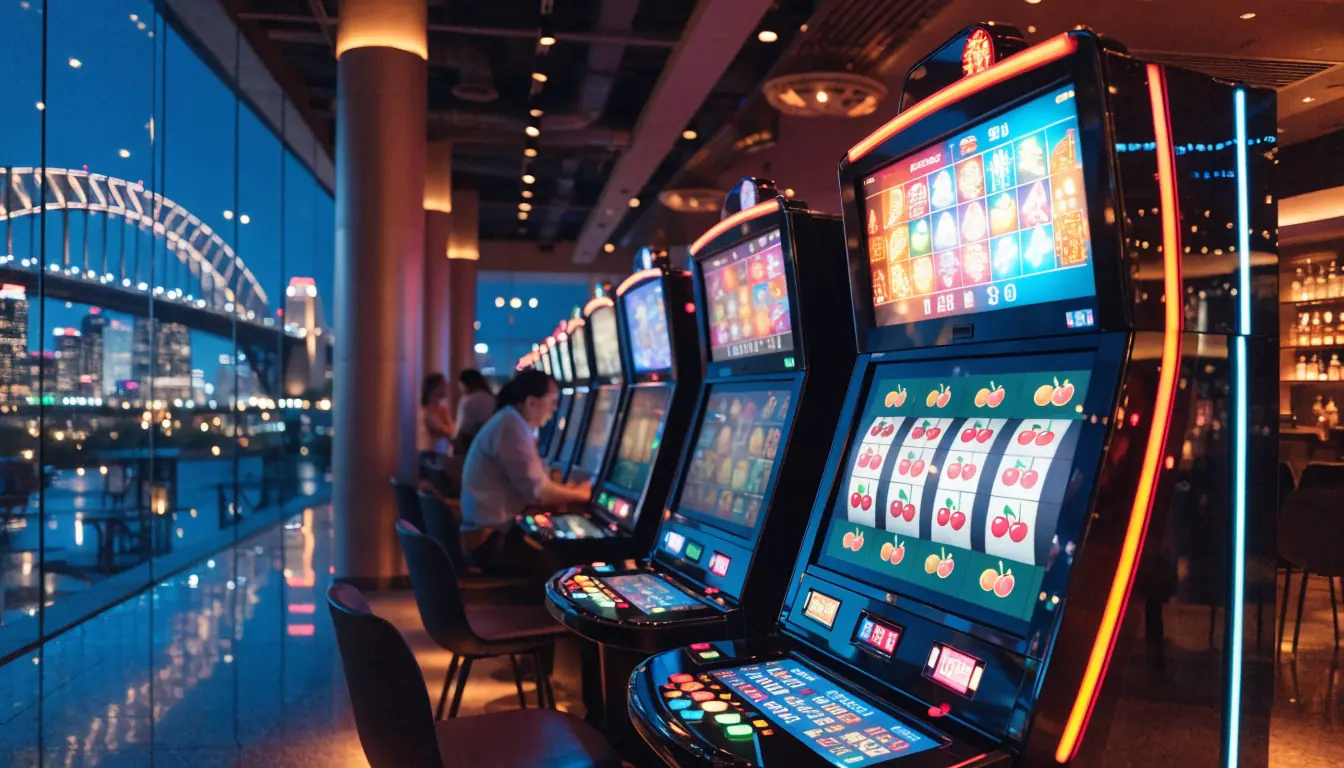
While withdrawal processes and platform-level banking sit more naturally in a discussion of casino options generally, it’s worth flagging here that cashout speed is increasingly treated as a feature attached to how a platform handles pokie winnings specifically — not just a generic banking afterthought. According to one industry review, some Australian-friendly casinos offer instant cashouts, which for a pokie player means the gap between landing a win and actually being able to access those funds can vary meaningfully from one platform to another. This is a detail worth checking on a platform’s terms directly rather than assuming it applies universally, since it’s the kind of claim that varies by operator and isn’t a fixed standard across the market.
Reading a Game’s Info Screen Before You Play
Nearly every pokie — physical or online — carries an information screen or "i" button giving you access to the paytable and rules. It’s worth treating this as mandatory reading before committing real money to an unfamiliar title, because it’s where the practical details actually live:
- RTP — the long-term theoretical percentage of wagered money returned to players over many spins, discussed in more depth in the payout section of this page. It’s a statistical figure, not a promise about any individual session.
- Volatility rating — low, medium, or high, telling you the general shape of how the game pays.
- Paylines or ways to win — how many line combinations or symbol-adjacency patterns can produce a win on a given spin.
- Maximum win — usually expressed as a multiple of the stake, giving a ceiling on what a single spin or bonus round could theoretically pay.
- Feature list — bonus buy availability, multiplier mechanics, respin triggers, gamble option, jackpot contribution, and any other mechanic specific to that title.
- Bet range — the minimum and maximum stake per spin, which determines whether the game fits a given budget at all.
Checking these before the first spin takes a minute and tells you more about how a session is likely to unfold than any amount of guessing based on theme or graphics.
Putting the Pieces Together
None of these elements — volatility, bonus buys, multipliers, filtering tools, RNG certification — exist in isolation. They combine into what a given pokie actually feels like to play, and that feel is what should guide which games you choose, not the artwork on the reels or how prominently a title is featured on a platform’s homepage.
A player with a modest, fixed budget who wants a session to last is generally better served by low or medium-volatility titles, filtered accordingly, with bonus buy features either avoided or budgeted for separately rather than folded into general play. A player specifically chasing the possibility of a large single win, and comfortable with the budget disappearing quickly in pursuit of it, is the more natural audience for high-volatility and Megaways-style titles. Neither choice is right or wrong on its own — but making it knowingly, using the filters and info screens available, is a meaningfully different position than picking a game at random and hoping the mechanics happen to suit you.
Match volatility to budget
Choose a pokie whose volatility aligns with your bankroll to keep sessions enjoyable and sustainable.
The next section moves from the games themselves to the broader landscape they sit within — where pokies can legally be played in Western Australia, what Crown Perth’s role actually is, and how the online options fit into that picture.
Perth Casino Landscape: Online Options, Crown Perth, and Regulatory Context
Western Australia runs one of the tightest gambling regimes in the country, and that shapes what "playing pokies in Perth" actually means in practice. Physical access is narrow by design, online access sits in a legal grey zone that favours the player over the operator, and the two paths rarely overlap in the same venue.
Crown Perth: the only legal floor for poker machines
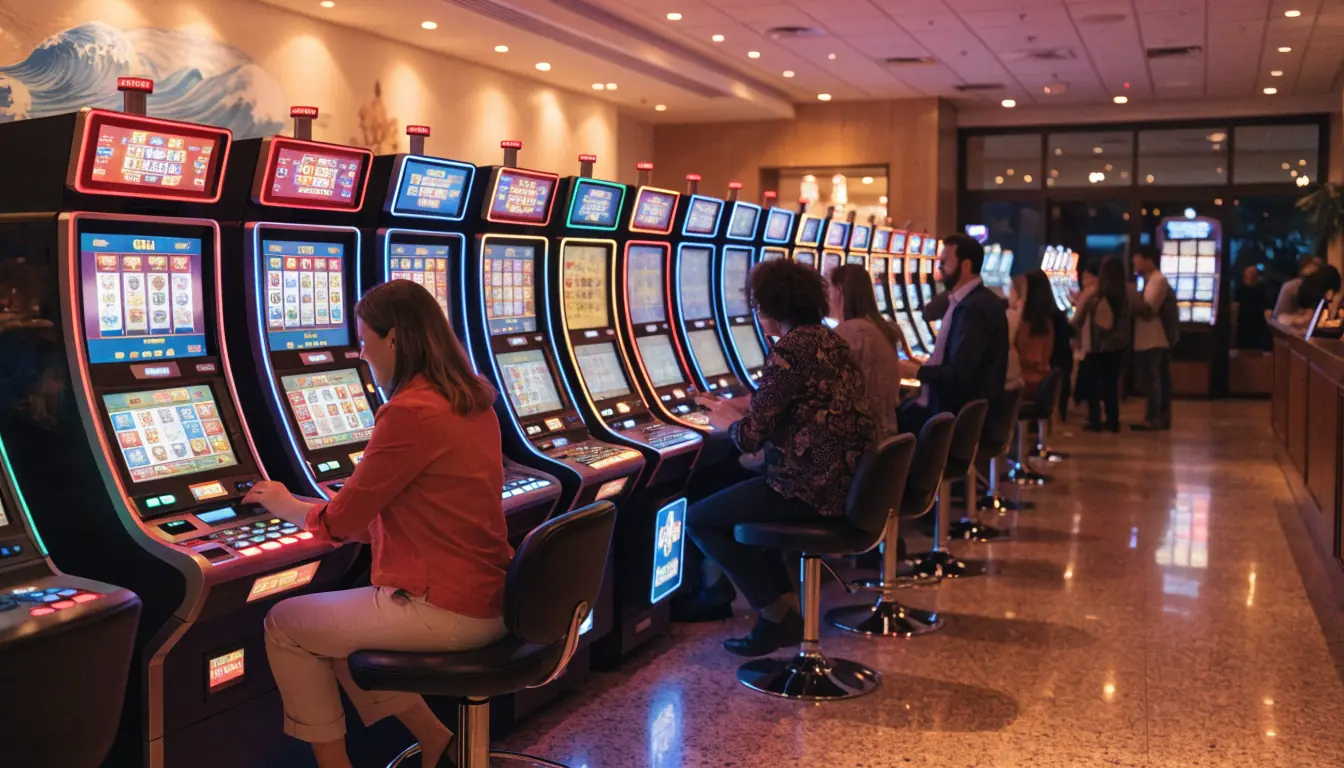
If you want to play a traditional poker machine in a licensed venue in Western Australia, there is exactly one place to do it: Crown Perth. No pub, club, or RSL in the state offers electronic gaming machines the way venues in New South Wales or Queensland do — that’s a direct result of Western Australia’s gaming laws, which are stricter than those in most other states. Crown Perth’s monopoly isn’t a marketing angle; it’s the practical outcome of legislation that keeps poker machines out of everyday licensed venues and confines them to a single casino floor.

This matters for anyone comparing Perth to other Australian cities. In places where pokies are spread across hundreds of local venues, "finding a machine" is trivial. In Perth, it isn’t. Physical casino access is limited, full stop, and that scarcity is precisely why so much of the pokies conversation in Western Australia has shifted online.
Where online pokies actually come from
No online casino operating in Australia — including one serving Perth players — holds an Australian licence for slots, roulette, or live dealer games. That’s not an oversight; it’s the law. The Interactive Gambling Act makes it illegal for any operator to offer online casino-style games to Australian residents, and there is no path to a domestic licence for this kind of product. What the law does not do is criminalise the player. It targets the operators, not the individuals placing bets, which is why offshore platforms remain accessible from Perth without the player breaking any law.

In practice, this means every online pokies platform reaching Australian players operates from outside the country, typically under a Curaçao eGaming licence rather than any state or territory authority. That’s a different regulatory footing to the one Crown Perth operates under, and it’s worth being clear-eyed about the difference: Curaçao licensing involves oversight of the operator, but it is not the same as being regulated by an Australian gambling authority, because no such authority licenses this product here.
What these platforms tend to offer
Offshore operators serving Australian players generally build their offer around a few recurring elements: deposit-match welcome bonuses paired with free spins, and — on a number of platforms — crypto withdrawal processing marketed as faster than conventional banking rails. One industry review that stress-tested several platforms with real deposits found withdrawal speed varying noticeably by payment method, which is a reminder that "fast crypto withdrawals" is a claim made by specific operators about specific rails, not a blanket feature of the market. Treat any such claim as a starting point for checking the operator’s own terms, not as something guaranteed across every platform carrying the same licence type.
The same caution applies to bonus structures. Deposit matches and free spins are common shapes for a welcome offer, but the wagering conditions attached to them vary between operators and need to be read before you deposit, not after.
Physical versus online: not a straight substitute
It’s tempting to treat online pokies as a simple stand-in for the Crown Perth floor, but the regulatory contexts are different enough that they shouldn’t be conflated. Crown Perth operates under Western Australian law, with the compliance obligations that come with a licensed local venue. Offshore platforms operate under foreign licensing, reach Perth players over the internet, and sit outside the reach of any Australian regulator. Neither arrangement is illegal for the player. But they are not interchangeable in terms of oversight, dispute resolution, or who you’d actually contact if something went wrong.
A regulatory environment built around limiting exposure
None of this happened by accident. Western Australia’s approach — one legal venue, no poker machines in pubs or clubs, no path to a local online casino licence — reflects a policy preference for restricting exposure to poker machines rather than expanding it. That preference is worth keeping in mind before assuming any online platform is somehow filling a gap the state intended to leave open. It didn’t leave the gap open; the gap exists because offshore operators reach into it regardless of where it was drawn.
The practical upshot for anyone in Perth: physical pokies mean Crown Perth, full stop, and everything else runs through an offshore, Curaçao-licensed platform that Australian law neither endorses nor bans you from using. The next section looks at how the return figures on those two paths actually compare.
Perth Pokies Payout Percentages: How RTP Impacts Your Play
RTP, or Return to Player, is a long-term theoretical measure of how much a pokie pays back over many spins. It says nothing about any single session — a machine can run cold for hours and still sit on a stated RTP, because the figure only settles out over a much larger sample than one player will ever generate.
This is where the gap between Perth’s two pokies environments becomes concrete. One industry review put physical pokies at Crown Perth in the 85%–92% range, against 96%–98% for online slots offered through offshore platforms. That’s a meaningful spread, and it holds because the two run on different economics: a machine on a casino floor carries the overheads of a physical venue, while an online game doesn’t.
Treat RTP as a guide to where the odds lean over time, not a promise about what happens tonight.
What should I look for in a casino?
You should look at the game library, welcome bonus, banking and withdrawal speeds, game providers, and mobile performance. Checking if platforms are licensed by authorities like Curaçao eGaming and if their games are tested by iTech Labs or eCOGRA is also essential.
Can I play pokies on mobile?
Yes, you can play pokies on mobile through platforms that offer mobile-friendly designs and browser-based interfaces, meaning you don’t need to download an app to spin the reels on your phone.
What does RTP mean in pokies?
RTP is a long-term theoretical measure of a game’s return over many spins. Physical pokies in Perth have RTPs of about 85%–92%, while online slots typically offer higher RTPs of 96%–98%.