Curacao Casino License for Australian Players Explained
 Available in US
Table of Contents
- Understanding Online Casino Operations under Curacao Licensing and Australian Law
- Land‑Based and Licensed Casinos in Australia: Regulatory Framework
- Key Licensing Requirements for Curacao‑Licensed Operators Targeting Australian Players
- What "Best" Means in Curacao‑Licensed Online Casinos and How Licensing Affects Quality
- Specifics of the Curacao Casino License for Australian Players in 2026
- How Curacao Casino Sites Are Managed and Blocked in Australia
- Crypto Casinos Licensed in Curacao: Compliance and Risks for Australian Users
Understanding Online Casino Operations under Curacao Licensing and Australian Law
A Curacao e-gaming licence lets an operator run slots, roulette, and live-dealer tables for players in many parts of the world. It does not do the same for players in Australia. That distinction sits at the centre of any conversation about casino Curacao online platforms and how Australian law treats them, and it’s worth stating plainly before anything else: the licence is real, the permission to serve Australian residents is not.
The Interactive Gambling Act 2001 is the federal law that draws this line. It prohibits offering unlicensed real-money online casino games to people in Australia, regardless of where the operator is based or which foreign authority issued its paperwork. A Curacao licence authorises a business to operate under Curacao’s own rules, for the jurisdictions its licence actually covers. It carries no weight under Australian law and creates no exemption from the Interactive Gambling Act. When you see an online curacao casino advertising itself as licensed, the licence is not fictional — the permission to accept Australian players under it is.
This is a point worth sitting with, because it’s easy to misread a licence badge as a green light. It isn’t one. A Curacao certificate tells you the operator has met Curacao’s requirements. It tells you nothing about whether serving an Australian address is lawful, because it isn’t.
What the law actually prohibits
The Interactive Gambling Act 2001 targets the supply side of the transaction, not the individual player. In practical terms, this means:
- Offering unlicensed real-money online casino games to Australian residents is prohibited under the Act, full stop, whether the operator sits in Curacao, Malta, or anywhere else outside the domestic licensing system.
- The prohibition falls on the business providing the service. It is the operator who commits the offence by making the service available, not the person who logs in and plays.
- No carve-out exists in the Act for offshore-licensed casino games. Sports wagering and lotteries have their own separate legal pathways in Australia, but online casino-style products — slots, roulette, blackjack, poker — are not part of any licensed domestic offering, whatever jurisdiction stands behind the site.
None of this makes a Curacao licence illegal to hold. It makes serving Australian customers under that licence a breach of Australian law from the operator’s side of the ledger. An online casino curacao site that keeps its doors open to Australian IP addresses is doing so in violation of the Interactive Gambling Act, even while remaining perfectly compliant with the rules of the jurisdiction that actually issued its licence.
Who enforces this, and how
The Australian Communications and Media Authority — ACMA — is the federal regulator responsible for policing the Interactive Gambling Act 2001. It does not license casinos, because there is nothing for it to license in this category. Its job runs the other direction: identifying services that shouldn’t be operating for Australian players and acting against them.
ACMA maintains a list of websites it has identified as breaching the Act, and this list feeds into ISP blocking — internet service providers cutting off access to the named domains at the network level, rather than the sites removing themselves voluntarily. This detail comes from reporting by onlinegamblingregulations.com rather than from a fixed statute, and it’s a space worth watching rather than treating as settled: which domains appear on that list changes over time as operators open new sites under new names, and enforcement mechanisms themselves may shift. The general shape — a regulator naming sites, ISPs blocking them — is the current picture rather than a permanent one.
This enforcement structure explains a pattern anyone who has tried to reach one of these platforms from an Australian connection will recognise: a curacao online casino that was reachable last month can simply stop loading. That’s not a hosting fault. It’s the blocking mechanism doing what it’s designed to do.
Federal law, state licensing, and where online casinos fit
Australia runs gambling regulation on two tracks at once, and it’s the source of a lot of confusion for anyone comparing casino curacao online offers against what’s legally available domestically.
Illegal Offering
Offering real‑money casino games to Australian residents on a Curacao licence breaches the Interactive Gambling Act 2001 and can result in enforcement action against the operator.
Each Australian state and territory runs its own licensing regime, its own regulator, and its own harm-minimisation rules. This structure covers licensed wagering — sports betting, race betting — and lotteries, where state and territory regulators issue licences to operators who then have to follow both the state’s specific conditions and a set of federal restrictions layered on top for anything delivered online.
Online wagering, in other words, sits under dual oversight: a state or territory licence to operate, plus federal rules under the Interactive Gambling Act that apply regardless of which state issued that licence. A wagering operator licensed in one state can typically take customers from other states, but it still has to answer to the federal restrictions on interactive gambling that apply nationally.
Online casino games never enter this system at all. There is no state or territory that licenses domestic online casino operators, and there is no federal pathway that legalises the offering either. The dual-track structure that governs sports betting and lotteries simply doesn’t have a lane for online slots, roulette, or live-dealer tables. That’s precisely why every operator serving this category to Australian customers is doing so from outside the country and outside any Australian licence, Curacao-issued or otherwise.
The obligations that apply to licensed online wagering — and why casino products fall outside them
It’s useful to see what compliance actually looks like for the online gambling that is licensed in Australia, because the contrast makes clear how differently unlicensed casino products, including Curacao-based ones, sit outside that structure entirely.
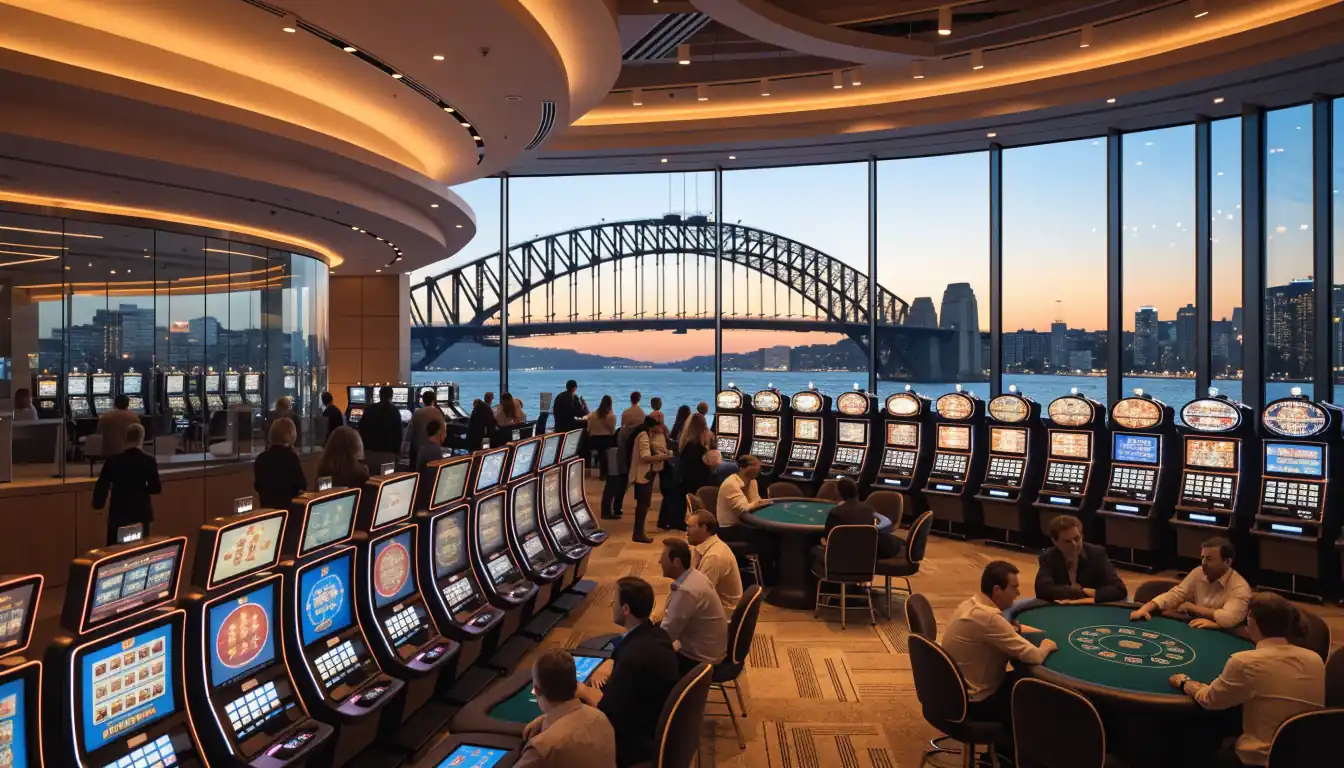
Licensed online wagering operators in Australia are required to carry out pre-verification of a customer’s identity before that person can place a bet or deposit funds — the check happens before money moves, not after. They’re barred from accepting credit cards or credit-linked products for online wagering; funding a bet with borrowed money through this channel isn’t permitted. And wagering service providers typically carry anti-money-laundering and counter-terrorism-financing obligations, tying their operations into Australia’s broader financial crime framework.
A Curacao-licensed casino operator serving Australian players has none of this baked in as a domestic legal requirement, because it isn’t operating inside the Australian licensing system that imposes these obligations. It may have its own KYC and AML procedures under Curacao’s rules — many Curacao-licensed sites do run identity checks and monitor transactions as part of meeting their own regulator’s standards — but those procedures exist because Curacao requires them, not because Australian law reaches the operator. There’s a meaningful difference between an obligation imposed by the jurisdiction that licenses you and a practice you happen to follow anyway.
What this means for the player, specifically
It is not illegal for an individual Australian to play at an offshore-licensed online casino. The Interactive Gambling Act 2001 is built around the operator’s conduct, not the player’s. Someone playing at an online casinos curacao site from an Australian address is not committing an offence by doing so.
While Australian players are not criminally liable for playing on offshore sites, they have no domestic consumer‑protection recourse if something goes wrong.
That said, "not illegal to play" and "protected while playing" are two separate claims, and the law only makes the first one. Because the operator sits outside Australia’s licensing and enforcement reach, none of the domestic consumer protections that apply to licensed wagering — the pre-verification requirements, the credit card restrictions, the AML obligations tied to Australian financial oversight — attach to that casino relationship. If a dispute arises over a withdrawal, a locked account, or a disputed bonus term, there is no Australian regulator with jurisdiction to intervene, because the operator was never inside the system that regulator polices. Whatever recourse exists runs through Curacao’s own complaint channels, if any, not through ACMA or any state gambling authority.
This is the practical shape of the legal baseline: the licence is genuine, the operator is real, the games likely run on legitimate software — and none of that changes the fact that the service is being delivered into Australia in a way federal law doesn’t permit, with the consumer protections that would normally apply to a domestically licensed product simply absent from the arrangement.
A note on scope
Everything above concerns online casino games specifically — the category the Interactive Gambling Act 2001 was built to restrict. It doesn’t extend to how Australia licenses its physical, land-based casino venues, which run under an entirely separate state-level structure with its own regulators, its own approval processes for games and equipment, and its own history distinct from anything Curacao-related. That system, and how it differs from what’s been described here, is worth its own explanation — because bracketing "online" and "land-based" together under one licensing logic is exactly the kind of shortcut that leads people astray on this topic.
Land‑Based and Licensed Casinos in Australia: Regulatory Framework
A physical casino floor in Sydney or Melbourne answers to a different set of rules than anything discussed under Curacao licensing. Where an offshore online operator sits outside Australian jurisdiction by design, a land‑based casino is embedded in it — licensed, inspected and disciplined by a state authority that can walk onto the premises. That distinction matters for anyone trying to work out what "licensed" actually guarantees, because the word covers two systems that share almost nothing beyond the name.
Australian gambling law runs on two tracks that rarely intersect. The Commonwealth handles interactive gambling through the Interactive Gambling Act, which is why online casino games are prohibited nationally regardless of which state a player logs in from. Land‑based gambling, by contrast, is licensed at the state and territory level, with each jurisdiction running its own regime, its own regulator and its own harm‑minimisation rules. A licence issued in New South Wales has no automatic standing in Queensland, and the body that polices a Sydney casino floor has no jurisdiction over a venue in Adelaide. This split is not a historical accident so much as the working structure of Australian gambling regulation: federal law sets the boundary on what may be offered online, and state law governs everything that happens inside a physical venue.
Core Message
Curacao‑licensed online casinos are legal to run offshore but remain prohibited to offer services to Australian players.
Why NSW Is the Clearest Case Study
New South Wales offers the most detailed public record of how a modern casino regulator is built, which is why it is worth walking through in some depth. Casino regulation in NSW used to sit with the Independent Liquor & Gaming Authority, known as ILGA, which before 2022 conducted reviews, investigations and inquiries relating to casino licences and casino operations. ILGA’s role was broad but general — it sat across liquor and gaming matters together, treating casinos as one category among several regulated industries rather than as a dedicated portfolio.
That changed with the creation of a body built specifically for casinos. The NSW Independent Casino Commission, referred to as the NICC, was established by an amendment to the Casino Control Act 1992 on 5 September 2022. The amendment did not simply rename the old function; it carved casino oversight out of the general liquor‑and‑gaming remit and gave it a standalone regulator with casino‑specific powers. The shift reflects a broader pattern in Australian regulation: as an industry’s risk profile grows more complex, the tendency is to split it away from adjacent portfolios rather than expand the mandate of an existing generalist body.
The NICC does not operate in isolation, however. Liquor & Gaming NSW, usually shortened to L&GNSW, assists the NICC in overseeing casino operations, and this assistance covers both overt and covert operations — a phrase worth pausing on. Overt oversight is what most people picture: audits, licensing paperwork, scheduled inspections. Covert oversight is different in kind, not just in visibility. It allows regulatory staff to observe a casino floor without announcing themselves as regulators, which is a meaningfully different power from anything available to authorities policing online operators. There is no equivalent of a covert operation for a Curacao‑licensed website; ACMA can identify and block a domain, but it cannot send an inspector to sit at a blackjack table.
What L&GNSW Actually Controls
The division of labour between the NICC and L&GNSW is worth setting out plainly, because the specifics reveal how granular land‑based regulation gets compared with anything possible for an offshore online licence.
L&GNSW is responsible for:
- Staff licensing — L&GNSW approves and licences relevant casino staff, meaning individual employees, not just the operating company, are vetted and authorised before they can work on a casino floor.
- Game and rule approval — L&GNSW approves the games to be played in a casino and the rules under which those games are played, so a casino cannot simply introduce a new table game or alter payout rules without regulatory sign‑off.
- Equipment approval — L&GNSW approves gaming equipment used in a casino, covering everything from cards and dice to electronic gaming machines before they go into service.
- Operating hours — L&GNSW approves the operating times of a casino, which means even something as basic as when the doors open and close is subject to regulatory control rather than commercial discretion.
Set against this, an offshore Curacao‑licensed operator answers to none of these mechanisms. There is no Australian body approving its slot titles, auditing its dealers, or signing off on its hours of operation, because it does not operate under Australian licensing at all — it operates despite the absence of one, which is a different thing entirely from being regulated by a lighter‑touch regime. The comparison is not "strict state oversight versus lenient offshore oversight." It is oversight versus none, at least from the Australian side.
The State‑by‑State Pattern
NSW is the most thoroughly documented example, but the same underlying structure — a licensing regime, a dedicated regulator, and locally set harm‑minimisation rules — repeats with variation across the other states and territories. Victoria, Queensland, South Australia, Western Australia, Tasmania and the Northern Territory each run their own casino licensing arrangements, separate from NSW’s and from each other’s. A casino operator in one state cannot rely on a licence issued elsewhere; each jurisdiction requires its own authorisation, and each maintains its own regulator to enforce it.

This fragmentation is sometimes described as inefficient, and there is a case for that view, but it also means responsibility for a casino floor is never diffuse. When something goes wrong at a licensed venue, there is a specific regulator in a specific state whose job it is to answer for it — a structural feature entirely absent from the offshore online space, where no Australian regulator has that kind of standing over the operator itself.
Land‑Based Rules Versus Rules for Online Operators
It is worth being precise about where the line falls, because it is easy to conflate "state‑licensed" with "safe" and "offshore" with "unregulated" in a way that oversimplifies both sides.
| Feature | Land‑based casinos (state‑licensed) | Curacao‑licensed online operators |
|---|---|---|
| Licensing authority | State/territory regulator (e.g. NICC in NSW) | Curacao gaming authority, outside Australian jurisdiction |
| Staff vetting | Individually licensed by L&GNSW‑type bodies | No Australian vetting mechanism |
| Game/equipment approval | Approved before use, by regulator | Not subject to Australian approval |
| Inspection powers | Overt and covert operations on premises | No Australian inspection power exists |
| Legal status of the offer to Australians | Fully lawful, state‑licensed | Prohibited under the Interactive Gambling Act |
| Harm‑minimisation rules | Set and enforced by the relevant state | Not enforceable by Australian authorities |
The table’s last two rows are the ones that matter most for anyone comparing the two systems casually. A land‑based casino’s legality is not in question; its licence is real, its regulator is identifiable, and its rules are enforced by a body with statutory power to act. An offshore online casino operating under a Curacao licence sits outside that structure entirely — not regulated more loosely by Australian standards, but not reached by them at all. The earlier discussion of how the Interactive Gambling Act treats operators rather than individual players is the federal side of this picture; this section’s point is narrower: even where Australian law does provide a mature, well‑resourced regulatory apparatus — staff licensing, equipment approval, overt and covert inspection — it applies only to premises inside Australian borders, not to any website reachable from one.
Harm Minimisation as a State Responsibility
Each state and territory sets its own harm‑minimisation rules for the venues it licenses, which is a natural extension of running its own regime and its own regulator. This means the practical safeguards a patron encounters on a casino floor — from signage to staff training to self‑exclusion arrangements at that specific venue — are shaped by whichever state issued the licence, not by a single national standard applied uniformly to every casino in the country. This is a distinct question from the national self‑exclusion register and the wagering‑specific consumer protections that apply to online betting, which are addressed elsewhere; the point here is narrower and specific to physical venues: harm minimisation at a land‑based casino is a condition of that casino’s state licence, enforced by the regulator that issued it, and it varies by jurisdiction because the licensing itself does.

The Practical Takeaway
For a reader trying to place Curacao‑licensed online casinos in context, the land‑based system is useful mainly as a contrast. It shows what a fully licensed, inspected, and locally accountable gambling venue actually looks like in Australia: a regulator with a name and a legislative mandate, staff who are individually licensed, equipment that is approved before it is used, and hours of operation that are themselves a matter of regulatory sign‑off. None of that infrastructure extends to an offshore operator holding a Curacao licence, however that licence is described in its own marketing. The two systems are not two tiers of the same regulatory ladder — they are separate structures, one built by Australian legislators for Australian premises, the other built by a different jurisdiction for a different purpose, reaching Australian players only because the internet does not respect state or national borders the way a casino floor does.
Key Licensing Requirements for Curacao‑Licensed Operators Targeting Australian Players
There is no set of licensing conditions that lets a Curacao‑licensed operator legally offer real‑money online casino games — slots, roulette, live‑dealer tables — to people in Australia. A casino licence issued by Curacao, whatever its terms, does not create an exception under Australian law. The Interactive Gambling Act 2001 prohibits offering these services to people in Australia regardless of where the operator is based or which foreign authority issued its licence. This is the threshold that matters more than anything printed on a licence certificate.
That threshold splits the market cleanly:
- Prohibited outright: real‑money online casino games — slots, table games, live‑dealer products — offered to an Australian resident by any operator, Curacao‑licensed or otherwise.
- Permitted under separate rules: online wagering on sports and racing, but only through operators holding an Australian state or territory licence, and only pre‑match — a different regime, covered by different regulators, with no overlap with Curacao licensing at all.
A Curacao licence governs how an operator is allowed to run its platform in the jurisdictions where Curacao’s authority actually applies. It says nothing about Australian users, because Australian law does not recognise it as a basis for serving them. Online wagering, by contrast, sits with the states and territories, and even that permission carries federal limits under the interactive gambling restrictions — the two systems don’t merge, and a Curacao certificate cannot borrow legitimacy from the wagering framework either.
Marketing that describes a Curacao‑licensed casino as "compliant for Australian players" is describing something that doesn’t exist as a legal category. The licence may be genuine, the operator may meet every condition Curacao sets, and none of that changes the position under the Interactive Gambling Act 2001. The gap here isn’t a technicality between "fully compliant" and "partially compliant" — there’s no compliant tier for this product at all when the customer is in Australia. The only accurate distinction is between services aimed at Australians in breach of the Act and services that aren’t aimed at them, which is a question about who the operator targets, not about which paperwork it holds.
What "Best" Means in Curacao‑Licensed Online Casinos and How Licensing Affects Quality
Since all Curacao-licensed casinos operate under the same regulatory framework, you’ll want to look past the license itself and compare what each operator actually offers in terms of bonuses, deposit requirements, and payout handling before deciding where to play in 2026.
Bonus: up to A$7,500 + 550 free spins across 10 deposits, 50x wagering · Payout speed: crypto under 1 hour, PayID 1-3 business days · Min. deposit: A$20 (A$30 to qualify for the bonus) Offers a large multi-deposit bonus spread across ten deposits with free spins attached, backed by fast crypto payouts and a low minimum deposit to get started.
License: Curacao Gaming Control Board OGL/2023/176/0095 (Hollycorn N.V.) · Bonus: up to A$11,000 + 300 free spins (code NEO100) Holds a Curacao Gaming Control Board license under Hollycorn N.V. and pairs it with one of the higher bonus ceilings on this list, plus a bundled free spins offer via a bonus code.
Bonus: up to A$750 + 50 jackpot spins, 35x wagering · Payout speed: crypto ~90 minutes, fiat 1-5 days · Min. deposit: A$30 Combines a jackpot-spins bonus with notably quick crypto withdrawals and an accessible minimum deposit, making it a solid pick for players who value fast cashouts.
License: Curacao, operated by Dama N.V. · Bonus: 325% up to 5.25 BTC + 250 free spins across 4 deposits Operated by Dama N.V. under a Curacao license, it stands out for a high-percentage bonus paid out in Bitcoin across multiple deposits, alongside a generous free spins package.
License: Curacao Gaming Control Board · Bonus: up to A$5,000 + 400 free spins Licensed by the Curacao Gaming Control Board, it offers a sizeable welcome bonus with a substantial number of free spins attached.
Bonus: 100% up to A$750 + 200 free spins, 35x wagering · Payout speed: crypto 30-120 minutes, fiat 24-72 hours · Min. deposit: A$30 Delivers a straightforward welcome bonus with free spins and reasonably fast crypto and fiat payout windows, plus a low minimum deposit requirement.
License: Curacao Gaming Control Board OGL/2023/176/0095 (Hollycorn N.V.) · Bonus: 100% up to A$10,000 + 100 free spins Licensed under Hollycorn N.V.’s Curacao Gaming Control Board permit, it offers one of the largest matched bonuses on this list along with a free spins package.
License: Curacao – Antillephone N.V. (Versus Odds B.V.) · Bonus: up to EUR 2,000 across 5 deposits + 200 free spins · Min. deposit: EUR 20 Operates under a Curacao license via Versus Odds B.V. (Antillephone N.V.) and offers a multi-deposit bonus structure with free spins, requiring a modest minimum deposit.
License: Curacao · Bonus: 100% up to A$500 + 200 free spins, 10x wagering · Payout speed: crypto 30-60 minutes, fiat 1-5 days · Min. deposit: A$10 Curacao-licensed with a welcome bonus that carries a notably low wagering requirement, fast crypto payout times, and one of the lowest minimum deposits on this list.
License: Curacao OGL/2024/1335/0780 · Bonus: up to A$1,000 + 150 free spins, wager-free · Min. deposit: EUR 20 Holds a specific Curacao license number and offers a wager-free bonus with free spins, which is a distinctive feature among the operators listed here.
Search results and review sites routinely promise a list of the "best" or "top" Curacao‑licensed online casinos. For an Australian reader, that framing needs a caveat before anything else: offering unlicensed real‑money online casino games to Australians is prohibited under the Interactive Gambling Act 2001. No ranking of operators changes that legal position. Any comparison of Curacao‑licensed sites has to be read against a market where the underlying activity — real‑money online casino play — is not something a licence, Curacao or otherwise, makes lawful to offer here.
That doesn’t mean the word "best" is meaningless. It means the word is doing different work than it appears to. A ranking that calls one operator "best" because of bonus size or game count is making a marketing claim, not a compliance one. A ranking that means something closer to "operates with fewer identifiable risks to the player" is talking about a different set of features altogether — verification procedures, dispute handling, how clearly terms are written, whether a privacy policy exists and is followed.
What "best" should actually be measured against
Since no numerical rating system for Curacao operators is verifiable from public Australian regulatory sources, "best" is more defensible when it’s tied to structural features rather than a score:
- Transparency of licensing status — whether the operator states its licence details plainly rather than implying a broader legitimacy than the licence supports.
- Consumer‑protection mechanisms — presence of account limits, self‑exclusion options, and clear terms, independent of whether they meet any Australian standard.
- Data handling — a published privacy policy covering what customer information is collected and how it’s used.
- Dispute and complaint pathways — whether there’s a documented process for resolving player complaints, rather than an informal or absent one.
None of these features make an offer to Australian players lawful. The Interactive Gambling Act 2001 prohibits offering certain online gambling services to people in Australia regardless of how well-run the operator otherwise is. A well-administered platform and a legally permitted one are not the same claim, and conflating them is exactly what a "best of" list tends to do by omission.
Why licensing quality and legal access are separate questions
A Curacao licence signals that an operator has met a set of requirements set by that jurisdiction — it says nothing about whether the service can be legally provided to someone browsing from Australia. Reviews that rank operators by bonus terms, payout speed, or game libraries are answering "which platform is better run," not "which platform can I legally use." Readers looking for the second answer won’t find it in a ranking; the answer sits in the legal framework itself, not in a comparison table of operators.

Specifics of the Curacao Casino License for Australian Players in 2026
A Curacao casino licence, whatever its provisions, does not create a lawful path for real-money online casino games to reach Australian residents in 2026. The Interactive Gambling Act 2001 prohibits offering unlicensed real-money online casino games to people in Australia, and that prohibition applies regardless of where the operator is based or which foreign authority issued its licence. Curacao’s own licensing updates — its terms, its oversight structure, its conditions for operators — govern the relationship between Curacao and the businesses it licenses. They carry no weight under Australian law and do not exempt an operator from the Act.
For an Australian player, this means the licence tells you what Curacao expects of the operator, not what Australian law permits. For an operator, marketing a Curacao licence as proof of a legal offering to Australians misrepresents the operator’s standing under the Interactive Gambling Act 2001, no matter how the licence itself is worded.
How Curacao Casino Sites Are Managed and Blocked in Australia
The Australian Communications and Media Authority (ACMA) is the body that polices the Interactive Gambling Act 2001, and Curacao-licensed casino sites offering real-money games to Australians fall squarely within its remit. ACMA’s approach does not rely on chasing individual operators one by one. Instead, it works through ISP blocking: internet service providers are directed to restrict access to sites identified as offering prohibited interactive gambling services, including Curacao-licensed casinos accepting Australian players.
According to onlinegamblingregulations.com, ACMA maintains a public list of blocked websites tied to this ISP-level blocking mechanism. That list is not static — domains get added as new operators surface, and the underlying set of blocked sites can shift over time as enforcement continues. A casino appearing offshore-licensed and freely accessible today is not a guarantee it will remain reachable, since the blocking process targets the site itself rather than the licence behind it.
Crypto Casinos Licensed in Curacao: Compliance and Risks for Australian Users
Crypto casino platforms holding a Curacao licence add a layer of complexity on top of the compliance picture already described for standard operators. Because these sites accept cryptocurrency deposits and withdrawals, the anti‑money‑laundering and counter‑terrorism‑financing obligations that wagering service providers typically carry become harder to enforce and harder to verify from outside. Blockchain transactions can obscure the identity of a customer at exactly the point where oversight matters most.
A published privacy policy is still required wherever an operator collects customer data, and crypto casinos are no exception — wallet addresses, transaction histories and account details all count as customer data. For Australian users, none of this changes the underlying legal position: offering real‑money casino games remains prohibited under the Interactive Gambling Act 2001, regardless of whether the currency involved is Australian dollars or Bitcoin. A crypto payment method does not create a carve‑out from that law, and no amount of AML documentation on the operator’s side alters what the law permits Australian residents to access.
How did Covid‑19 lockdowns affect land‑based casinos and boost online gambling?
The provided text does not discuss Covid-19 or its effects, so this cannot be answered.
Are crypto casinos legal in Australia in 2026?
Offering real-money online casino games to Australians is prohibited under the Interactive Gambling Act 2001, regardless of the currency used. A Curacao licence does not exempt an operator from this federal law.
What should players look for when choosing a licensed casino in Australia?
No state or territory in Australia licenses domestic online casino operators. Players should be aware that any offshore site, including those holding a Curacao licence, operates outside Australian law.
How is technology used in regulatory compliance for online gambling in Australia?
ACMA maintains a list of websites breaching the Interactive Gambling Act, which feeds into ISP-level blocking to cut off access. Additionally, licensed online wagering providers must integrate with the BetStop national self-exclusion register and use pre-verification of identity.
What payment methods are available for Australian players at online casinos?
For licensed online wagering, the use of credit cards and credit-linked products is prohibited. The provided text does not specify other available payment methods.
How can a player verify that an online casino holds a valid licence in Australia?
There is no state, territory, or federal pathway that licenses online casino operators in Australia. Any platform offering real-money casino games to Australians is doing so without a valid domestic licence.
Is online casino legal in Australia?
No, offering unlicensed real-money online casino games to Australian residents is prohibited under the Interactive Gambling Act 2001, regardless of where the operator is based.
Prepared by the Casino Jackpots Guide editorial staff.